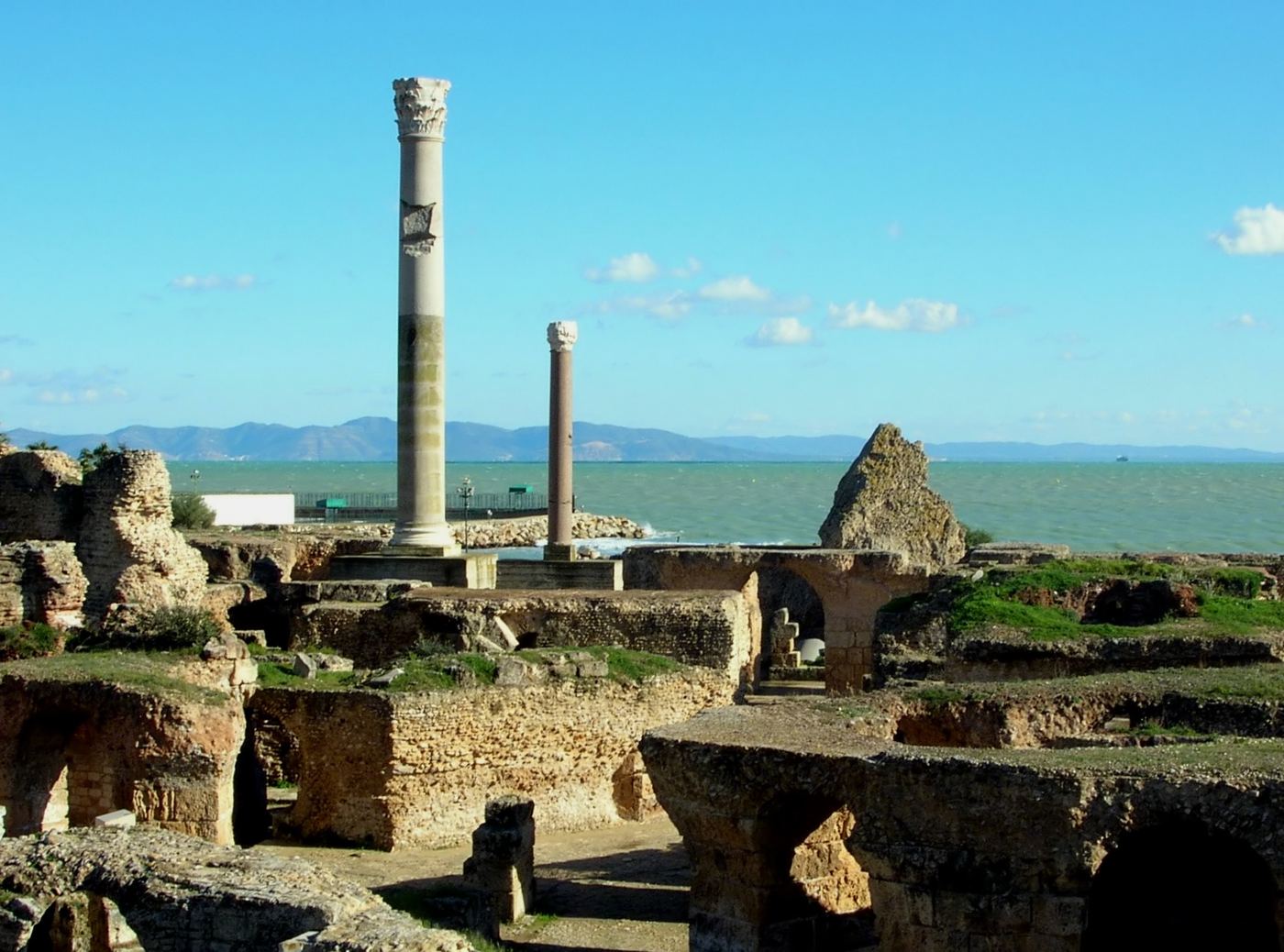
2nd c.Seafront
Antonine Baths
Built between 145 and 162 after a great fire, among the largest in the Roman Empire. Only the lower level, the service rooms, survives (Ennabli and Slim).
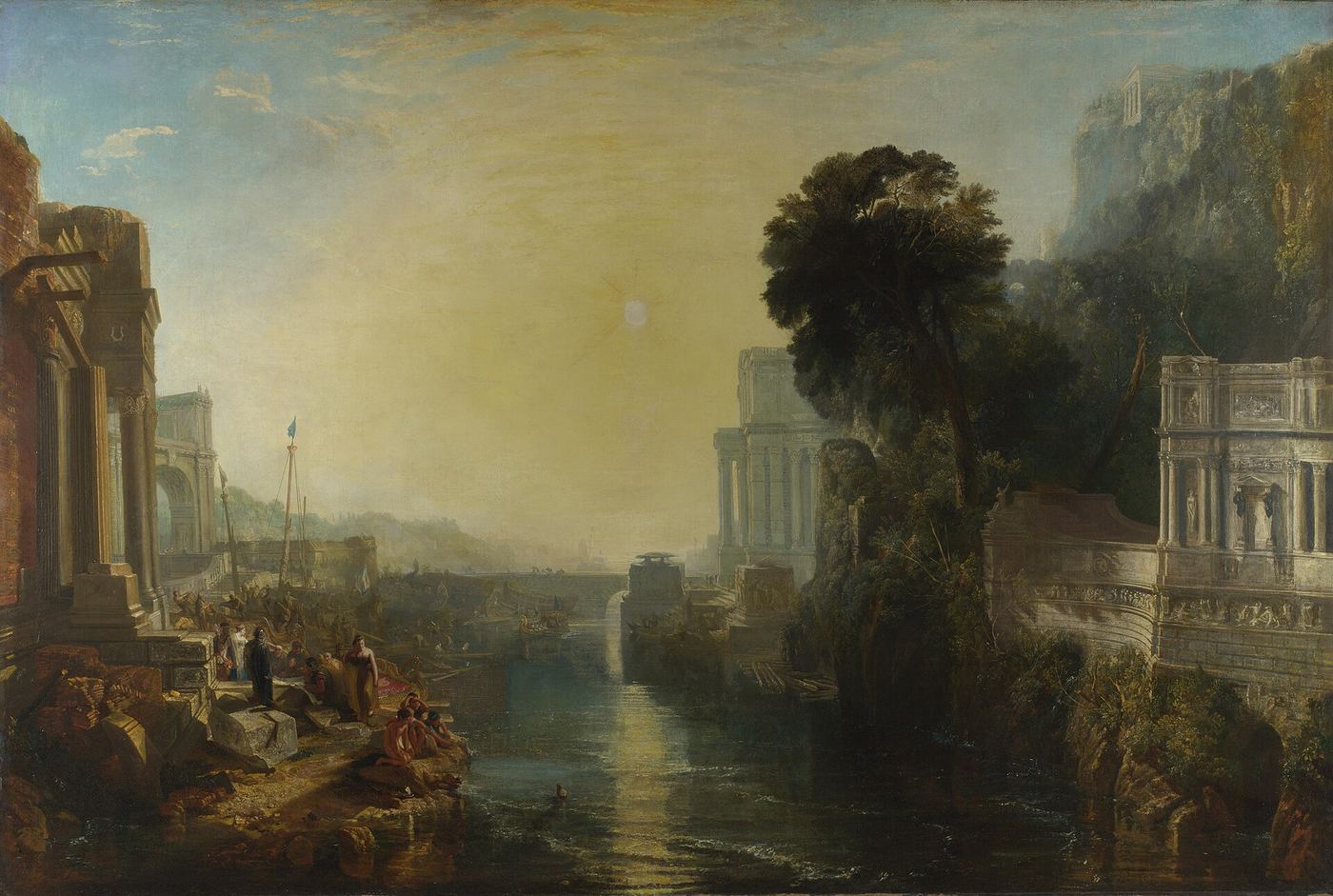
The Punic city burned in 146. On its ruins another Carthage lived for seven centuries, faded away, served as a quarry, and was reborn as a town and a World Heritage site.
as a Roman, Vandal and Byzantine city, from 29 BC to 698
seats in the Roman amphitheatre, of which only the arena survives
the archaeological site joins the UNESCO World Heritage List
inhabitants in the municipality of Carthage (2014 census)
Each age built on top of the last one, or with its stones.
As the metropolis of Roman Africa, Carthage becomes one of the hearths of Latin Christianity: its writers shape the theological language of the West and its bishops hold many councils.
Born in Carthage, the first great Christian writer in Latin. His Apology pleads the Christian cause against pagan accusations.
A young noblewoman and her slave, martyred in the amphitheatre of Carthage. The account of their passion draws on Perpetua’s own diary.
Bishop of Carthage from about 249, he leads his Church through the persecution of Decius and is beheaded under Valerian.
Born in Thagaste, he studies and then teaches rhetoric in Carthage. As bishop of Hippo, he often returns to preach and sit in councils.
The Punic language, the sufetes and renamed gods: see also the fall of Carthage →
This masonry with stone piers, already found at Kerkouane, reappears in the Roman period, even in the Capitol of Dougga.
With fine local marbles, the workshops of Africa spread their bestiaries and mythological scenes throughout the Empire.
Thinissut, Bou Kornine, El Hofra near Cirta, the “Ghorfa” stelae: African Saturn, heir to Baal, is worshipped until the early 4th century (Lancel).
Roman towns in Africa still elect sufetes in the 2nd century; some have three, which some Semitists read as a Berber contribution (Lipinski).
Handed to the Numidian kings in 146, they may have been used by Sallust for his Jugurthine War; the point is debated, and by Augustine’s time they are only a memory.
For Stéphane Gsell, and later M’hamed Hassine Fantar, the long survival of a Semitic language may have eased the Arabisation of the Maghreb.
Mostly Roman remains, with Punic islands, scattered across a residential town.
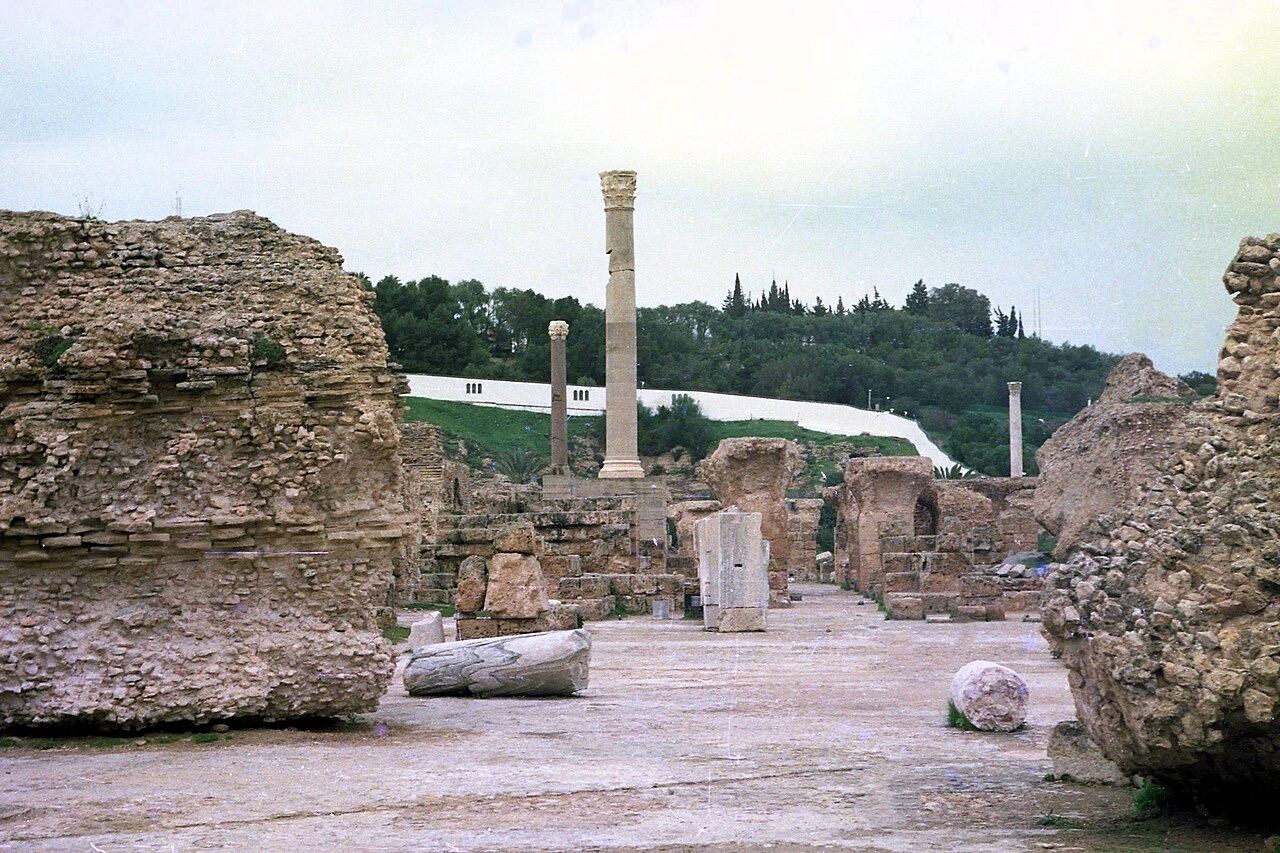
Built between 145 and 162 after a great fire, among the largest in the Roman Empire. Only the lower level, the service rooms, survives (Ennabli and Slim).
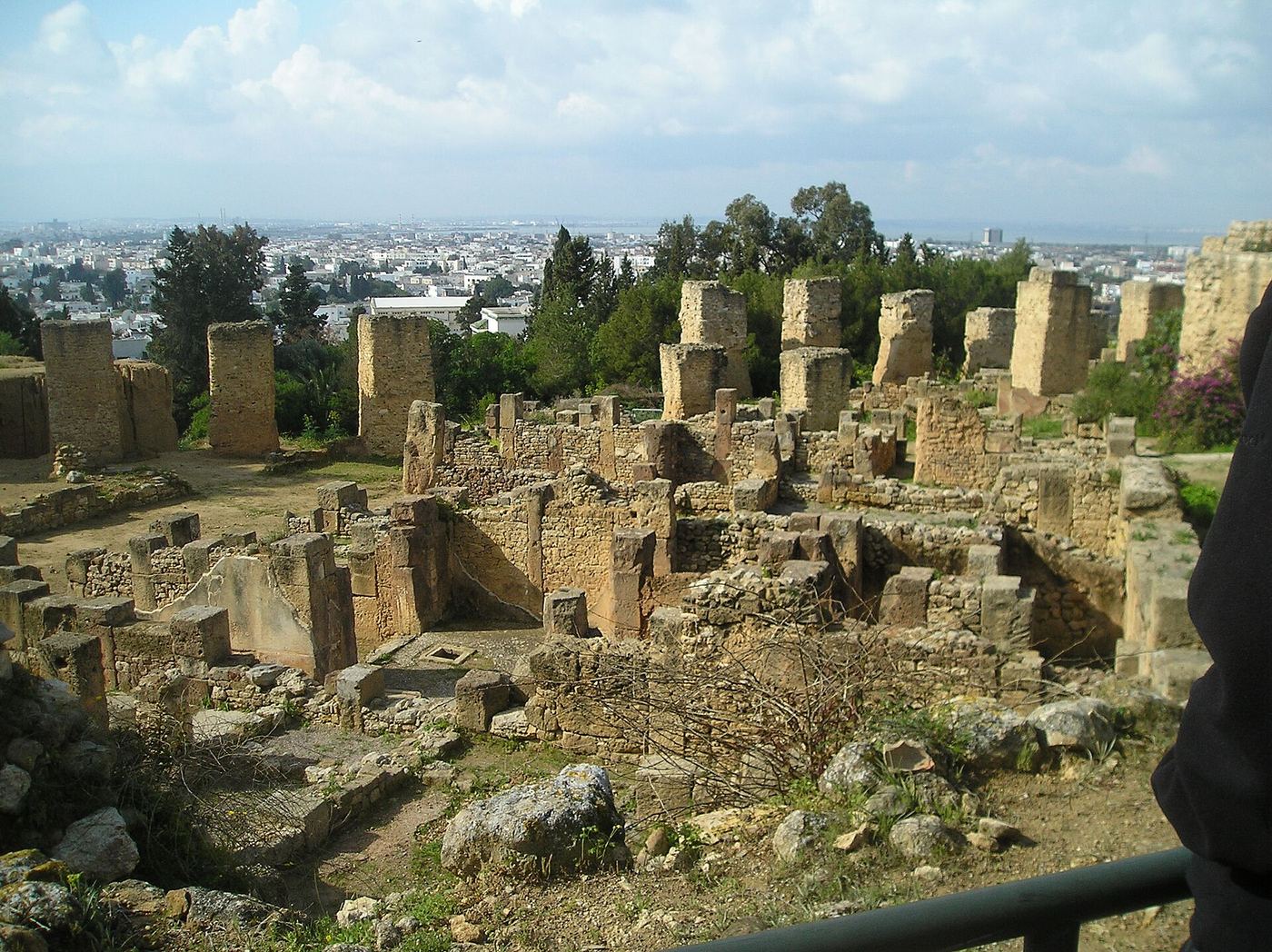
Beneath the Roman forum, a residential quarter from the early 2nd century BC: shop on the street, cistern below, corridor to a courtyard (Lipinski). On top, the National Museum and the Acropolium, the former cathedral.
The foundation →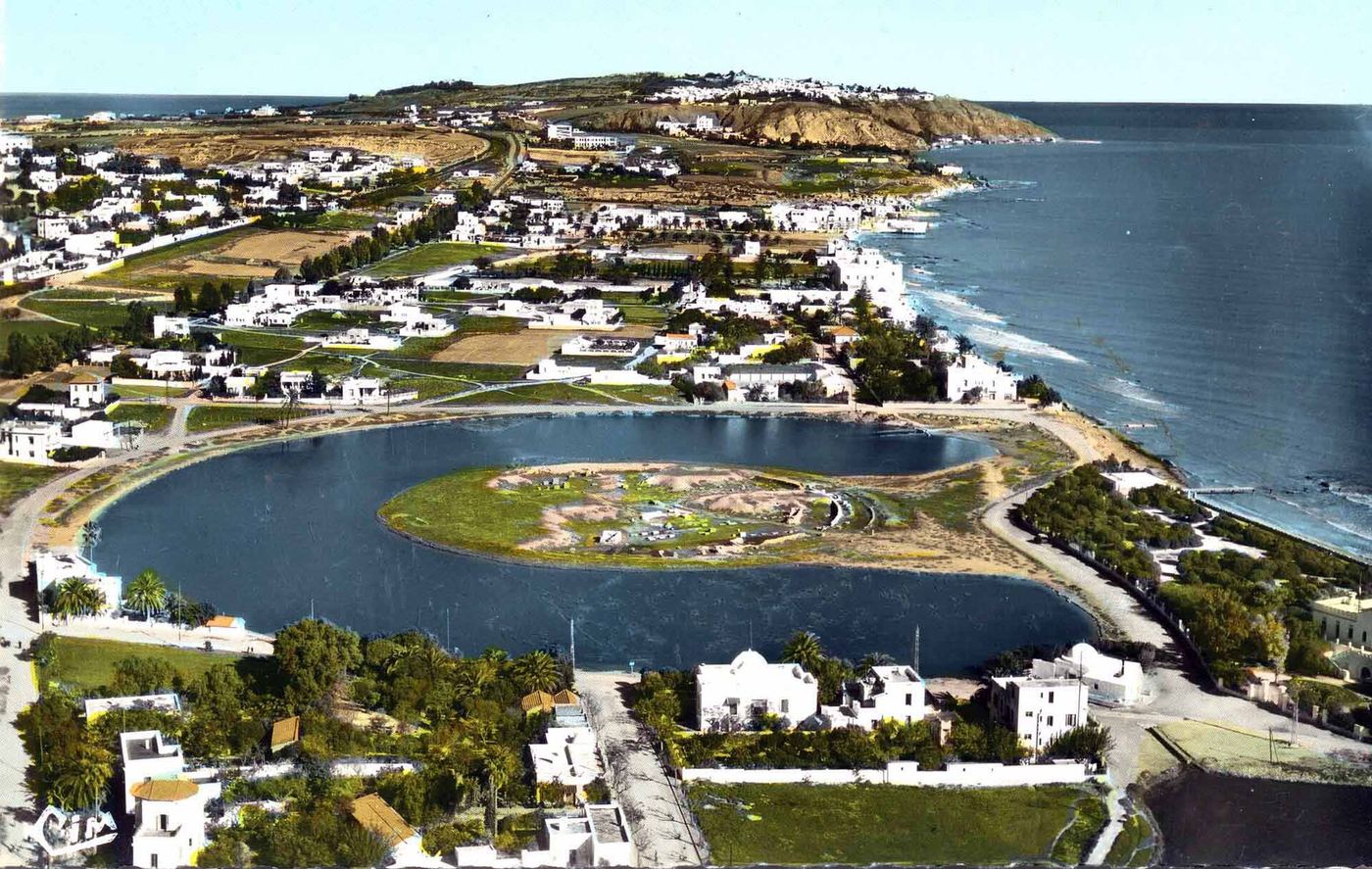
Two lagoons keep the shape of the basins: the merchant harbour and the circular naval harbour with its Admiralty island (Stager, Hurst).
The economy →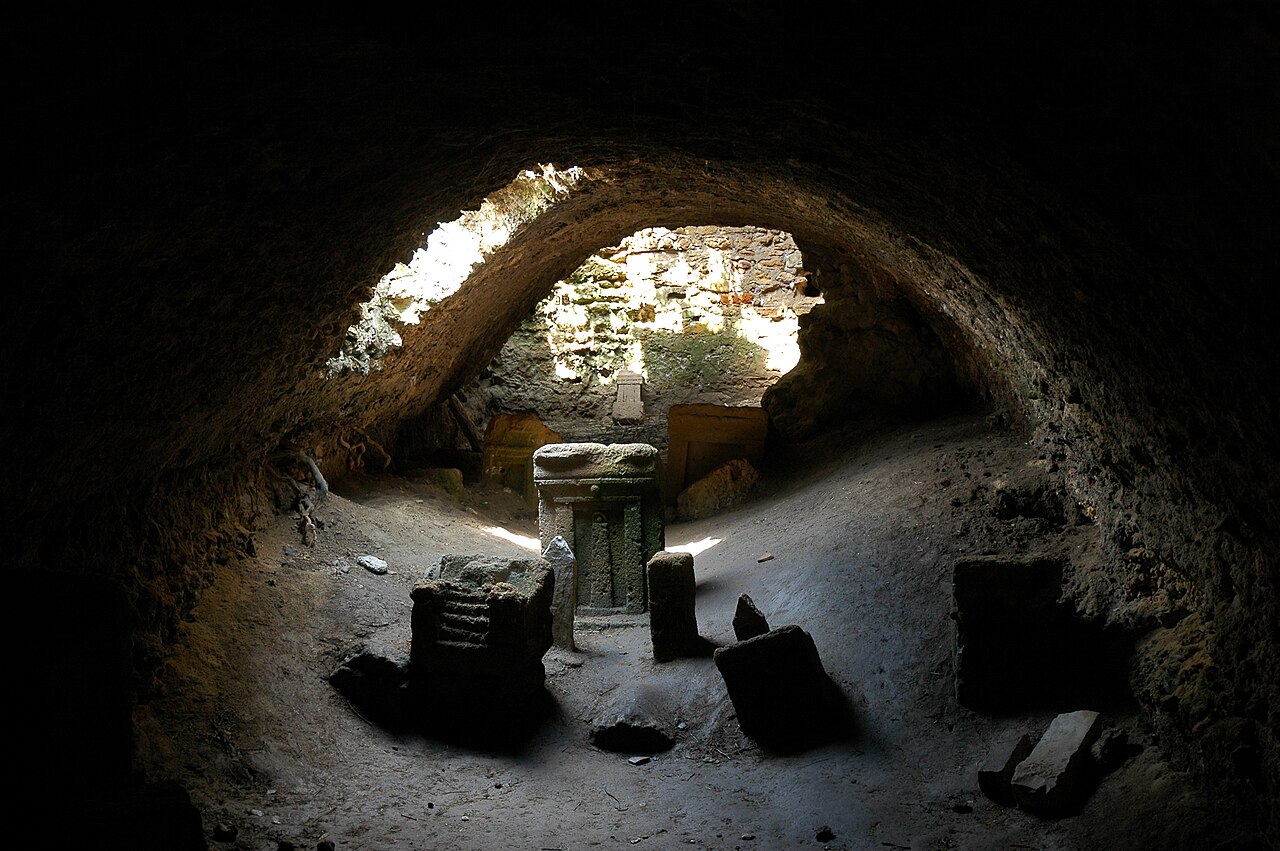
Sacred enclosure of Tanit and Baal Hammon. The long-held theory of child sacrifice is challenged by specialists such as Sabatino Moscati.
Religion →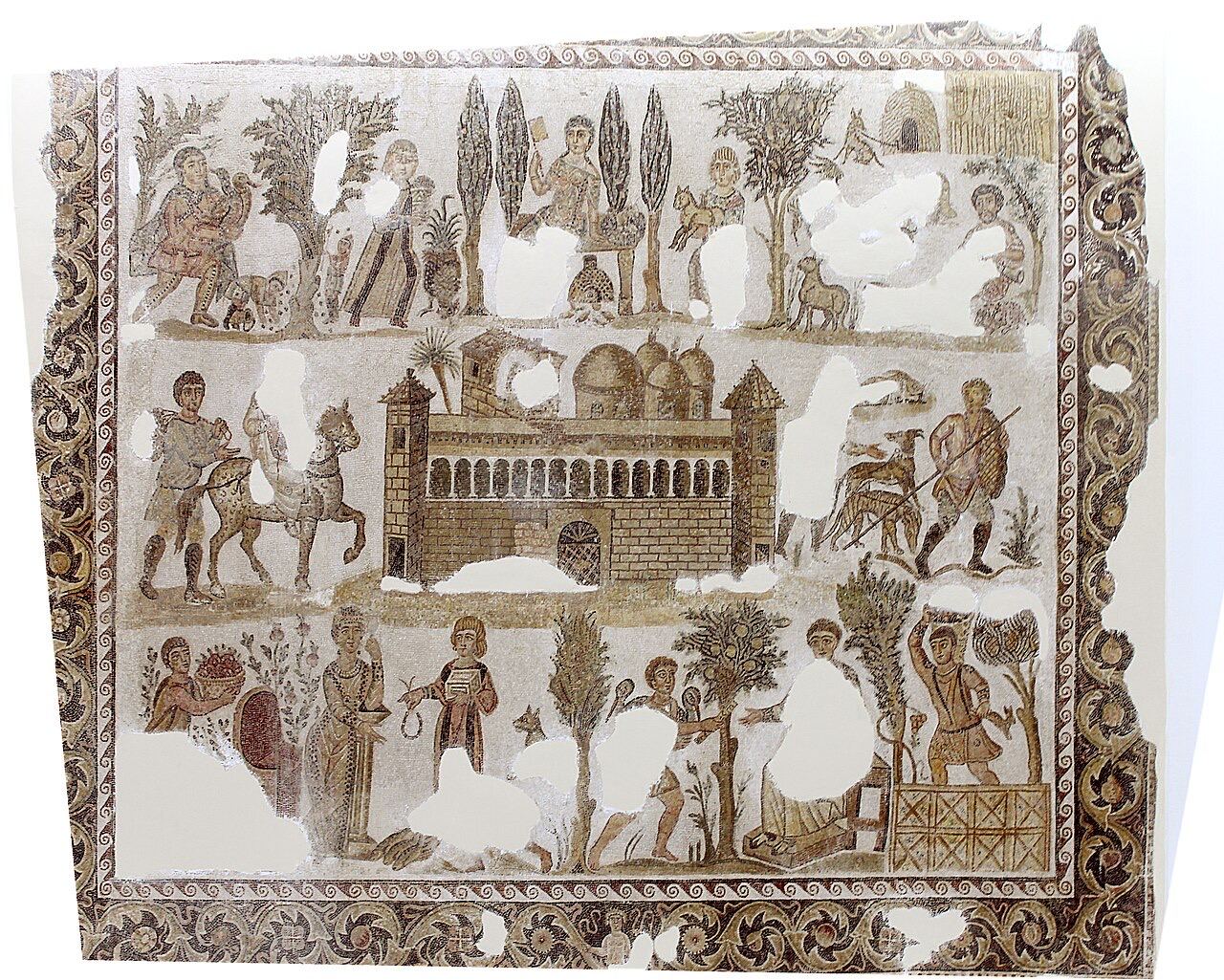
Near the theatre, the “Villa of the Aviary” is named after its mosaic. The great mosaics of Carthage, such as the Dominus Julius, are in the Bardo Museum.
Built for about 5,000 spectators, it was little more than a ruin in the early 20th century; heavily restored, it hosts the Carthage International Festival.
Only the arena has survived more than a thousand years of looting. Perpetua and Felicity were martyred there in 203.
All that remains is a long hollow in the landscape.
Huge Roman reservoirs at the end of the Zaghouan aqueduct. Nearby lies the cemetery of the officiales, the proconsul’s staff (Le Bohec).
The main difficulty is dispersion: the remains form islands among villas and gardens. The TGM train, which crosses the town (Salammbô, Byrsa, Dermech, Hannibal stations…), takes you from one area to the next.
The siege, the fall of Byrsa, and the salt myth.
From Kerkouane to Cartagena, the sites to visit.
The name of Africa, the town, the festivals.
What Rome told, what we know.