The army of Carthage
Carthaginian officers leading soldiers from across the western Mediterranean — and the largest fleet of its day.
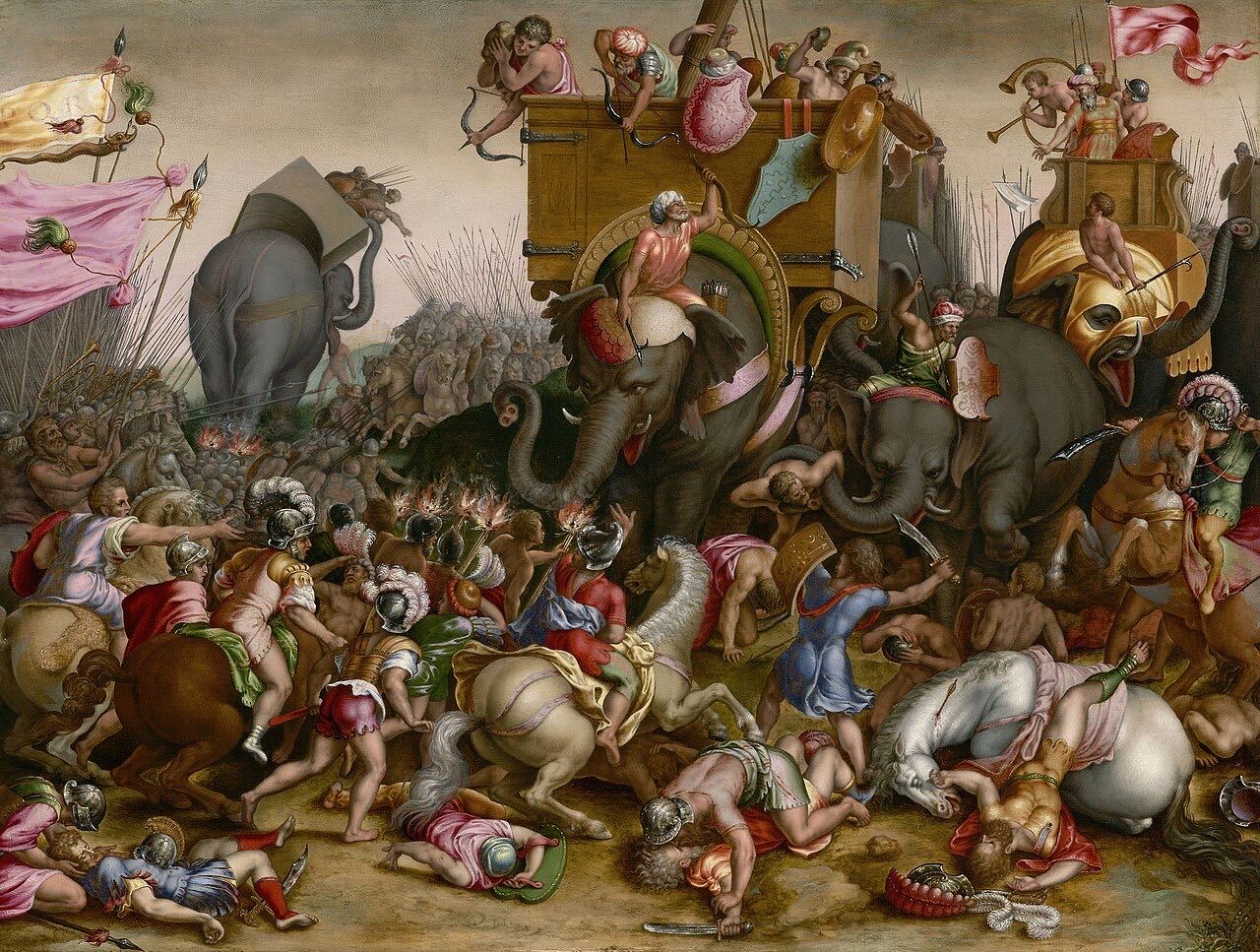
Who fought for Carthage?
Cannae and the Punic Wars →The Sacred Band
Some 2,500 elite citizens, heavily armed, according to Diodorus. The officers were Carthaginian.
Libyan infantry
The core of the army: disciplined foot soldiers with spear and shield, re-equipped at Cannae with weapons taken from the Romans.
Numidian cavalry
No saddle, no bit, light and elusive: harassment, feigned flight and sudden return. The finest cavalry in the Mediterranean.
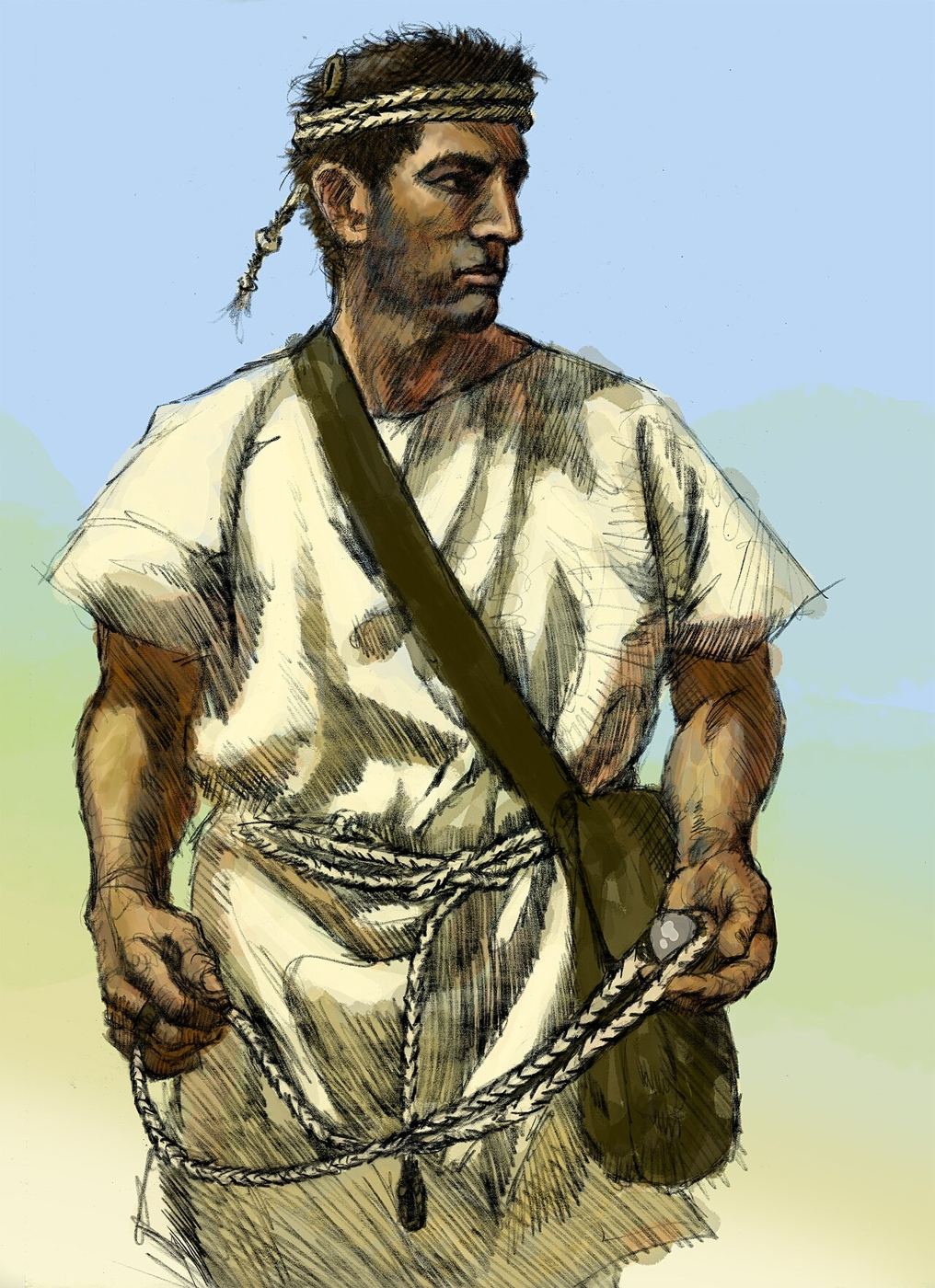
Slingers
Trained from childhood, they carried three slings for different ranges (Strabo) and hurled stones and lead shot.
Iberians, Celtiberians, Gauls
The Iberian sword — Rome adopted it as the gladius hispaniensis — and the fury of the Cisalpine Gauls who joined in Italy: the centre of the crescent at Cannae.
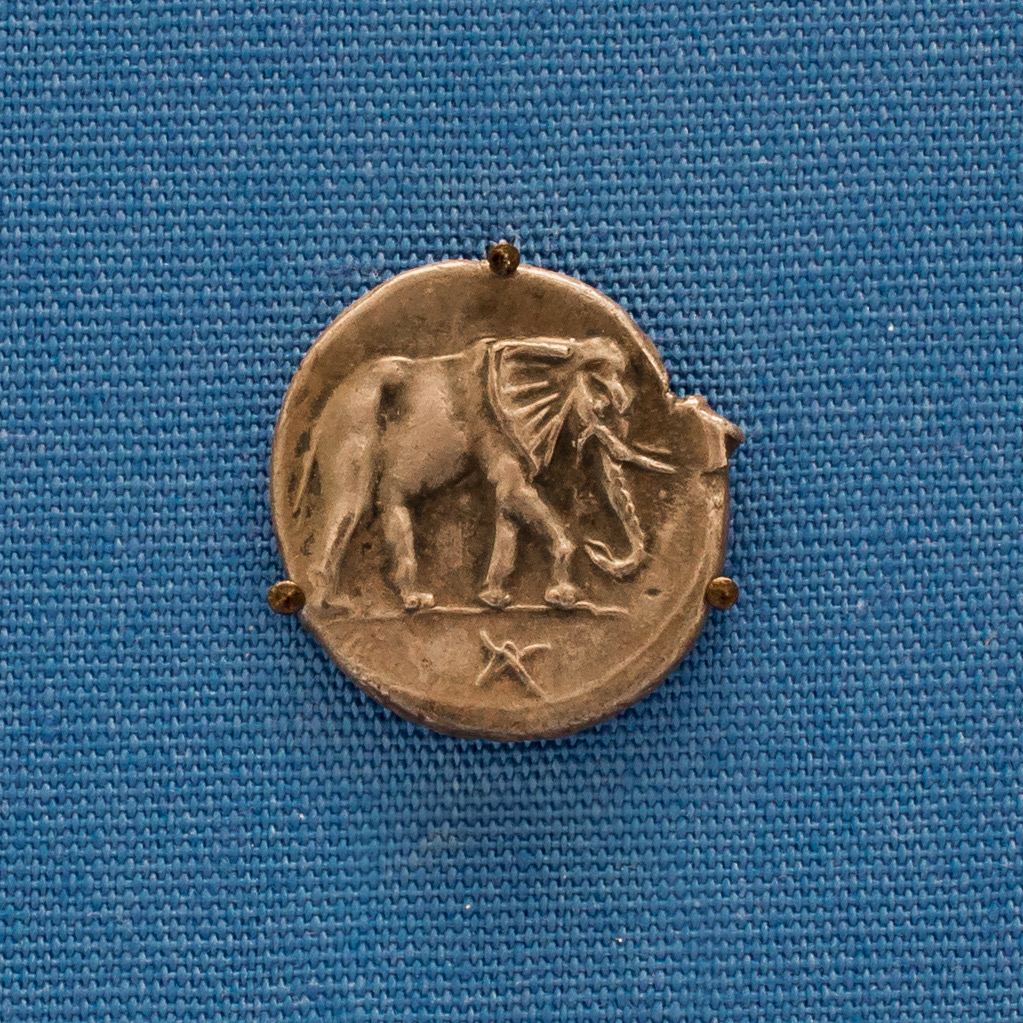
Elephants
A weapon of shock and terror; 80 at Zama according to Polybius.
Learn more →An army of contracts and alliances
Carthage, a trading city with few citizens, did not raise large citizen armies. It combined three resources: the Libyans of its African territory, liable to service; contingents from allied kings and chiefs, above all Numidians; and mercenaries hired for pay in Iberia, Gaul, the Balearics, Greece and Campania.
Generals and officers were Carthaginian. Citizens served mainly in the fleet and only took up arms en masse in extreme danger — against Agathocles in 310, against Regulus in 256–255, during the final siege of 149–146.
The system had its weakness: in 241 the mercenaries back from Sicily, poorly paid, rose in revolt. The Mercenary War (241–238) almost destroyed Carthage before Hamilcar Barca crushed it.
Xanthippus the Spartan
A Spartan mercenary hired by Carthage while the consul Regulus was encamped before Tunis. He reorganised the army, fought with cavalry and elephants on open ground and crushed the legions: Regulus was captured and Carthage saved.
Hannibal's army in numbers
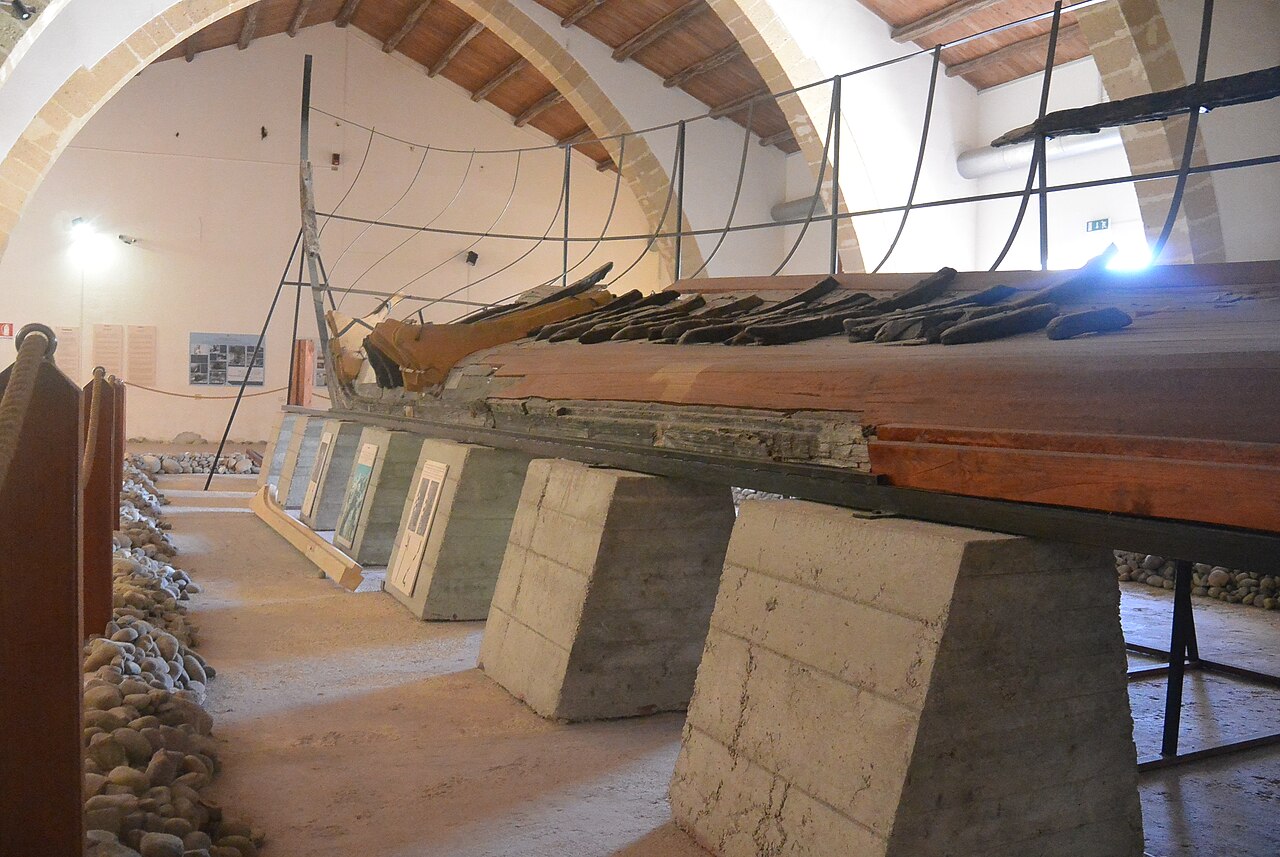
Masters of the sea
Punic ships were built in series: the parts bore assembly letters, as the Marsala wreck revealed. Rome copied a stranded Carthaginian ship to build its first fleet.
ship sheds in the circular harbour (Appian)
rowers per quinquereme
ships allowed after 201
The ships of Carthage
War fleet and merchant fleet served one aim: holding the trade routes (Lancel).
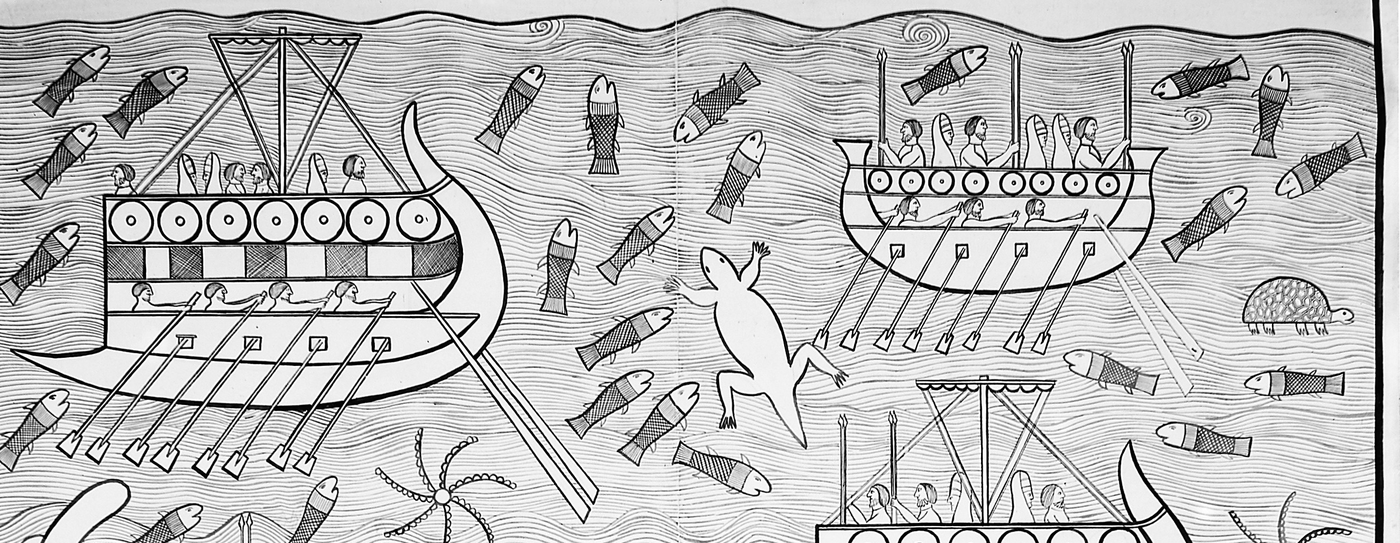
Phoenician galleys and ships, drawn after an Assyrian relief from Nineveh: Carthage inherited this naval know-how.
The trireme
Three banks of oars stacked one above the other and a ram at the bow: the classic ship of the line, with some 200 men aboard, about 170 of them rowers.
Lancel, Carthage, 1992
The quadrireme
Four rowers per rowing unit, for a heavier, steadier ship. Pliny, citing Aristotle, credits the Carthaginians with its invention.
Pliny, Natural History, VII, 207
The quinquereme
Born in Syracuse around 399 under Dionysius I, it became the ship of the line in the wars against Rome: about 300 rowers and 120 marines, according to Polybius.
Diodorus, XIV, 41-42 · Polybius, I, 26
The gauloi
The Greeks called the round Phoenician ship a gaulos: broad hull, square sail, few oars. These freighters also carried supplies and equipment for the war fleets.
Herodotus, III, 136
The hippoi
Boats with a bow carved as a horse’s head — hence their Greek name, "horses". According to Strabo, the humbler fishermen of Gades used them to fish along Mauretania as far as the river Lixus.
Strabo, Geography, II, 3, 4
The voyages
The forbidden island
Far beyond the Pillars of Hercules, Carthaginians are said to have found an uninhabited island, wooded, fertile and crossed by navigable rivers. Many went there, some settled. Fearing it would draw foreigners and slip from the city’s grasp, the leaders reportedly banned sailing there on pain of death and did away with those living there, so that no one would tell. Unverifiable, the story mostly reflects the Punic sailors’ reputation for secrecy.
Source: On Marvellous Things Heard, 84 — a collection wrongly attributed to Aristotle
Who was in command?
Equipment and units
Techniques and manoeuvres
Tactics in detail →Phalanx and camps
From the Greek and Macedonian world Carthage borrowed the phalanx, the order of march and the layout of camps (Dridi).
Cavalry and envelopment
Cavalry became a decisive arm; the enemy was enveloped at Cannae (216); the ambush at Lake Trasimene (217) made up for inferior numbers.
The art of the siege
Siege towers, rams, ballistae and catapults: in 409 the army of Hannibal the Magonid took Selinus with tall mobile towers and rams (Diodorus, XIII, 54).
Ram, break through, outflank
Military legacy
Each people in its place
Numidian horsemen for pursuit, Balearic slingers for missile fire, Libyans and Iberians for the line: Hannibal turned this diversity into a tactical instrument.
The model of envelopment
The double envelopment of 216 has been studied in military schools into modern times; Schlieffen made it the heart of his doctrine.
Sixteen years without mutiny
According to Polybius, Hannibal's multinational army never mutinied during sixteen years of war in Italy, despite hardship.