Carthage · Art and crafts

Punic art and crafts

The Greeks mocked Phoenician “trinkets”. Excavations tell another story: specialised workshops blending Eastern, Egyptian and Greek models with African tastes.

8th – 2nd c. BCStone · clay · glass · gold
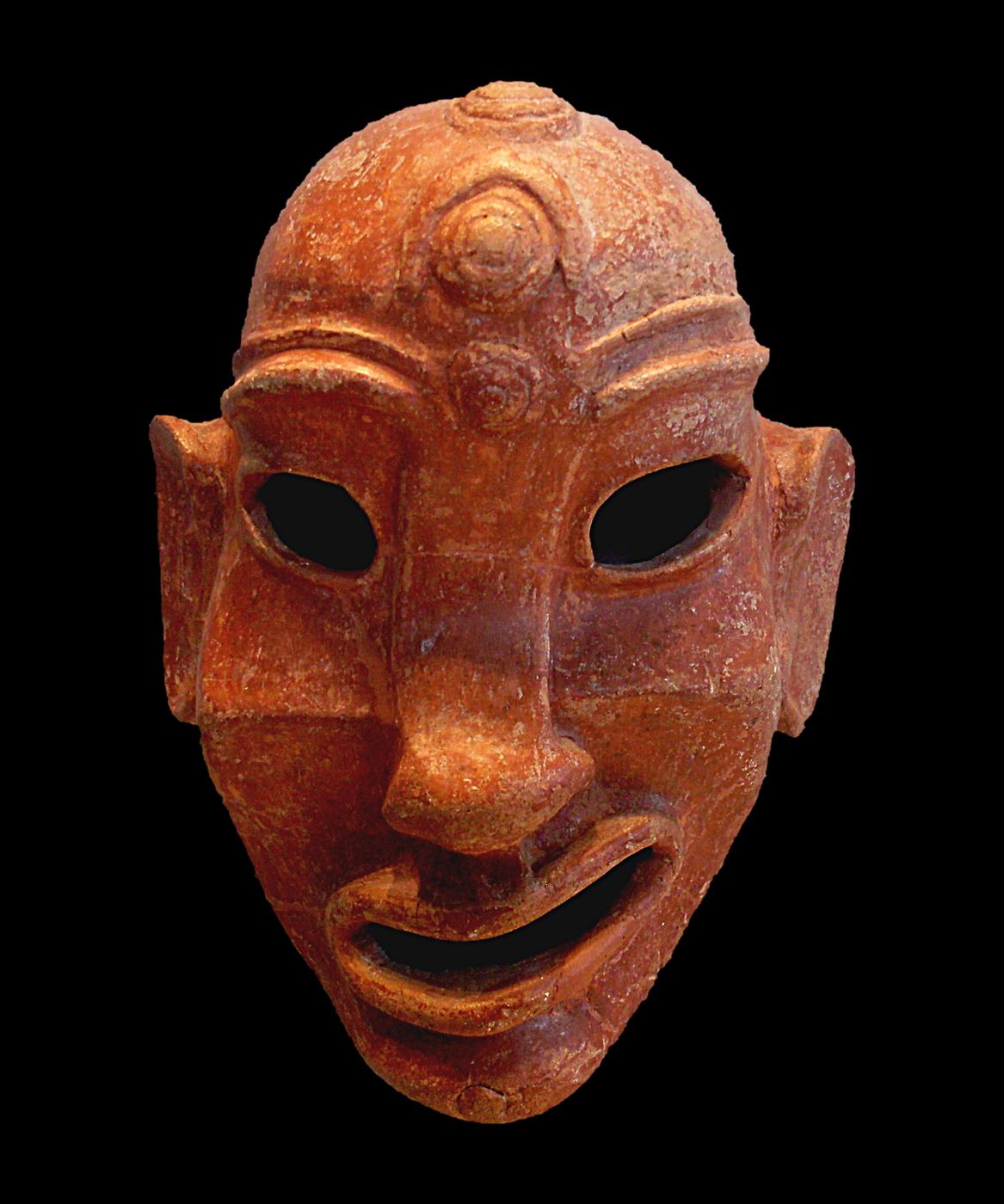
Punic grimacing terracotta mask
Grimacing mask, terracotta, Bardo National Museum
Cabinet of curiosities

The Punic workshop in twelve objects

Most finds come from necropolises excavated since the 19th century: grave goods reveal abundant and varied craftsmanship (Amadasi Guzzo).

12 objects shown

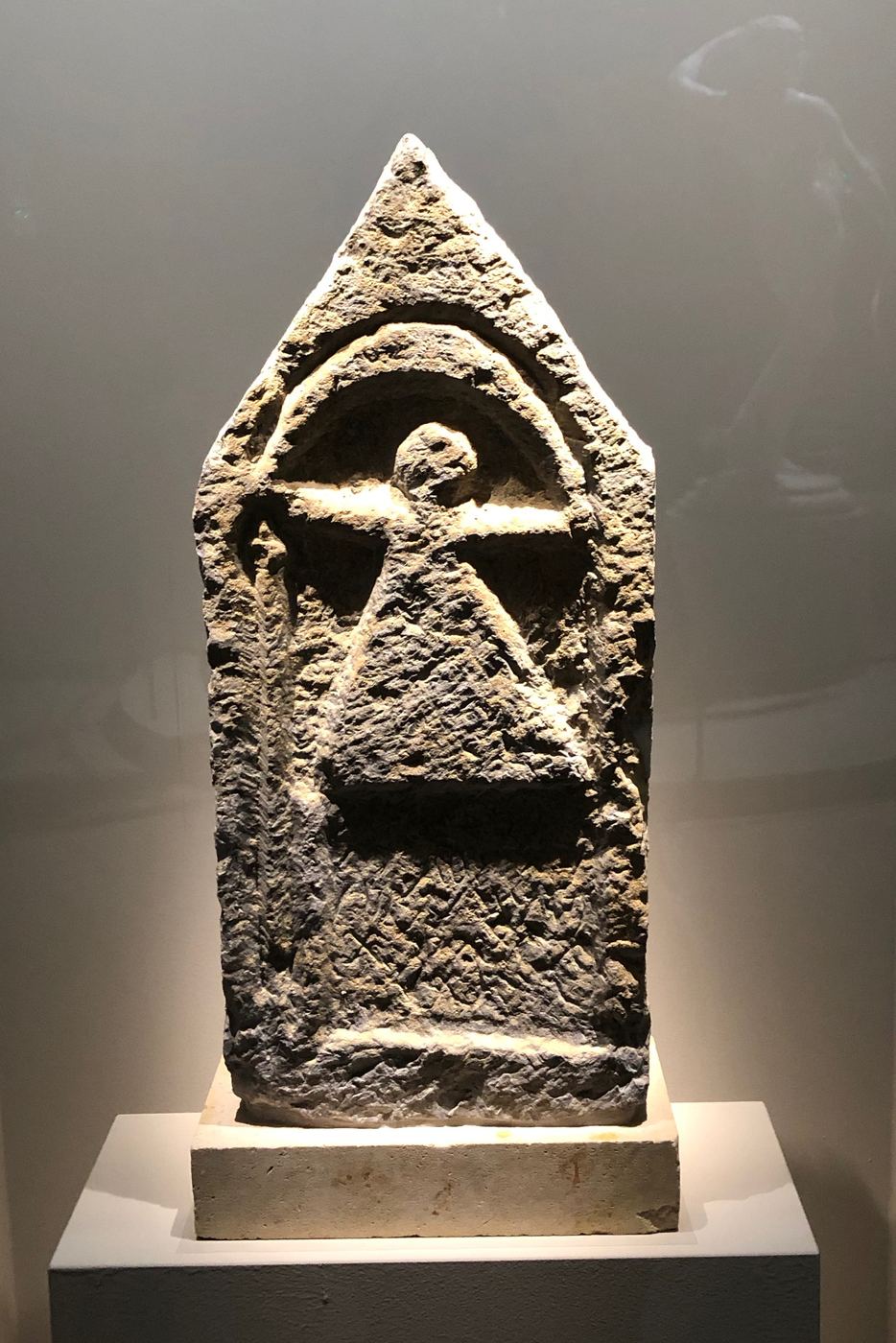
Punic stele carved with the sign of Tanit
Stone

Stelae and cippi

First cut in sandstone, then in limestone, they gain Greek-influenced motifs. The “sign of Tanit” spreads from the 5th–4th c.; once thought unique to the West, it is now also found in the Levant.

Material
Sandstone, then limestone
Period
8th – 2nd c. BC
Use
Votive (tophet) and funerary
Where to see it
Carthage, Bardo, Louvre
Terracotta

Grimacing masks

Deep wrinkles, twisted mouths, sometimes geometric patterns: these masks, probably of Levantine origin, were hung up to ward off demons.

Material
Terracotta
Period
Late 7th – 6th c. BC
Use
Apotropaic (protective)
Where to see it
Bardo, Louvre, Motya
Adornment

Jewellery

Heavy, crowded necklaces, rings, ear and nose rings (nezem), amulet cases: an Eastern luxury that classical authors liked to mock.

Material
Gold, silver, hardstones
Period
Throughout the Punic period
Use
Adornment and protection
Where to see it
Carthage, Bardo
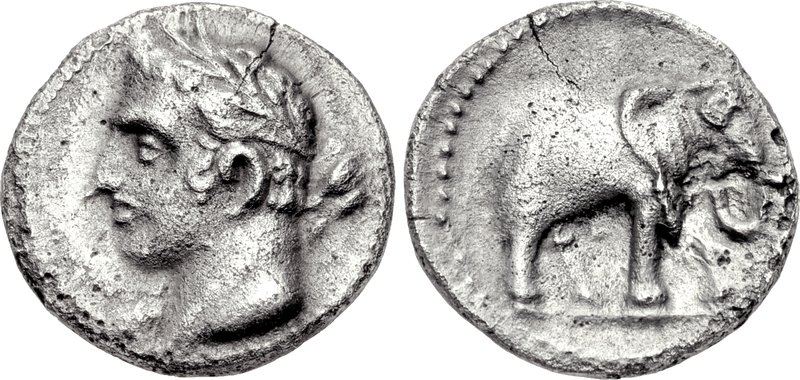
Carthaginian quarter shekel, head of Tanit and horse
Metal, bone, ivory

Coins

For a long time, trade used ingots or barter. The first coins were struck in Sicily (Motya, Palermo) to pay mercenaries; Carthage opened its own mints only in the mid-4th c. Types: a female head inspired by Euainetos’ Syracusan coins, a horse, a palm tree (Dridi).

Material
Gold, electrum, silver, bronze
Period
c. 480/430 – 146 BC
Use
Pay, trade, civic identity
Where to see it
British Museum, Carthage, Bardo
Stone

Sarcophagi

The Phoenician anthropoid model evolved in the West. In the 4th c., the lid bears a statue of the deceased: the “priest” blesses with his right hand, the “priestess” holds a dove; both carry an incense vessel.

Material
Carved marble and limestone
Period
4th – 3rd c. BC
Use
Funerary (Rabs necropolis)
Where to see it
Carthage, Louvre, Palermo
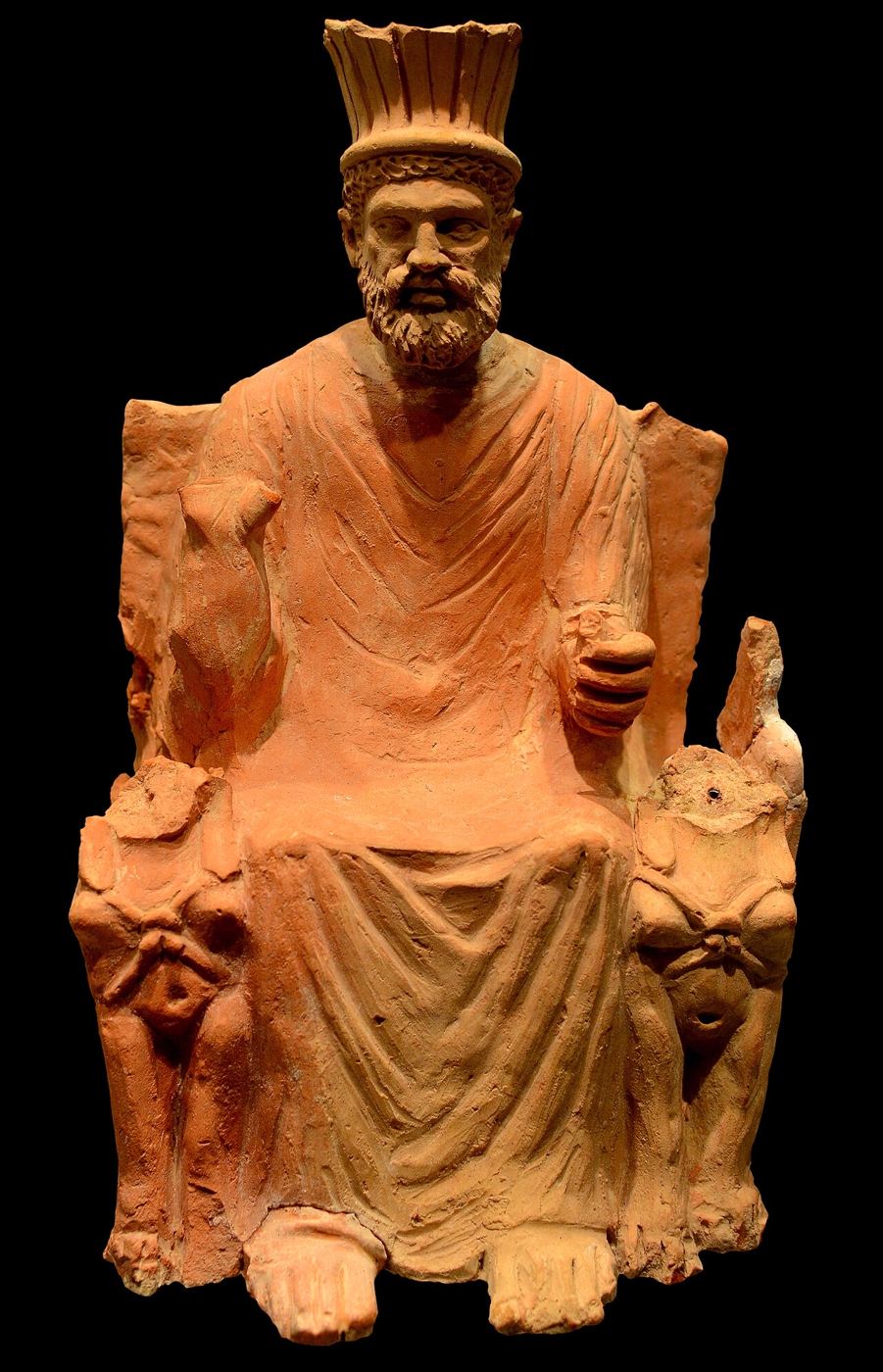
Enthroned Baal Hammon, terracotta from Thinissut
Terracotta

Protomes and figurines

Moulded busts in Egyptian style, then Greek from the 6th c., figurines with tambourines: coroplastic art spread from Africa to the Balearics. It outlived Carthage’s fall, as at the sanctuary of Thinissut (Cap Bon).

Material
Moulded terracotta
Period
6th c. BC – 1st c. AD
Use
Religious and funerary
Where to see it
Bardo, Louvre, Ibiza
Adornment

Glass mask pendants

Pliny reports that the Phoenicians invented glass; above all they traded it on a large scale. A Punic signature: tiny human heads in glass paste, coloured throughout, strung on bead necklaces.

Material
Glass paste
Period
Mainly 4th – 3rd c. BC
Use
Amulet, adornment; perfume flasks
Where to see it
Louvre, Bardo, Carthage
Metal, bone, ivory

Razors

Common in tombs after the 7th c., they are linked to the purification of the dead and had a talismanic value (Lancel). From the 5th c. they were engraved with Egyptian or Aegean motifs, sometimes on both sides.

Material
Bronze, sometimes iron
Period
7th – 2nd c. BC
Use
Ritual, talismanic
Where to see it
Madrid (Ibiza), Carthage
Terracotta

Pottery and lamps

Kitchenware, oil lamps of standardised shapes, feeding bottles, “cake moulds” (Lancel), and even a model of a tabouna bread oven found in a tomb.

Material
Clay
Period
Whole period; Greek imitations from the 3rd c.
Use
Daily life, grave goods
Where to see it
Carthage, Bardo, Palermo
Adornment

Amulets

Mostly in the graves of women and children. Imported from Egypt or made locally, they show Bes, Horus or the wedjat eye.

Material
Bone, glass paste, stone
Period
Throughout the Punic period
Use
Magical protection of the dead
Where to see it
Bardo, Carthage
Adornment

Seal rings and scarabs

Scarab bezels engraved in intaglio, often imported from Egyptian or Phoenician workshops. After the mid-4th c., humbler engravings on glass paste may point to local production.

Material
Carnelian, agate, jasper, onyx
Period
Whole period; decline after 350 BC
Use
Seal, talisman
Where to see it
National Museum of Carthage
Metal, bone, ivory

Carved ivory and bone

Small carved plaques of Eastern or Egyptian inspiration; bone often replaces costlier ivory. Raw ivory found on the same sites suggests local workshops.

Material
Ivory, bone
Period
8th – 4th c. BC
Use
Furniture inlay, caskets
Where to see it
Western Mediterranean museums
Architecture

Houses, floors and tombs

Few Punic buildings still stand: most of the story is read at ground level, at Kerkouane and on the slopes of Byrsa.

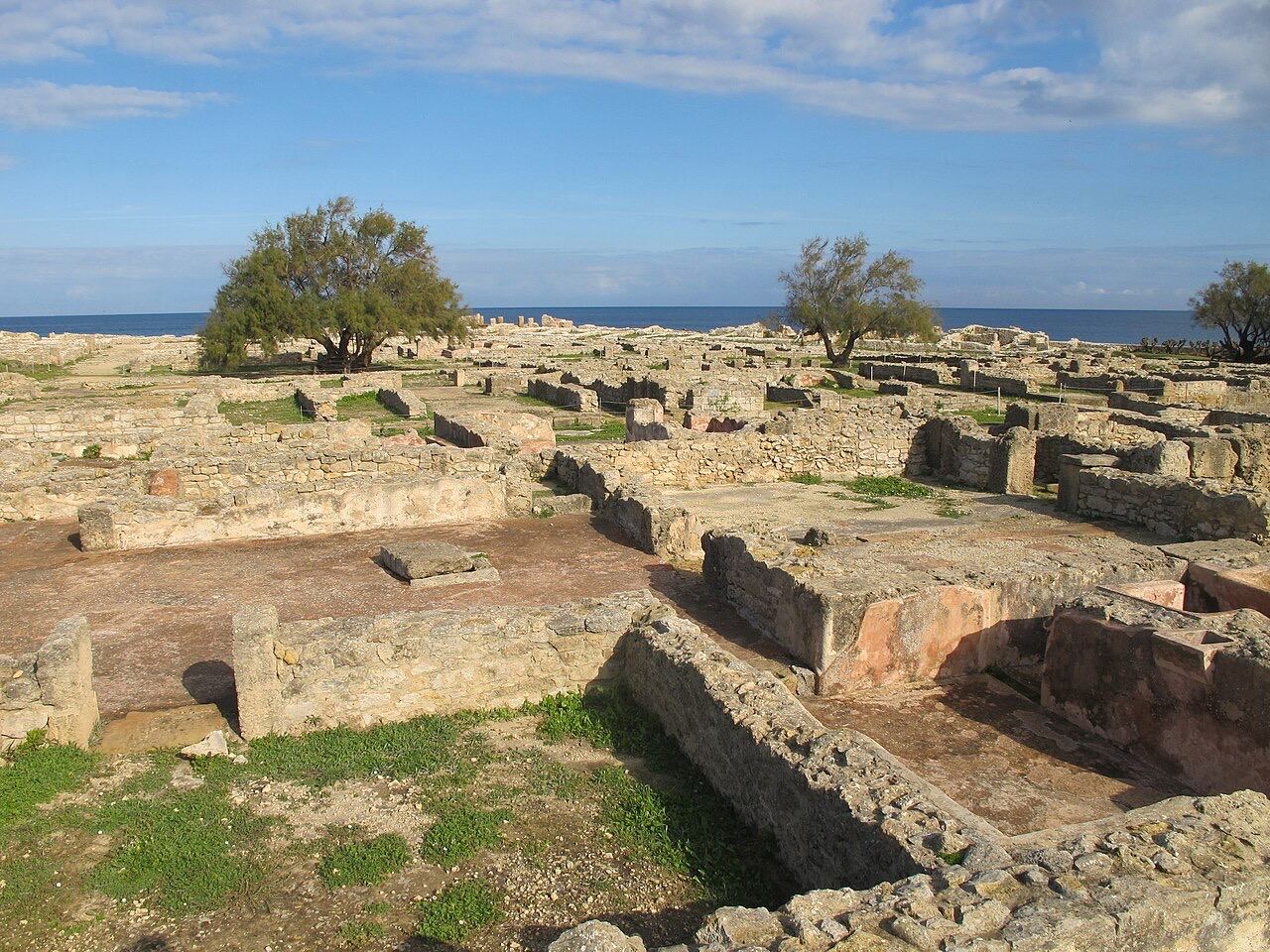
Punic houses at Kerkouane, Cap Bon
Kerkouane, Cap Bon (UNESCO)
Kerkouane

A grid-plan town

Wide streets, regular blocks: Kerkouane, like the “Mago” and “Hannibal” quarters of Carthage, follows an orthogonal plan. Each house is arranged around a courtyard and has its own cistern — water was a private matter.

Many hip baths have been found there. Some houses are richer, such as the peristyle house on the Rue de l’Apotropaion. For M’hamed Hassine Fantar, this is an Eastern model adapted to a Libyan substrate.

Late 4th – early 3rd c. BCCisternsHip baths
Carthage, Hannibal quarter

Multi-storey houses

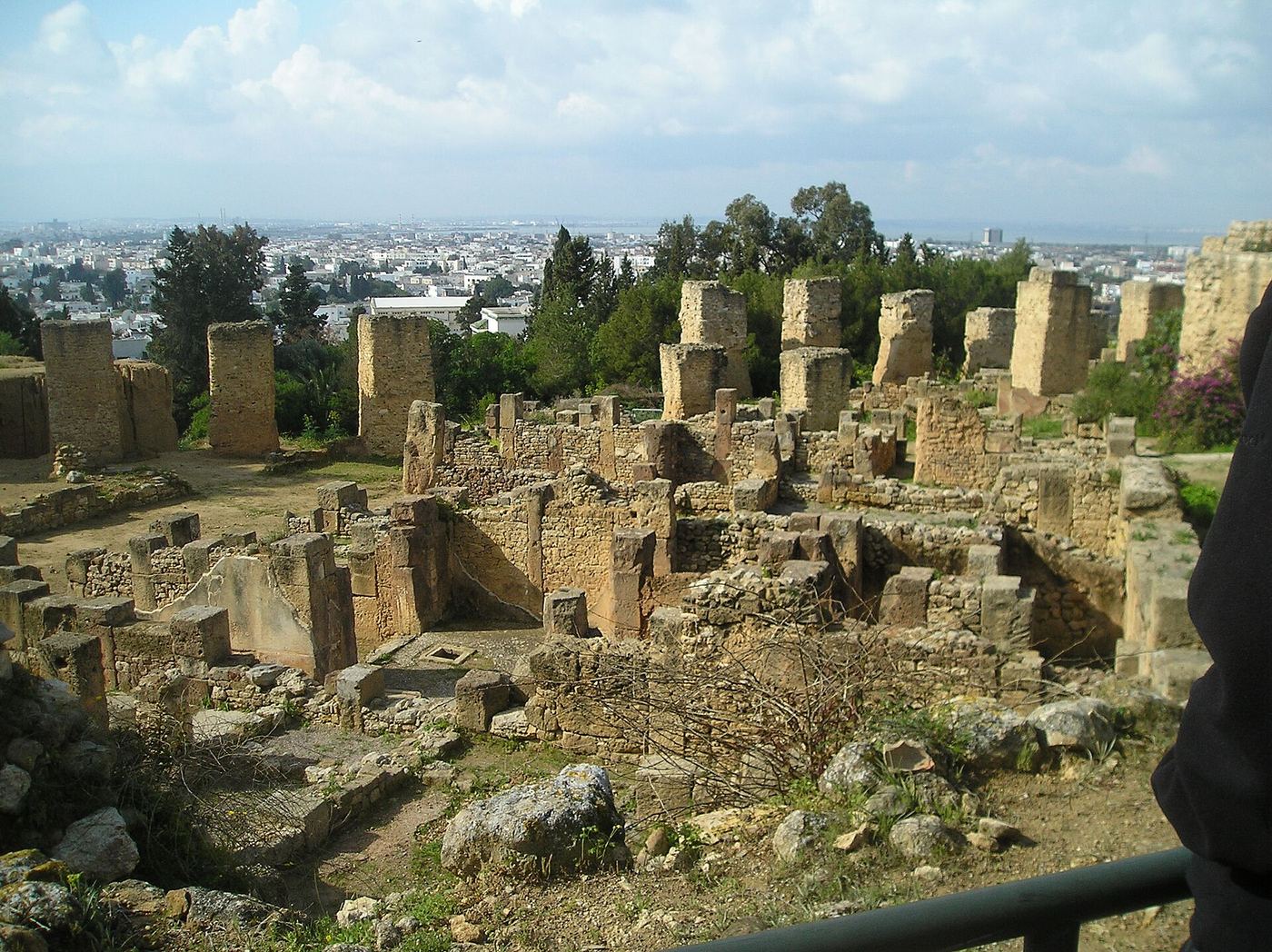
On the slope of Byrsa, a narrow entrance opens onto a long corridor leading to a courtyard with a soakaway. At the front, a room may have served as a shop; a staircase led upstairs.

Appian speaks of six-storey buildings. Archaeology confirms several levels, but not how many.

Remains of the Punic quarter on Byrsa, Carthage
Punic quarter on Byrsa, 2nd c. BC
Pavimentum punicum

The sign of Tanit underfoot

Chips of stone and marble set in red mortar: these floors, found at Kerkouane and on the south slope of Byrsa, sometimes bear the sign of Tanit.

Dated to the 3rd c. BC, they call into question the idea that mosaic was born in Greece.

A blended art

Egypt, Greece, Africa

EgyptIn the early periods: cavetto cornices, miniature temple façades with sun disc and uraeus on the stelae (Lancel).
GreeceLater: moulded, stuccoed sandstone columns from El Haouaria, the Ionic order (naiskos of Thuburbo Majus, at the Bardo) and the Doric (Byrsa).
AfricaOpus africanum — walls framed by upright stone chains — appears at Kerkouane and survives into Roman times, as at the Capitol of Dougga.
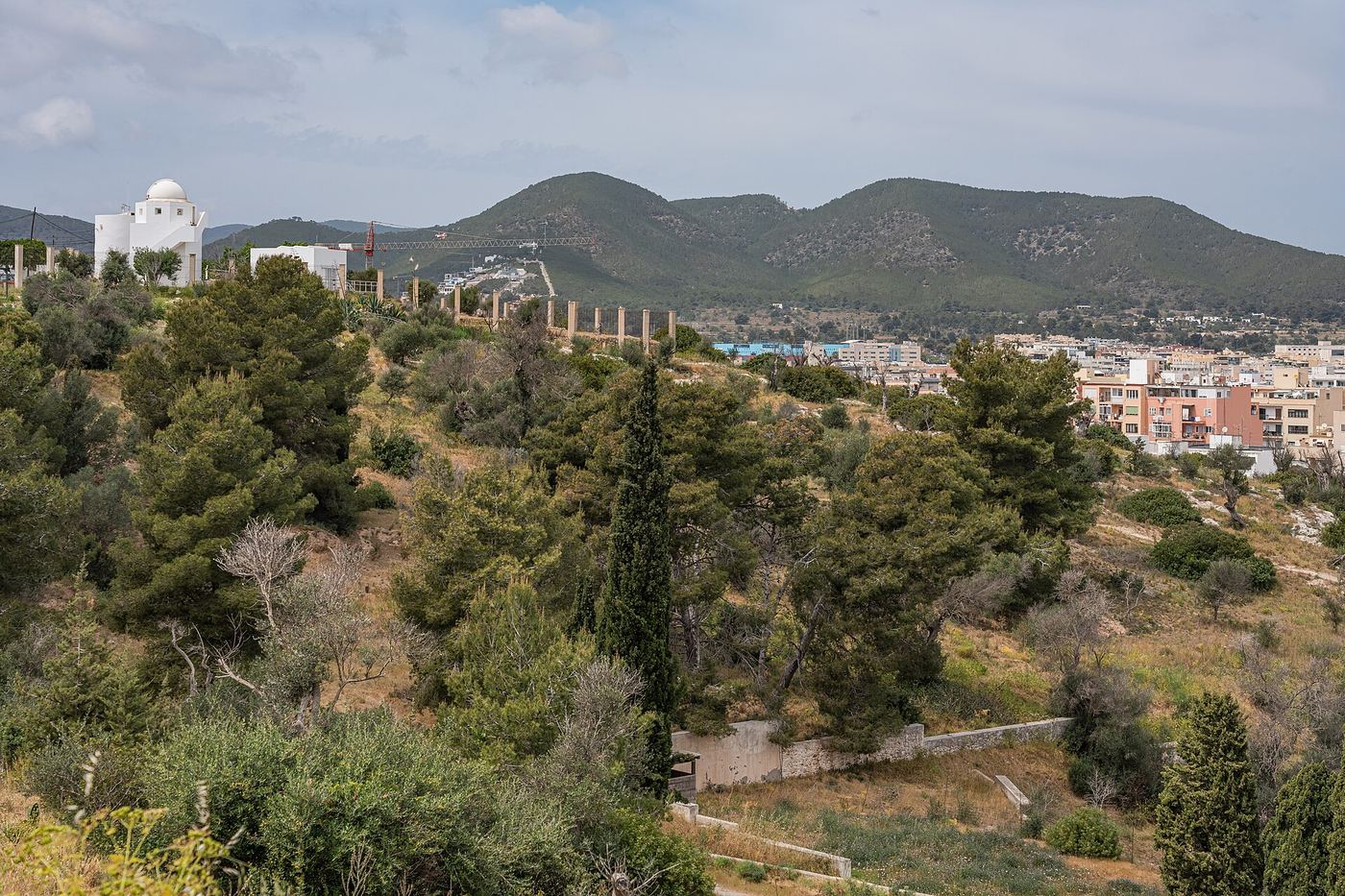
Punic necropolis of Puig des Molins, Ibiza
Puig des Molins necropolis, Ibiza
Funerary architecture

The necropolises

WhereIn an arc around the city: their layout made it possible to trace the limits of Punic Carthage (Picard).
TombsCut into the rock: a simple shaft, a shaft with stacked chambers, or a staircase leading down to the shaft.
RiteInhumation dominates; cremation prevails in some periods, as Puig des Molins has shown.
Grave goodsPottery, jewellery, amulets, red ochre (blood, life), painted ostrich eggs (rebirth), miniature clay furniture.
DecorationPainted tombs of Djebel Mlezza (Cap Bon); at Kerkouane, an exceptionally preserved wooden sarcophagus.

“For this seafaring people, the heavenly City was the last port of call.”

François Decret, Carthage ou l’empire de la mer (1977)
Museums

Where to see Punic art

The great collections are in Tunis and Carthage; others are scattered from London to Madrid, following 19th-century excavations and purchases.

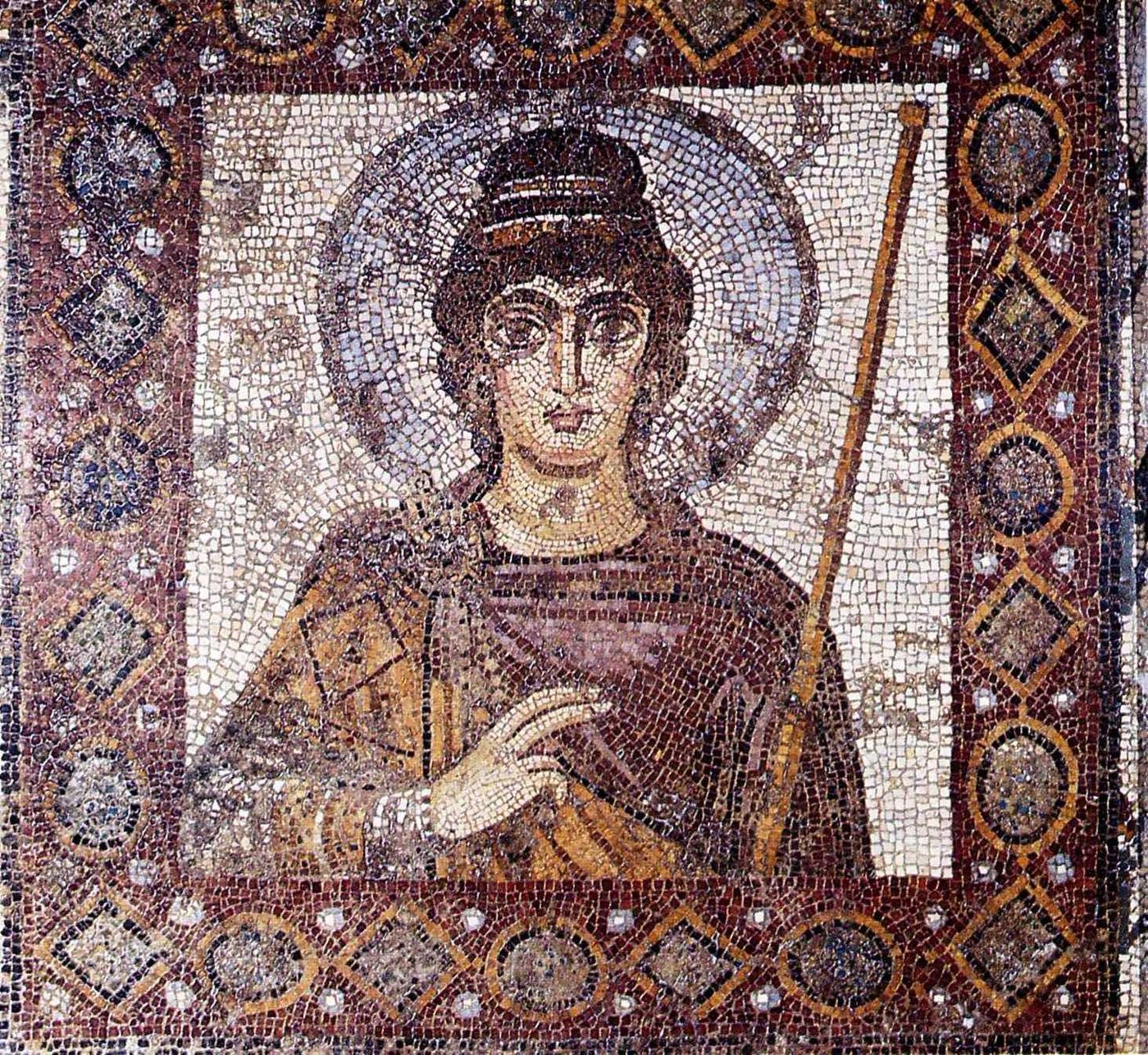
“Lady of Carthage”, late antique mosaic
Carthage, Byrsa hill

National Museum of Carthage

Sarcophagi of the priest and priestess, jewellery, lamps, glassware, a model tabouna oven — next to the Punic quarter. (Image: the “Lady of Carthage”, a much later, late antique mosaic.)

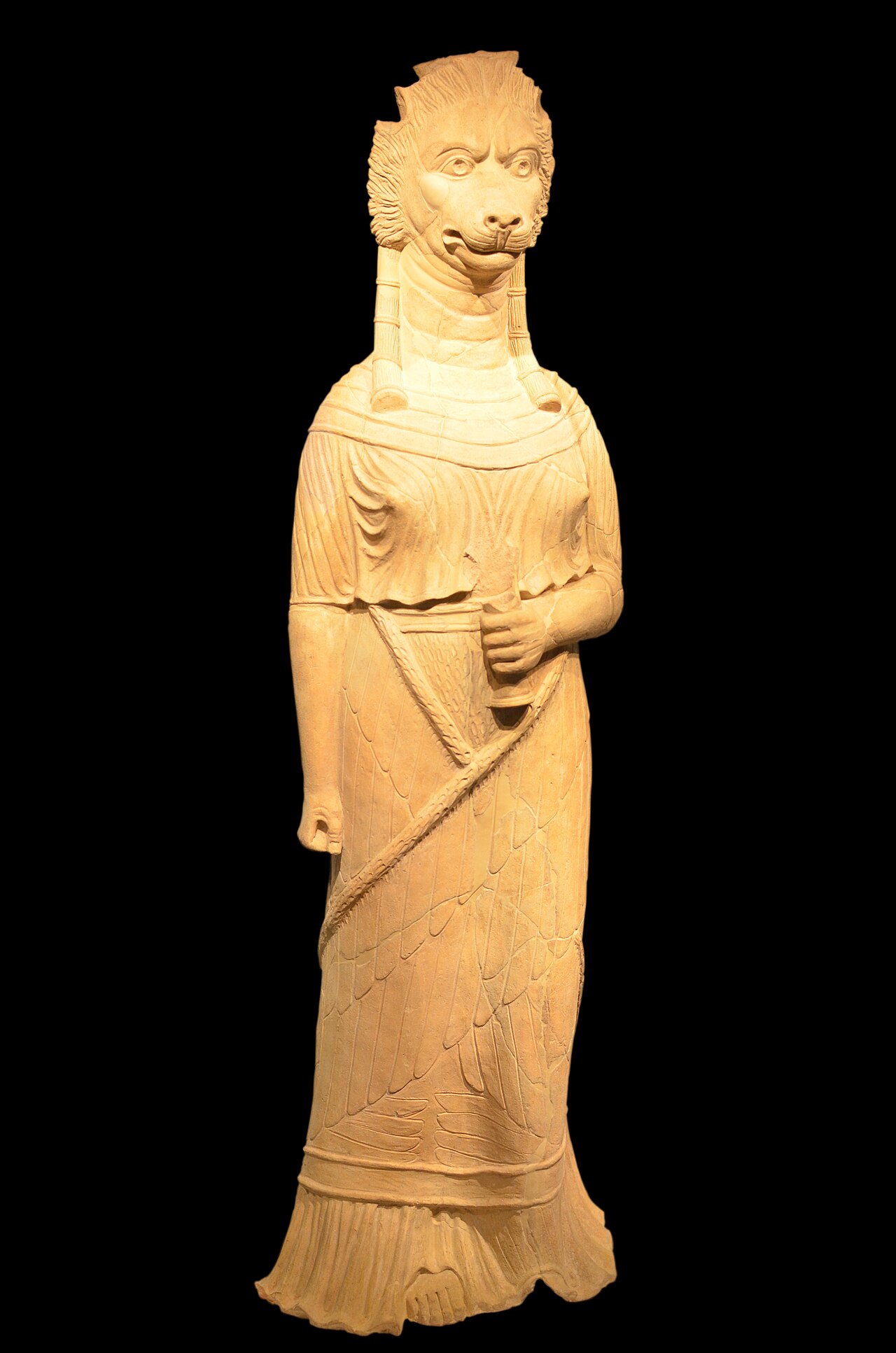
Lion-headed goddess from Thinissut, terracotta
Tunis

Bardo National Museum

Punic department: tophet stelae, a late 6th-c. grimacing mask, statuettes from Thinissut (Baal Hammon, lion-headed goddess), amulets and jewellery, the naiskos of Thuburbo Majus.

Cap Bon

Kerkouane site and museum

The Punic town itself, and a small museum displaying its finds: pottery, adornments, objects from the necropolises.

Paris

Louvre Museum

Near Eastern Antiquities: mask from Carthage (late 7th – early 6th c.), Egyptianising protomes, sarcophagi of the Rabs, bearded head in glass paste, stelae with the sign of Tanit.

London

British Museum

The Libyco-Punic bilingual inscription from the mausoleum at Dougga, and a rich series of Carthaginian coins, including the Barcid elephant shekels.

Elsewhere in the Mediterranean

Spain, Sicily, Sardinia

MadridNational Archaeological Museum: the Lady of Galera, bronze razors from Puig des Molins.
IbizaPuig des Molins museum and necropolis: figurines, unguent flasks, shaft tombs.
PalermoAntonino Salinas Museum: 5th-c. anthropoid sarcophagus, Punic lamps.
MotyaWhitaker Museum: grimacing masks from the Punic island in Sicily.
CagliariNational Archaeological Museum: the Nora Stone, one of the oldest Phoenician inscriptions in the West.