Passum
FR PassumAR الباسوم
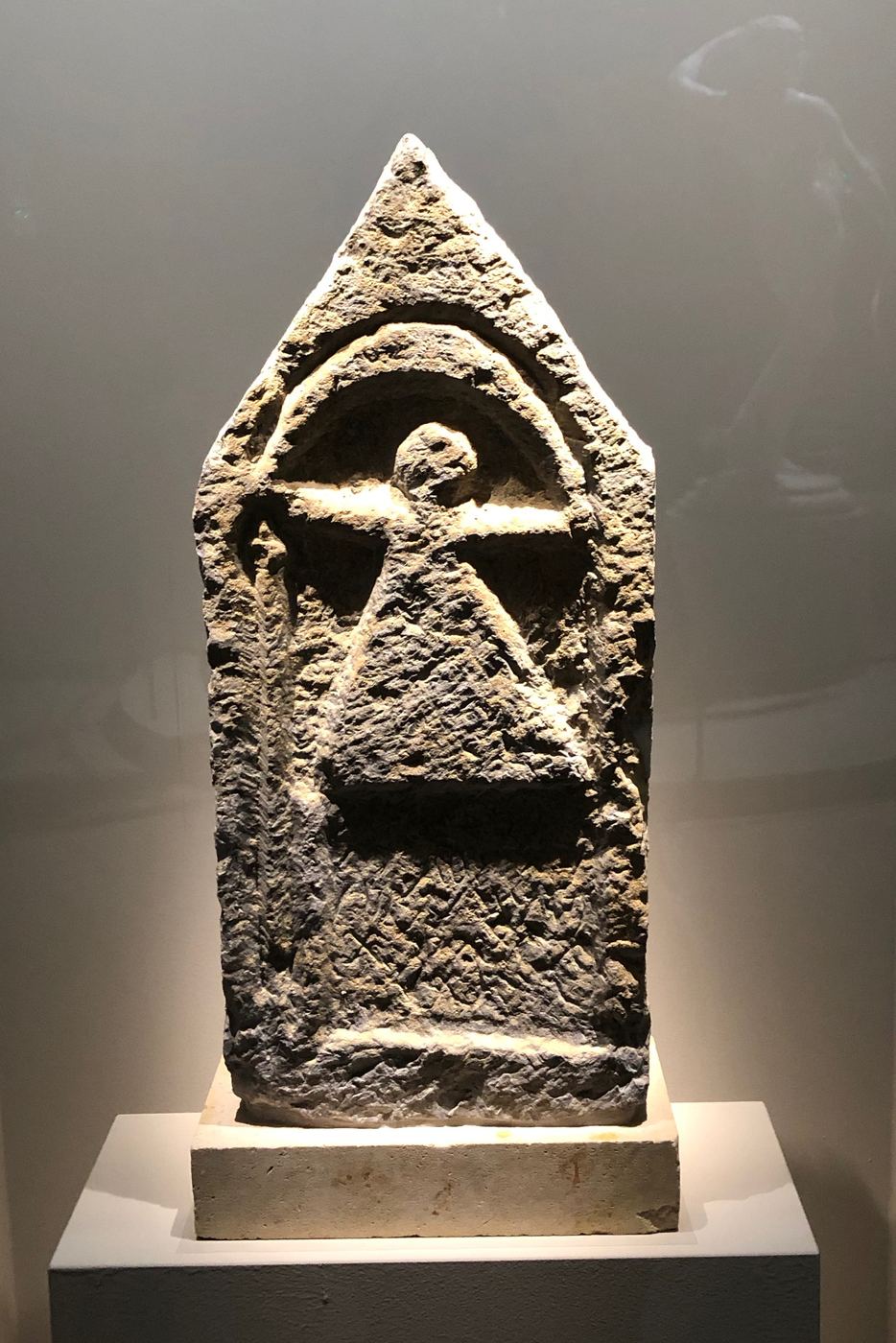
A sweet wine made from sun-dried grapes, a renowned Carthaginian speciality. Columella (XII, 39) preserved Mago's recipe for it almost word for word.
Pavimentum punicum
FR Pavimentum punicumAR الرصيف البونيقي
A floor of stone and marble chips set in red mortar, sometimes decorated with the sign of Tanit (Kerkouane, southern slope of Byrsa). Dated to the 3rd century BC, these floors call into question the idea that mosaic was born in Greece.
Pentarchy
FR PentarchieAR اللجان الخماسية
A board of five members known only from Aristotle (Politics, II, 11). The pentarchies filled their own ranks, handled important business and chose the members of the Hundred and Four; how they worked remains obscure.
Penteconter
FR PentécontèreAR السفينة الخمسينية
A long ship with fifty oars, fast and versatile, from the early days of Phoenician expansion. According to the Periplus, Hanno led sixty of them along the Atlantic coast of Africa.
People's assembly
FR Assemblée du peupleAR جمعية الشعب
𐤏𐤌Phoenician spelling
The gathering of free citizens in the agora (Diodorus); the Punic word ʿm, “people”, refers to it in inscriptions. It decided when the sufetes and the Senate disagreed, and anyone could then speak against the proposals (Aristotle). Polybius (VI, 51) held that it had gained the upper hand by the time of the Punic Wars.
Periplous
FR PériplousAR البيريبلوس (مناورة)
An outflanking manoeuvre: ships go round the enemy wing to take it from the side, hence the value of a line longer than the opponent's. Not to be confused with a periplus, the account of a voyage.
Periplus of Hanno
FR Périple d'HannonAR رحلة حنون
An account, preserved in Greek, of Hanno's voyage along the Atlantic coast of Africa around 500 BC, with sixty penteconters. It is said to translate a Punic inscription displayed in a Carthaginian temple; it is the oldest record of the exploration of West Africa.
Phoenician alphabet
FR Alphabet phénicienAR الأبجدية الفينيقية
𐤀𐤁𐤂𐤃Phoenician spelling
A script of 22 letters, all consonants, written from right to left. Passed on to the Greeks, it is the ancestor of the Greek and Latin alphabets and, through Aramaic, of the Hebrew and Arabic scripts.
Pillars of Hercules
FR Colonnes d'HerculeAR أعمدة هرقل
The ancient name of the Strait of Gibraltar, the edge of the world known to the Greeks. Carthage watched over the passage and launched its Atlantic expeditions through it: Hanno's to the south, Himilco's to the north.
Punic
FR PuniqueAR البونيقية
From Latin Punicus, from Poenus, the Latin form of Greek Phoinix, “Phoenician”. The word refers to the civilisation and language of Carthage: a western Phoenician, a Semitic language written from right to left, still spoken in the African countryside in Saint Augustine's time, around AD 400.
Punic razors
FR Rasoirs puniquesAR الأمواس البونيقية
Small hatchet-shaped bronze blades, common in tombs after the 7th century BC, linked to the purification of the dead and credited with talismanic value (Lancel). From the 5th century they were engraved with Egyptian or Aegean motifs.
Punic Wars
FR Guerres puniquesAR الحروب البونيقية
The three wars between Rome and Carthage: 264–241 (Sicily), 218–201 (Hannibal in Italy, ending at Zama) and 149–146 BC, which ended with the destruction of the city.
Punica fides
FR Punica fidesAR «الوفاء البونيقي»
“Punic faith”: a Latin phrase that became a byword for treachery. Livy (XXI, 4) credits Hannibal with “more than Punic perfidy”. A cliché of Roman propaganda, which the facts hardly set apart from Rome's own conduct.
Purple dye (murex)
FR Pourpre (murex)AR الأرجوان (الموريكس)
The costliest dye of antiquity, extracted from a sea snail, the murex: thousands were needed for a few grams of colour. A Phoenician speciality, it left heaps of crushed shells near the workshops at Kerkouane; Djerba remained famous for it in Roman times.