Politics and society in Carthage
Neither king nor tyrant: a merchant republic, admired by Aristotle, where two elected magistrates, a Senate and a popular assembly shared power.
suffetes elected for one year — the “kings” of Greek and Latin authors
judges on the court of oversight according to Aristotle (“the Hundred” in Justin)
term for those judges after Hannibal’s reform of 196 — previously for life (Livy)
tyrants and no serious civil strife in the city’s history, according to Aristotle
Who governed Carthage?
A regime the ancients called “mixed”: a little monarchy, a lot of aristocracy, a share of democracy.
- Popular Assemblyelection? (debated) 2 suffetes
- Popular Assemblyelects Generals
- Senaterefers disputes Popular Assembly
- 2 suffetespreside Senate
- Generalsreport to Senate
- Senatesupplies judges Hundred and Four
- Generalstried on return Hundred and Four
- Pentarchiesappoint Hundred and Four
Dotted line: uncertain relationship. The diagram reconstructs a late state (4th–3rd c.) from scarce, mostly Greek sources.
The suffetes
From Phoenician shofet, “judge”. Two magistrates elected every year, whom Greeks and Romans called “kings” for lack of a better word. They presided over the Senate, administered justice and ran the city, but did not command armies. Who elected them — the notables or the people — is unknown.
Sznycer; Seneca, On Tranquillity, IV, 5
The Senate
The texts speak of the “Elders of Carthage” (gerontes, seniores). Drawn from the great families, it probably had several hundred members. War, peace, diplomacy: it decided the major questions, and generals had to report to it.
Sznycer; Livy
The Hundred and Four
A smaller council that only Aristotle names this way (“the Hundred and Four” or “the Hundred”). According to Justin, a hundred judges chosen from the Senate reviewed the conduct of generals on their return. Appointed for life until Hannibal’s reform.
Aristotle, Politics, II, 11; Justin, XIX, 2
The pentarchies
Boards of five members, mentioned by Aristotle alone. They filled their own ranks, dealt with important business and chose the members of the Hundred and Four. How they worked remains obscure.
Aristotle, Politics, II, 11
The popular assembly
Free men meeting in the agora, according to Diodorus. When suffetes and Senate disagreed, the matter went to the assembly, where anyone could speak against the proposals (Aristotle). Polybius thought it had gained the upper hand by the time of the Punic Wars.
Aristotle; Diodorus, XX, 9; Polybius, VI, 51
The generals
Military command was kept apart from civil office. Army commanders, drawn from the great families, were elected separately, probably by the assembly. Answerable to the Senate, they could be tried by the Hundred and Four after a campaign.
Sznycer; Justin, XIX, 2
A constitution held up as a model
“Carthage is thought to be well governed […]. A sign of a well-ordered constitution: the people remain loyal to it, and there has been neither civil strife worth the name nor a tyrant.”
Aristotle places Carthage, the only non-Greek city in his survey, alongside Sparta and Crete among the most successful constitutions: a “mixed” regime combining monarchy (the suffetes), aristocracy (the Senate) and democracy (the assembly). Polybius would also mention the excellent reputation of these institutions (VI, 43).
A snapshot, not a fixed model: the value of the text has been debated since Stéphane Gsell, and historians now accept that these institutions changed over the centuries (Sznycer).
Too much weight on wealth
- Magistrates are chosen for their fortune as much as their merit: a slide towards oligarchy.
- The highest offices can be bought — and whoever has paid then seeks to get rich.
- One man can hold several offices at once.
- Civil peace depends on prosperity: Carthage regularly sends part of its people to make their fortune in the cities it controls.
Two centuries later, Polybius saw the Carthaginian constitution in decline: by Hannibal’s time the people had the upper hand, while in Rome the Senate still governed (VI, 51). He also notes that in Carthage offices were bought openly, whereas in Rome electoral bribery was a capital crime (VI, 56).
Institutions that changed
A highly stratified society
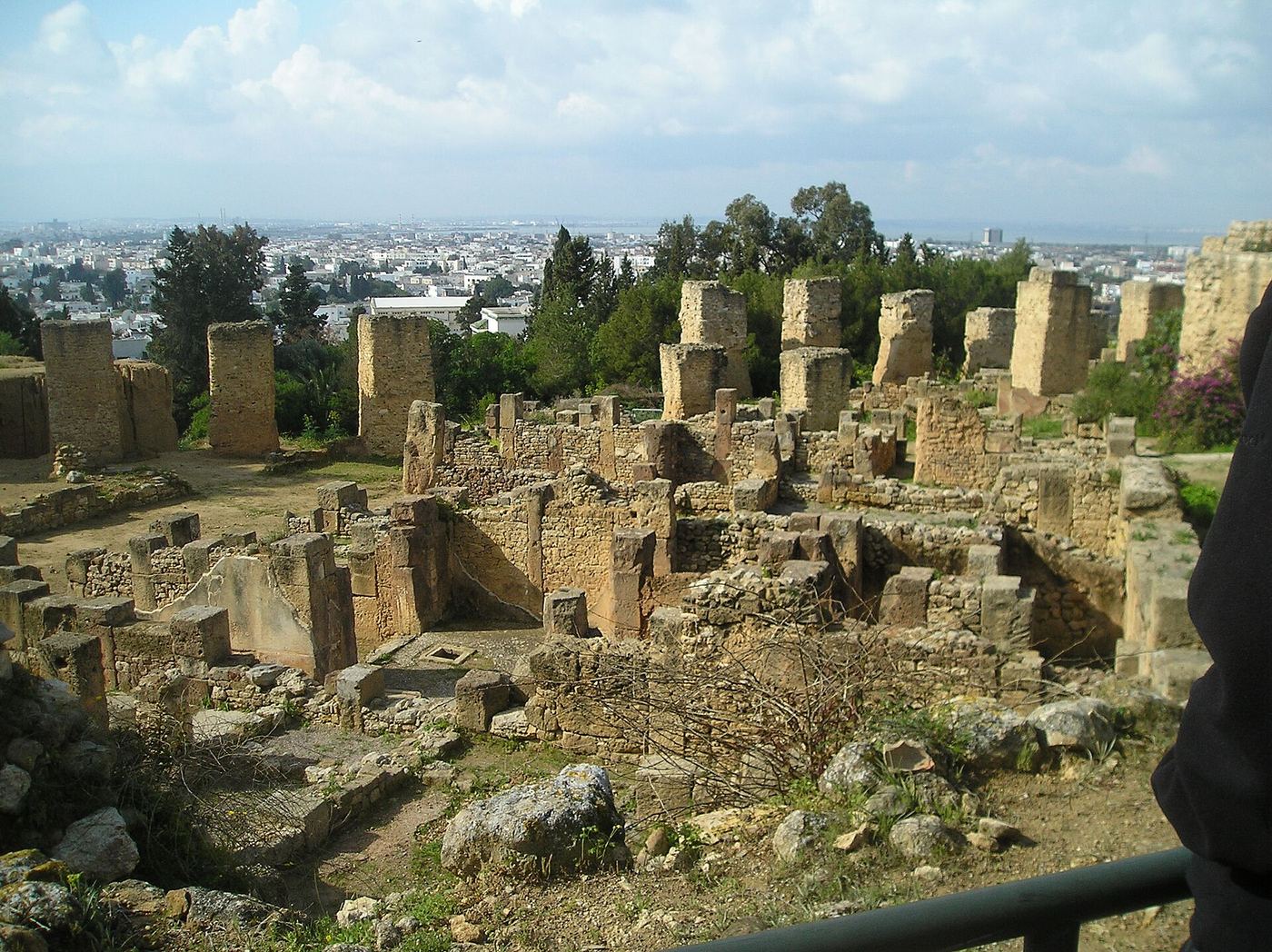
At the top, an aristocracy of Tyrian origin; below it, a population the sources almost always leave in the shadows.
The aristocracy
Descended from the settlers of Tyre, these great families held the economy, politics and cults. First shipowners, they became great landowners, monopolised the magistracies and lived in rich houses on Cape Bon or in the Megara suburb (Bessis).
The priests
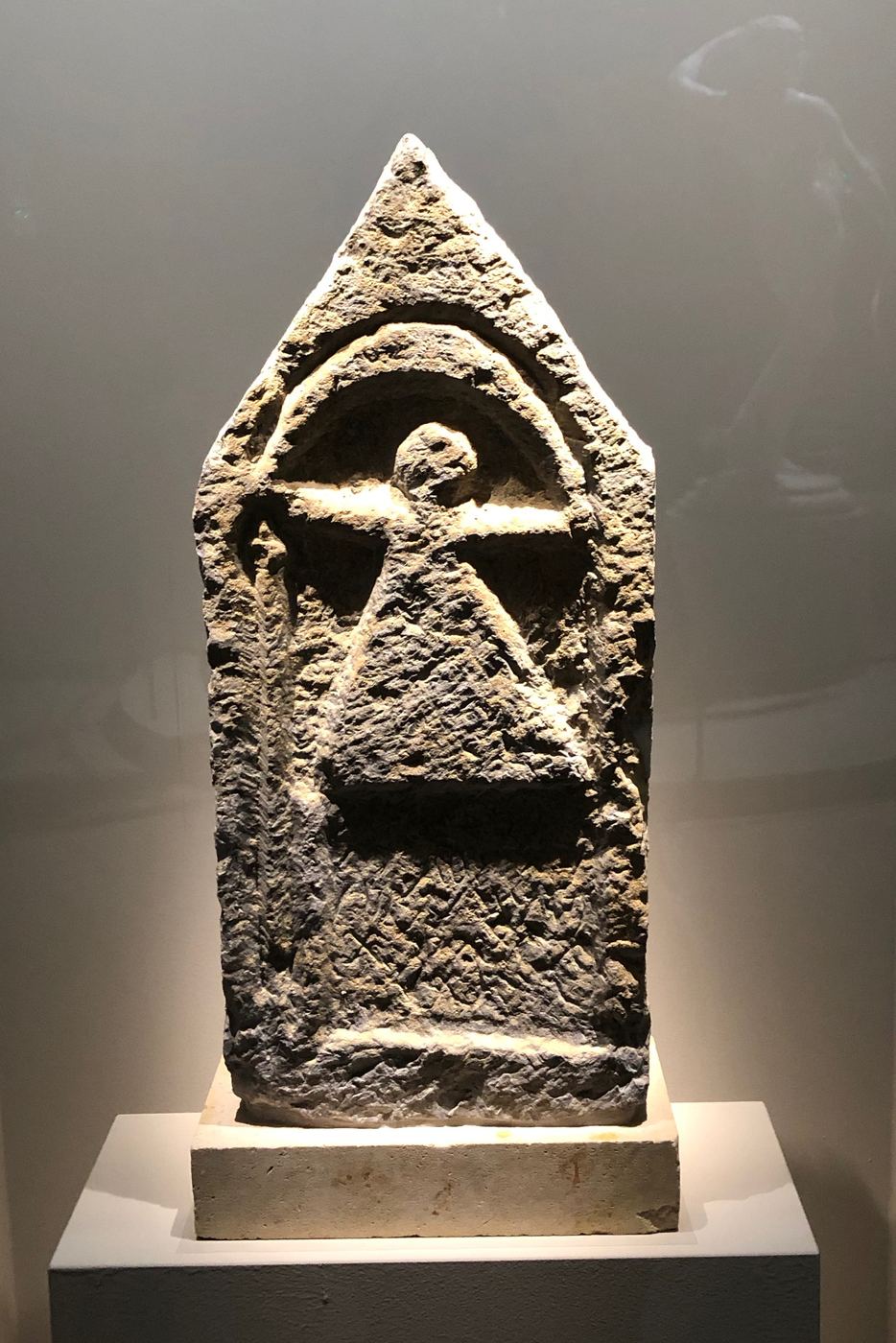
Drawn from the aristocracy, they formed a highly organised body. The temples, centres of intellectual life, kept Phoenician language and culture alive for centuries, even under Roman rule. A tophet stele (3rd c., Bardo Museum) shows a priest in a linen robe, his shaven head under a cap.
The townspeople
Craftsmen and traders in unknown numbers; free men and slaves, the latter owned by individuals or by the state; and foreigners from all over the Mediterranean (Dridi). Ancient texts almost never let them speak.
Women, between autonomy and alliances
Dido, Sophonisba, the wife of Hasdrubal who chose death in 146: a few striking figures, but few sources. Society was patriarchal, yet left women real autonomy: tophet stelae were dedicated by women in their own name, several trades seem to have been open to them, and the priesthood was not closed to them (Dridi).
Marriage remained a political tool. Sophonisba, daughter of the general Hasdrubal son of Gisco, married the Numidian king Syphax to seal an alliance, then Masinissa. Whether polygamy was practised is unknown.
The Libyans: dominated, but indispensable
Native populations are the least known. Early trade turned into domination: during the First Punic War, Carthage took half of the harvest of the countryside (Polybius, I, 72), and revolts followed one another — in 240 the Libyans joined the Mercenary War in large numbers.
Yet the ties were close: Punic nobles married Libyan princesses (Bessis), some tombs combine Phoenician and African rites, and Punic communities were cosmopolitan from the start. In the 2nd century, Masinissa’s Numidian encroachments helped bring about the city’s fall.
Read also
Ancient sources: Aristotle, Polybius, Diodorus, Justin, Livy. Scholarship: M. Sznycer, S. Bessis, H. Dridi, E. Lipinski.