A merchant empire
Carthage was not only a military power: its wealth came from a trading network stretching from the British Isles to West Africa, and from the Atlantic coasts to the Levant.
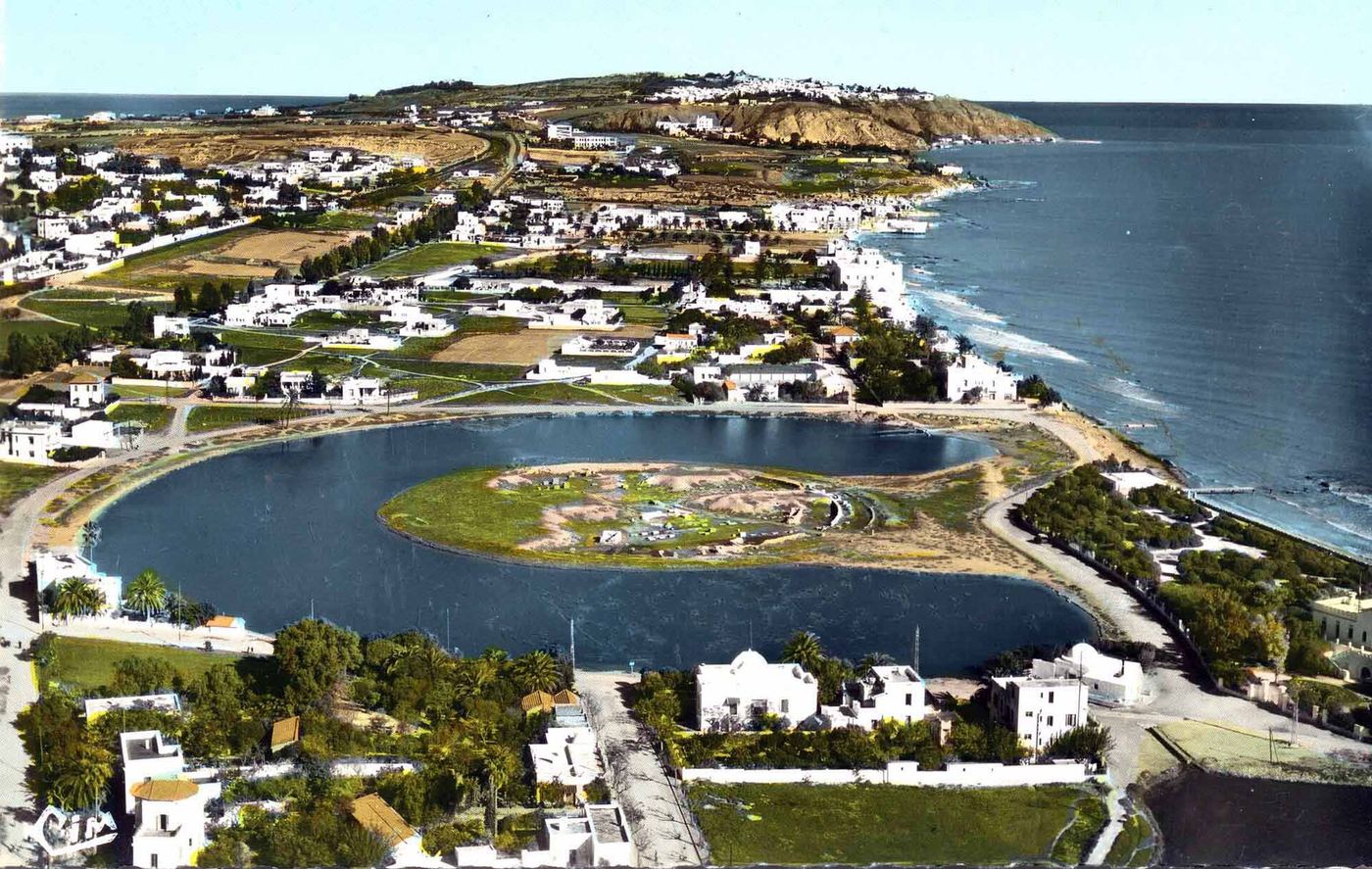
inhabitants according to Strabo — modern historians rather estimate 200,000 to 400,000
pounds of silver (≈ 100 kg) a day: the Baebelo shaft, for Hannibal (Pliny)
ship sheds for warships in the circular harbour (Appian)
books in Mago’s treatise on agriculture
Pillars of the economy
Trade, land, mines and workshops: the four sources of Carthaginian prosperity.
Maritime trade
The heart of Carthaginian power: the routes of the western Mediterranean.
- Control of the Atlantic tin route
- Control of straits and strategic passages
- Trading posts from Morocco to Libya, in Sicily, Sardinia, the Balearics and Spain
- Exchanges with Greeks, Etruscans and Phoenician cities
Agriculture
The fertile lands of present-day Tunisia made Carthage a granary of the Mediterranean.
- Cereals, olives, vines, fruit trees
- Techniques described by Mago
- Large estates worked by enslaved labour
- Exports of wine, oil and grain
Mines
The mines of Spain supplied the precious metals Carthage needed.
- Silver from Cartagena and the Sierra Morena
- Gold and copper from the Iberian Peninsula
- Tin from the "Cassiterides" in the north-west
- Funding the war against Rome
Crafts
Products renowned throughout the Mediterranean world.
- Purple dye from the murex
- Series-built ships
- Glass, pottery, goldwork
- Textiles and carpets
The trade routes
| Heading | Destination | Exports | Imports |
|---|---|---|---|
| North | Brittany, the British Isles & Gaul | Pottery, wine, textiles, jewellery | Tin, amber, furs |
| East | Phoenicia & the East | Silver, wheat, olive oil | Incense, spices, ivory |
| South | West Africa & the Sahara | Salt, cloth, pottery, glass beads | Gold, ivory, exotic animals |
| West | Spain & the Atlantic | Manufactured goods, wine | Silver, copper, mercenaries, horses |
Perishable goods (cloth, timber, food) left few traces: these lists combine ancient texts and archaeology.
The voyages
Elissa from Tyre to Carthage, Hanno along Africa, Himilco to the North Atlantic: follow the routes, then the territories.
Approximate borders based on historical syntheses (spheres of influence, not modern borders). Base map: Natural Earth. Ancient sites: customary locations.
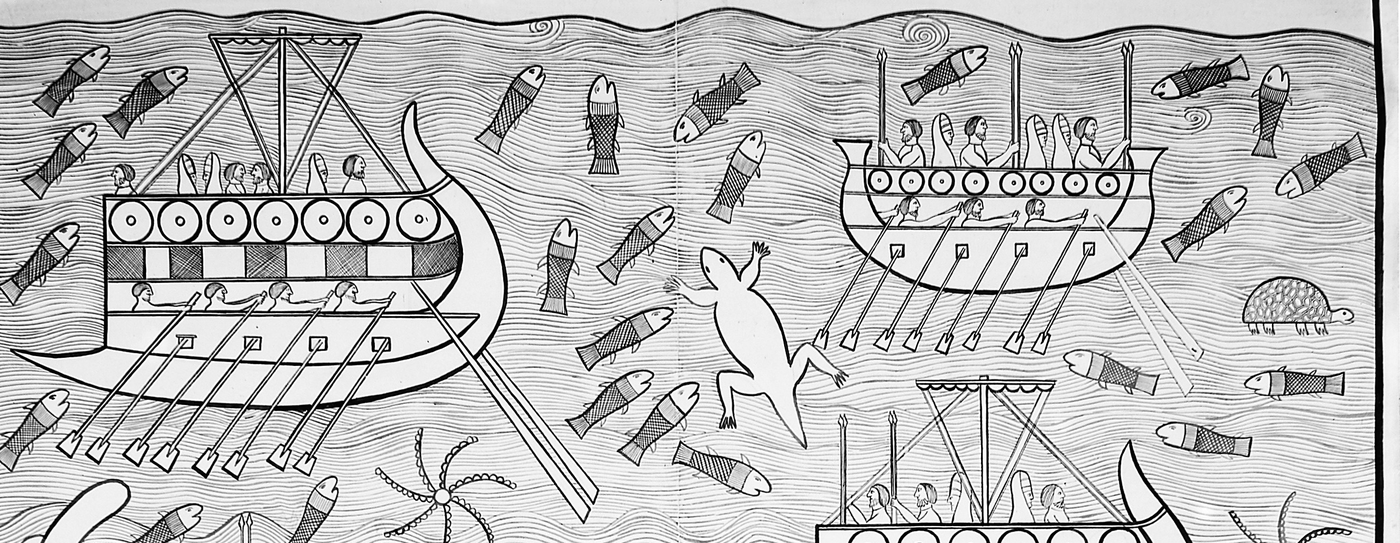
The voyage of Hanno
Sixty ships along the Atlantic coast of Africa to found trading posts, according to the Periplus attributed to him.
Read →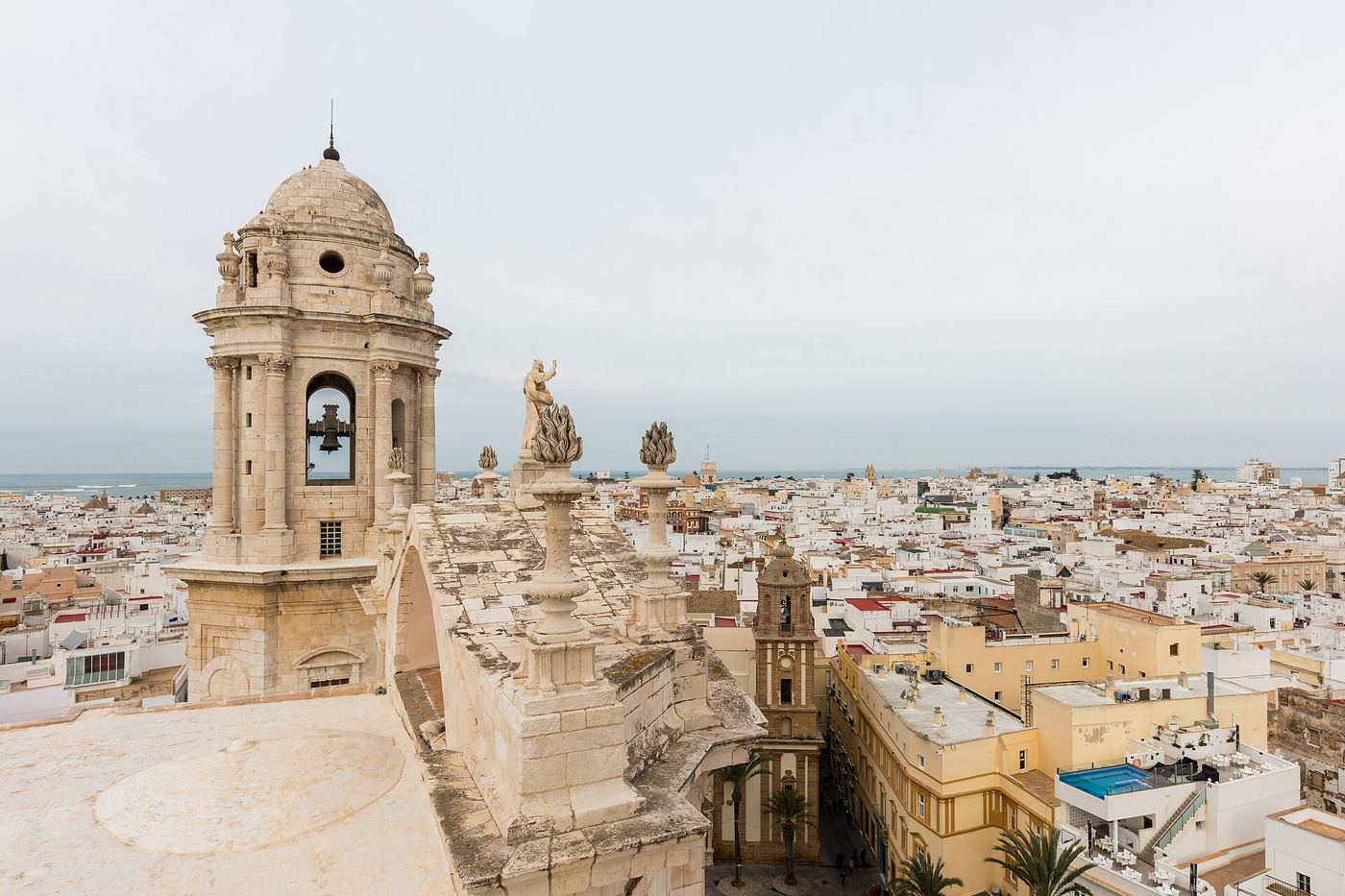
Gadir, gateway to the Atlantic
A Phoenician city allied to Carthage: from here Himilco sailed north, on the tin route.
The silent trade
Beyond the Pillars of Hercules, the Carthaginians laid their goods on the beach and withdrew; the locals set gold beside them. They went back and forth until both sides agreed, without a word — and without cheating, says Herodotus.
Source: Herodotus, Histories, IV, 196
Purple and the workshops
Inherited from Tyre, purple dye was made from the murex, a sea snail of which thousands were needed for a few grams of colour. At Kerkouane, on Cape Bon, heaps of crushed shells mark the workshops; the island of Djerba remained famous for it in Roman times.
Carthage’s workshops also produced pottery, glass-paste beads and masks, jewellery, weapons and cloth. The shipyards built in series: each part bore an assembly letter.
Two harbours in one
Buying, selling, exploring
Like Tyre before it, Carthage lived by trading metals and valuable goods.
“The Punic people invented trade.”
Heirs of the Phoenicians, the Carthaginians were known in antiquity as outstanding sailors and merchants.
Pliny, Natural History, VII — cited by F. Decret (1977)
Stages of trade
What came into Carthage
Raw materials first — silver, copper, tin from Iberia and the Cassiterides — then objects: Greek and Etruscan vases, which fill whole cases at the Bardo Museum, and Egyptian amulets.
What Carthage sold
Glass, a Phoenician speciality, jewellery, pottery, purple-dyed cloth, ivory, gold or silver inlays. The textiles, though famous, have almost vanished: only heaps of murex shells and loom weights still bear witness to them.
Caravans and exploration
Trade also followed caravan tracks, more uncertain and more dangerous, which explain settlements in Libya and southern Tunisia. Voyages of exploration pursued the same goals: ores — tin, gold from the Maghreb — and new markets.
The bountiful sea
Fishing, salting and fish sauces: an industry Rome would take over on a large scale.
Garum
A sauce made from oily fish, used in cooking and as a remedy. It was the Phoenicio-Punic world that spread its use around the Mediterranean; it was made on a large scale in installations found at several sites (Krings and Lipinski).
Salted fish
Salted fish, packed in amphorae, travelled with the other sea products throughout the Mediterranean basin.
Tuna
The coins of Gades, today’s Cádiz, bear tuna: a sign of how much this fishery weighed in the Phoenician city’s economy.
The murex
Gathered for purple dye, it piles up in heaps of crushed shells near the dye works.
Garum production and trade continued on a large scale under Rome: the best-preserved salting factories, such as the one at Baelo Claudia near Cádiz, date from the Roman period.
Coinage and finance
Carthage minted coins late, but on a large scale, above all to pay its armies.
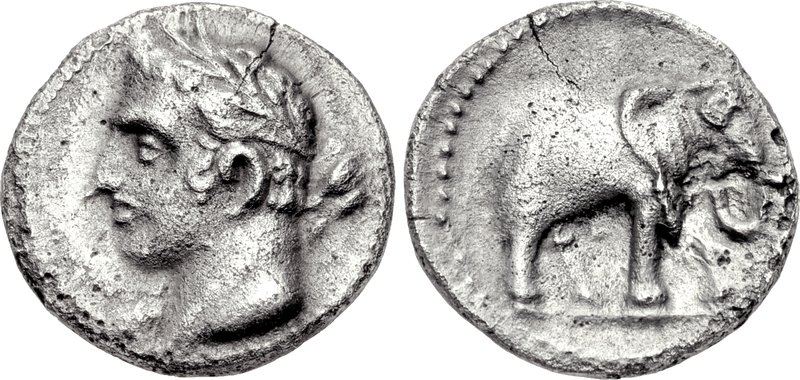
Quarter shekel struck in Spain by the Barcids, 3rd c. BC.
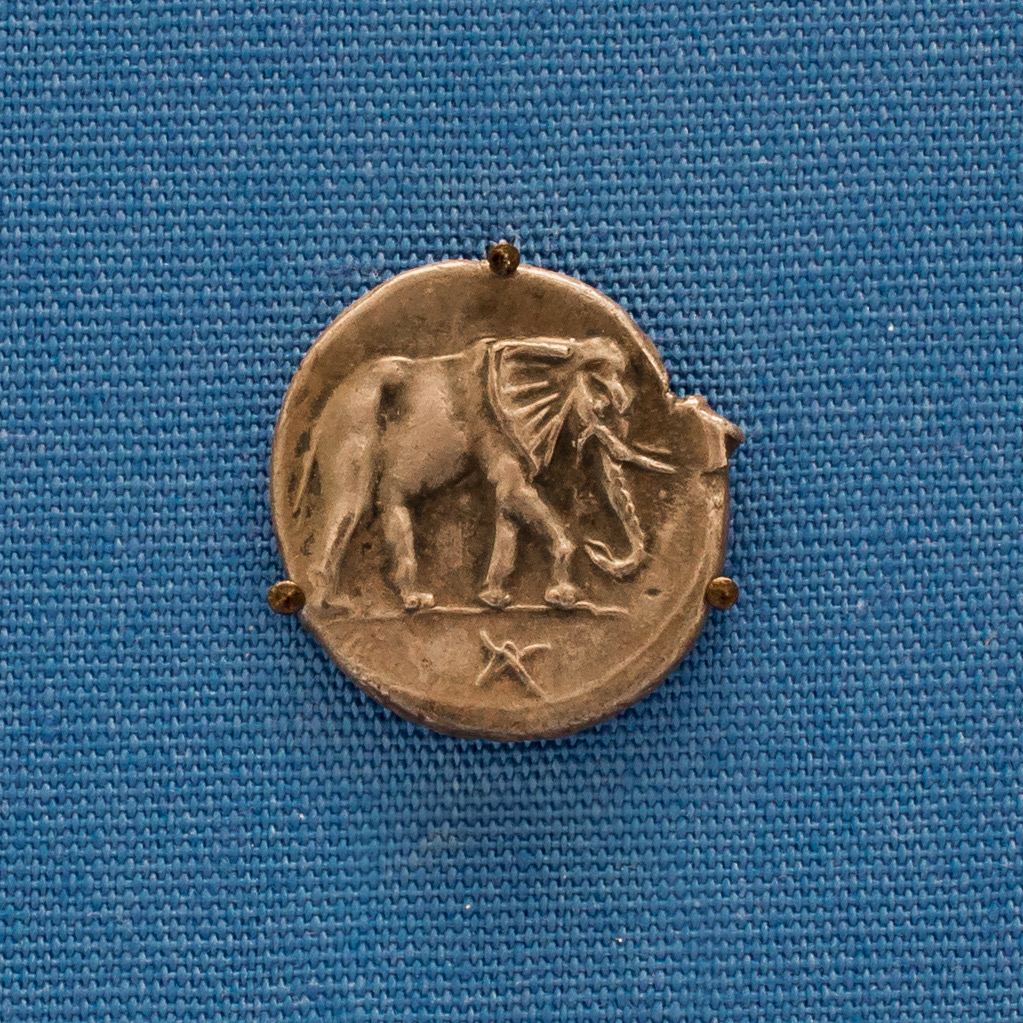
Silver shekel: head of Melqart and war elephant (British Museum).
Money to pay for war
The tax system
Carthage lived on customs duties on trade, tribute from subject territories — Libyan farmers had to hand over up to half their harvests during the First Punic War (Polybius) —, the mines of Spain and agricultural taxes. Enough to fund mercenary armies without mobilising all its citizens.
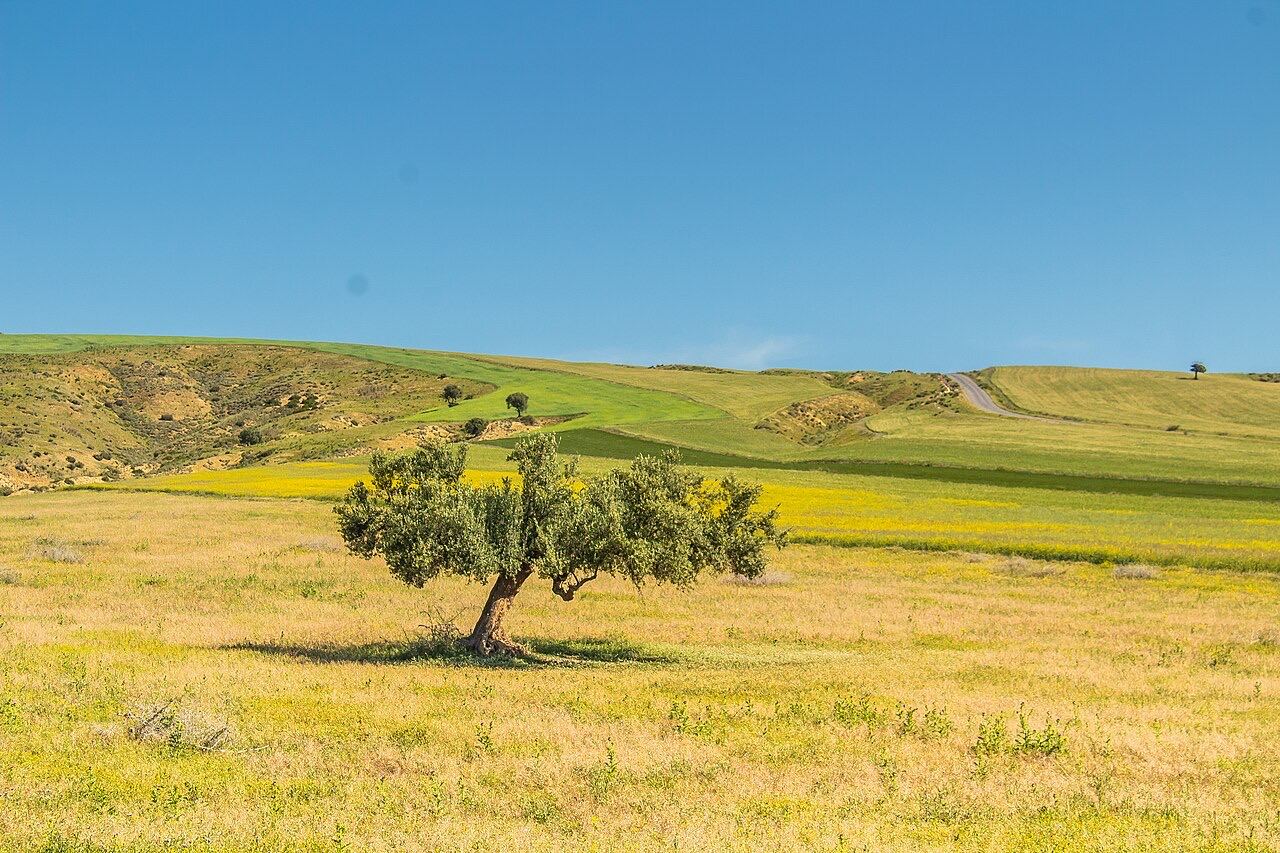
Scientific agriculture
The Carthaginian agronomist Mago wrote a treatise on agriculture in 28 books. After the fall of Carthage the Roman Senate ordered it translated into Latin — an honour granted to no other Punic book.
Mago’s treatise
28 books on soils, vines, olives, livestock and estate management, quoted by Varro, Columella and Pliny.
Olive oil
Carthage produced and exported its oil on a large scale, rivalling Greek production.
Wine
Carthaginian wines were renowned, especially passum, a raisin wine whose recipe by Mago Columella preserved.
Water
Cisterns, wells and water management to farm a semi-arid land.
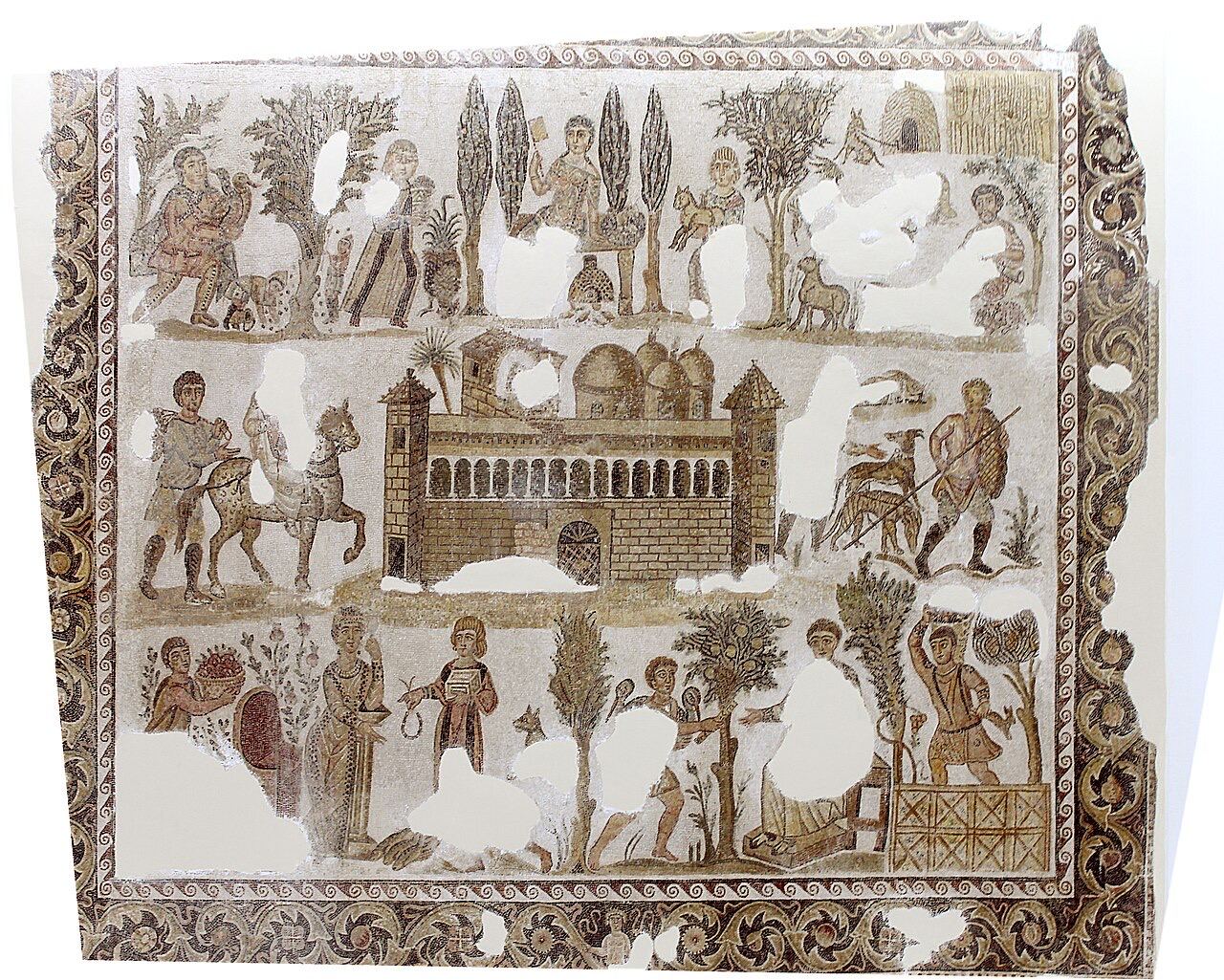
The African estate
This Roman-era mosaic shows a great estate near Carthage through the seasons: olives, grapes, game. The large estates inherited from the Punic period made Africa the granary of Rome.
Carthaginian agriculture
Carthage versus Rome
| Aspect | Carthage | Rome |
|---|---|---|
| Economic base | Maritime trade and agriculture | Military conquest and tribute |
| Army | Mercenaries and allies, Carthaginian officers | Citizen-soldiers (legionaries) |
| Navy | Long-standing naval supremacy | Fleet built during the first war to compete |
| Government | Merchant oligarchy, two elected suffetes | Aristocratic republic, two consuls |
| Coinage | Gold, silver, bronze, electrum | Bronze, then the silver denarius (c. 211) |
| Wealth | From trade | From conquest |