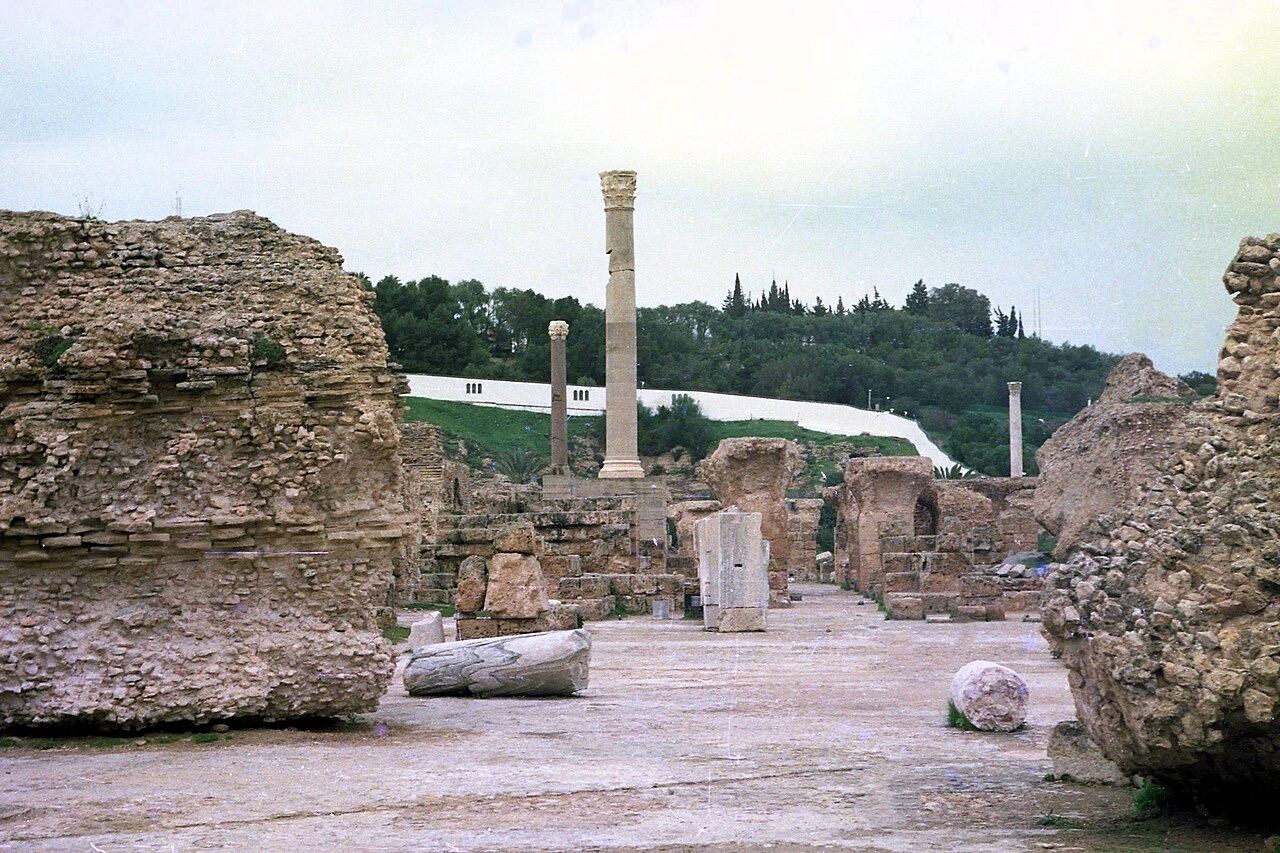
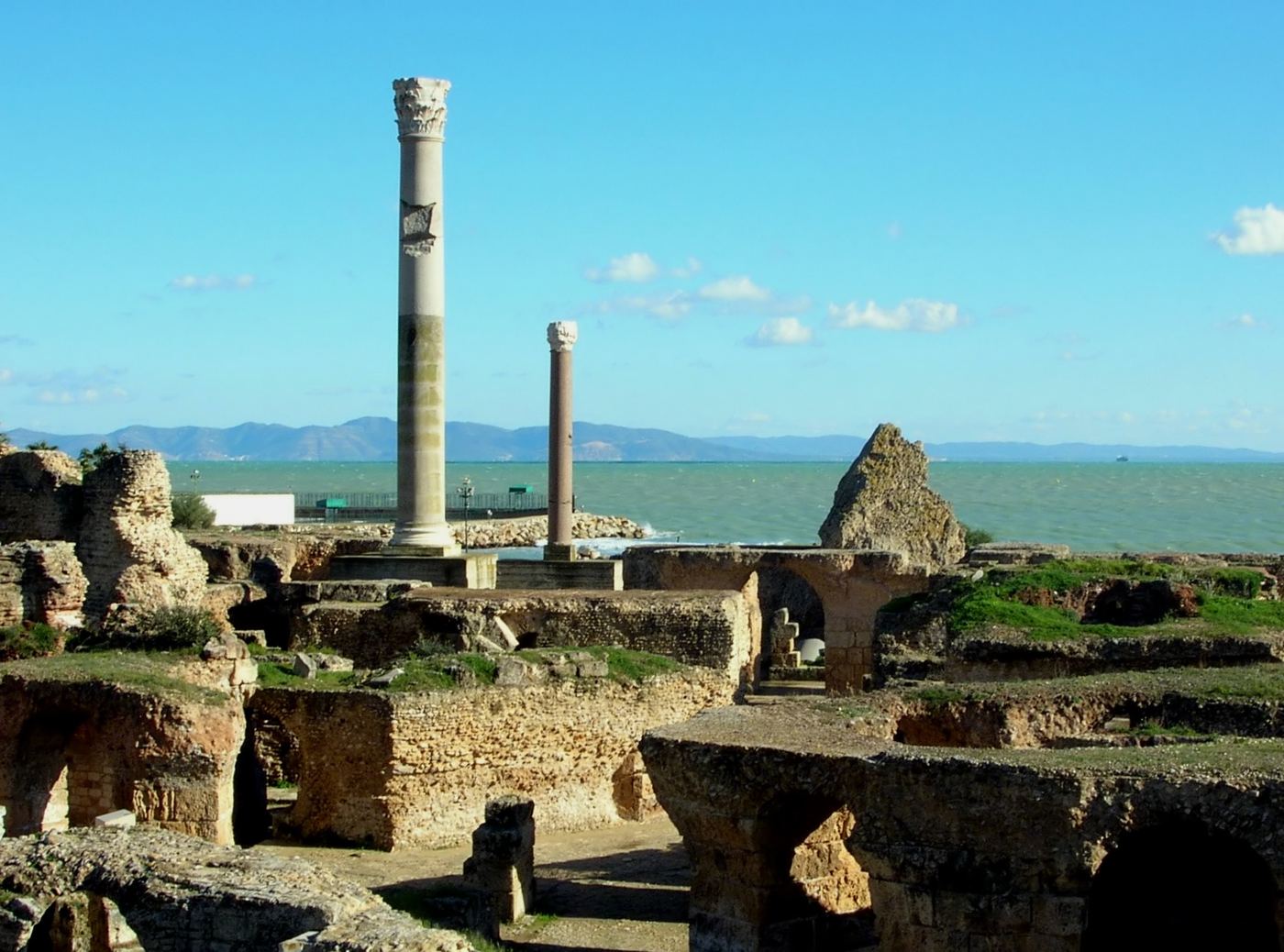
The capture of Carthage
What Rome did, and what it claimed to have done: the Third Punic War, from the disarming of the city to the burning of Byrsa.
of siege, from 149 to the spring of 146 BC
suits of armour and 2,000 catapults handed to Rome before the war
and six nights of street fighting up to Byrsa
survivors who came out of Byrsa, sold into slavery
« Carthago delenda est »
Back from an embassy to Africa, struck by Carthage's renewed prosperity, Cato ends every speech in the Senate with this phrase. According to Plutarch, he showed fresh figs picked in Carthage three days earlier: the enemy was within sailing distance. Scipio Nasica, by contrast, argued for sparing the city.
A real destruction, not an erasure
Rome burnt and dismantled Carthage, and killed or enslaved its people. But the tale of a city "razed" and sterilised with salt is legend: excavations find the Punic city beneath the Roman one, and Punic culture survived for centuries.
Masinissa, the other architect of the fall
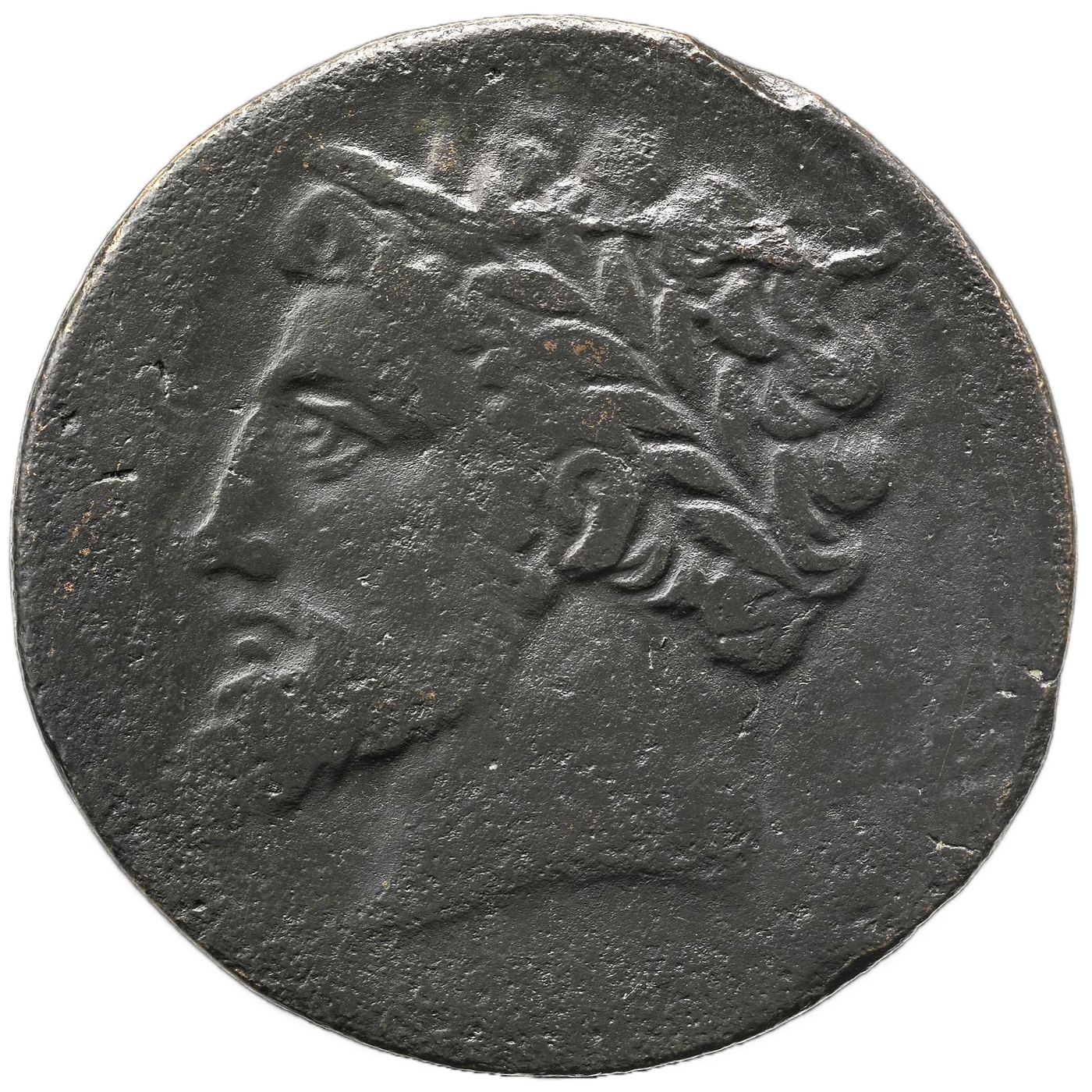
Rome struck the final blow, but it was the Numidian king Masinissa who, for fifty years, ate away at Carthage's territory and handed Rome its pretext.
Rich lands, a coveted city
Masinissa wanted to build a great settled Numidian kingdom, with towns and wheat-growing land. Yet the most fertile plains and the richest trading posts in Africa belonged to Carthage, whose prosperity had survived defeat. He knew that with Rome behind him, every annexation would go unpunished.
Carthage had lost its best defender. As suffete, Hannibal had reformed the state and restored its finances, but his enemies denounced him to Rome. He went into exile in 195 and died in 183, long before the last war.
Rome used Masinissa without wanting to hand him Carthage. Several modern historians think the destruction of the city was also meant to stop an overly powerful Numidian kingdom from taking it: on his death, his kingdom was immediately divided.
What happened
Full timeline →The last days
Polybius, Scipio's friend and adviser, witnessed the fall of the city. Appian drew on his account.
The choice of the flames
Commander of the defence, Hasdrubal finally surrenders, as a suppliant, at the feet of Scipio. From the top of the burning temple, his wife, dressed in her finest clothes, curses him for his cowardice, kills their two sons and throws herself with them into the flames.
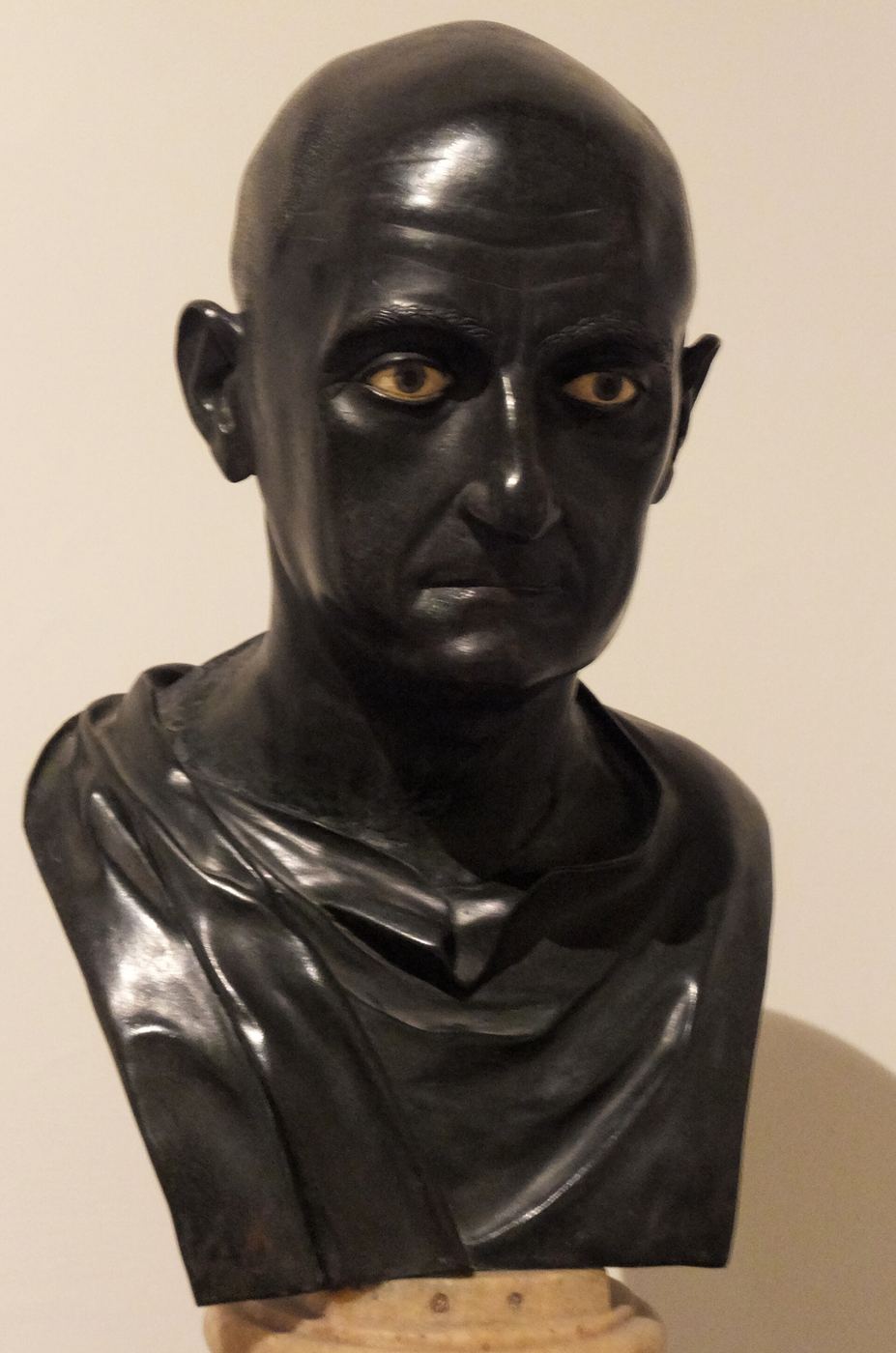
"A day will come when sacred Ilion shall perish, and Priam, and the people of Priam of the good ash spear."
Before the burning city, Scipio Aemilianus weeps and quotes these lines from the Iliad. When Polybius asks him why, he confides his fear that the same fate may one day strike Rome.
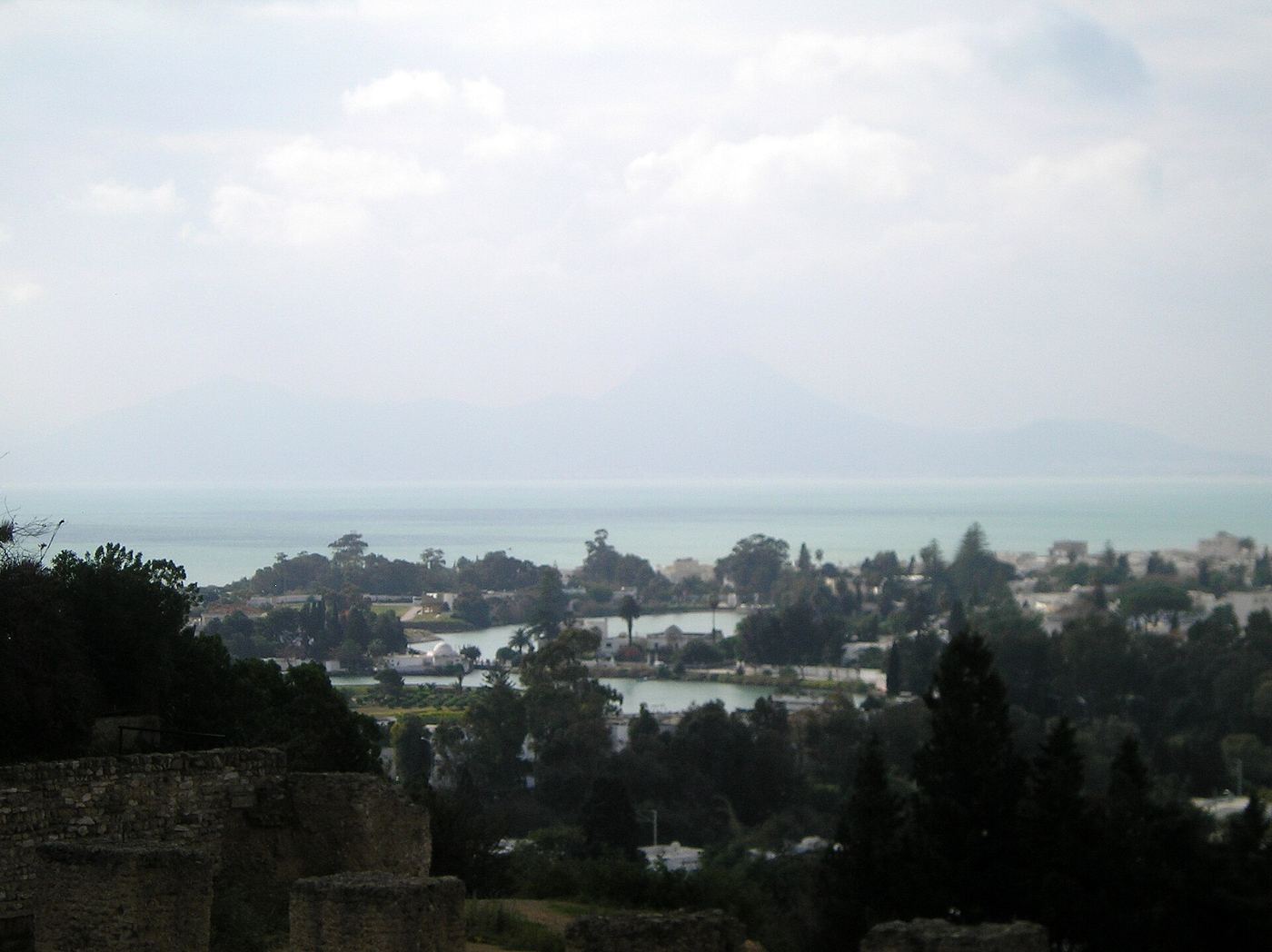
The citadel, from the last stand to the excavations
On the summit of Dido's legendary hill stood the temple of Eshmun, reached by sixty steps. There the last hours of Punic Carthage were played out.
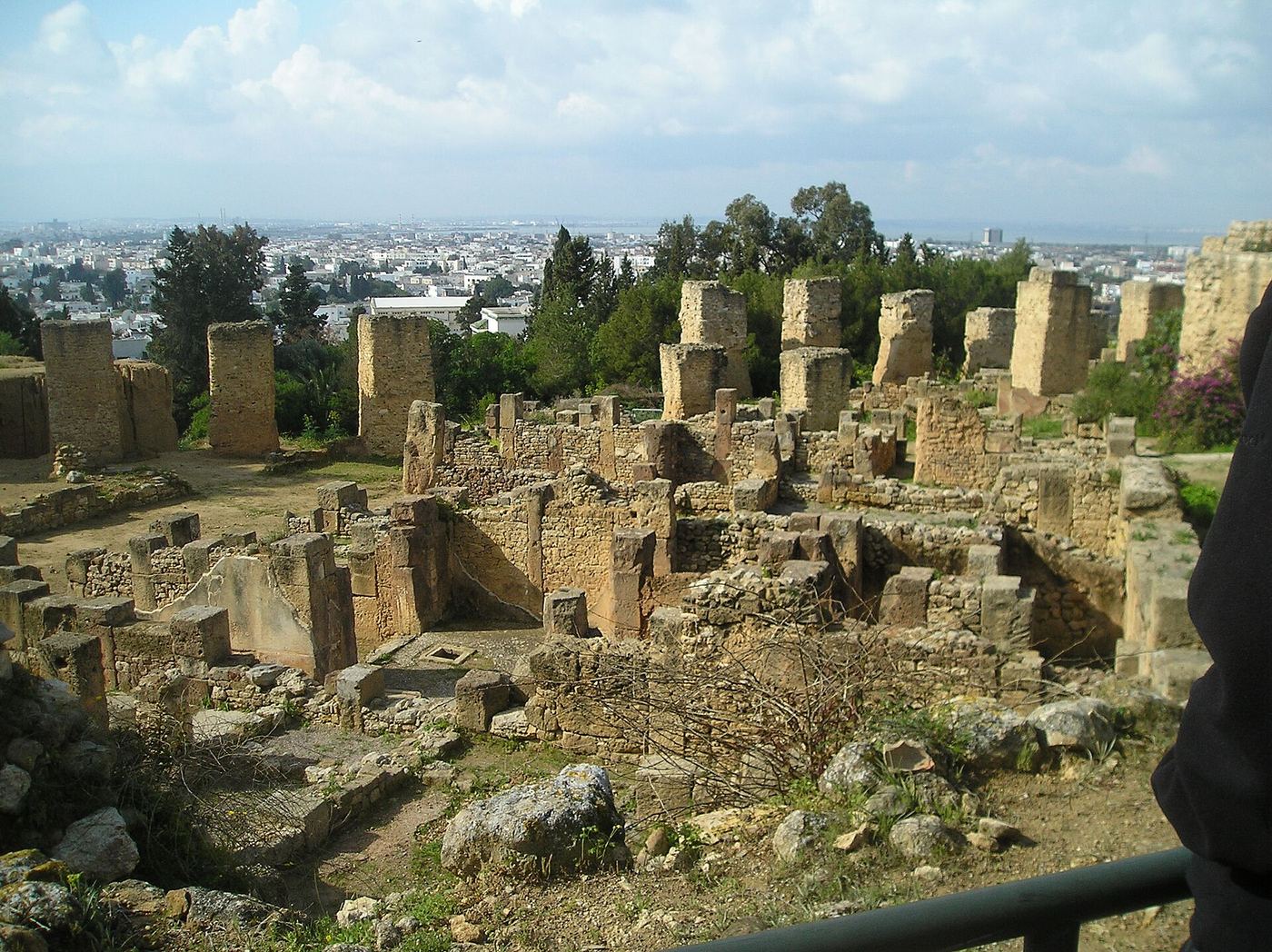
Under Augustus, the Romans levelled the summit to build the forum of the new city. The spoil covered the slopes — and unwittingly protected a 2nd-century Punic residential quarter, streets and cisterns included, uncovered by French archaeologists from the 1970s onwards.
The foundation of Carthage →Roman myth / reality
"Carthage was razed to the ground"
The city was burnt and dismantled, but not erased: Punic houses, streets and cisterns have been found beneath the Roman layers, preserved several metres high.
"Salt was sown to sterilise the soil"
No ancient source — not Polybius, Appian or Livy — mentions it. The story appears in modern writers of the 19th and 20th centuries. Salt was, besides, a precious commodity.
"Carthaginian civilisation vanished"
Punic was still spoken in the 5th century AD. Towns in Roman Africa kept their suffetes, and Punic cults survived under Roman names.
"Carthage was never rebuilt"
After the failure of Gaius Gracchus (122 BC), Caesar decided on the refoundation, carried out under Augustus: Carthage became the capital of Roman Africa and one of the largest cities of the Empire.
Archaeological evidence
What the excavations actually show, notably those of the UNESCO "Save Carthage" campaign (1972–1995).
A refoundation on site
Colonia Iulia Concordia Carthago was built exactly on the Punic site, for its harbours and its position. The curse of 146 did not last a century.
Punic structures preserved
Punic walls, floors and cisterns appear beneath the Roman layers. On Byrsa, a thick burn layer precisely dates the capture of 146.
The salt myth
No ancient author speaks of salt spread over Carthage: the episode is a modern invention, perhaps inspired by biblical or medieval stories.
Cultural continuity
Neo-Punic inscriptions, personal names, cults: Punic culture lived on. Saint Augustine still attests the use of the language around AD 400.
The circular harbour
The plan of the Cothon survived the centuries: the Romans refitted the Punic naval harbour, whose ship sheds have been found by excavation.
A new grid
The Romans laid out a new orthogonal plan and levelled the top of Byrsa — which paradoxically preserved the Punic quarter buried beneath the fill.
Carthage did not disappear
The city of 146 did burn: excavations on Byrsa and in the Punic quarter find the fire layer, collapsed houses, sling bullets and catapult balls. But a civilisation is more than a city. Punic language, cults, institutions and towns lived on for centuries, and Carthage itself was rebuilt on the same site.
The Punic language
Spoken until the 5th century AD, nearly six centuries after the fall of Carthage. Saint Augustine, born in Thagaste, bears witness to it and quotes Punic words.
Neo-Punic inscriptions
Punic was still carved, in a script called Neo-Punic, until the 1st and 2nd centuries, then written in Latin letters until the 4th century.
The language of kings
The Numidian kings, Masinissa included, governed and minted coins in Punic. At Dougga, official inscriptions are bilingual, Libyan and Punic.
Lasting institutions
Under Rome, African towns such as Leptis Magna or Mactar still elected suffetes, the magistrates of the Carthaginian tradition, into the 1st and 2nd centuries.
The gods change their names
Baal Hammon is worshipped as African Saturn and Tanit as Caelestis, at the same sanctuaries and with stelae inherited from the Punic model.
Punic towns remain
Utica, Hadrumetum (Sousse), Leptis, Kerkouane… several Punic cities came through the war; some, Rome's allies in 149, kept their status as free cities.
Carthage reborn
Decided by Caesar, the colony was founded under Augustus on the same site. It became the capital of Africa Proconsularis and one of the largest cities of the Empire.
A name and a heritage
The name Africa, then Ifriqiya, comes from the territory of Carthage. The archaeological site is a UNESCO World Heritage Site.
Carthage today
Animated map →