Carthage lives in Tunisia
The city of Elissa and Hannibal gave Tunisia its first great state, and gave the world the very name of Africa.
One name, four languages
Phoenician-Punic: "New City". The original name, around 814 BC.
The Greek name, used by Polybius and the Hellenistic authors.
The Latin, source of Carthage, Carthagena and Cartagena.
Arabic: today a municipality in the northern suburbs of Tunis.
Africa was born in Tunisia
The origin of the word Afri is still debated: suggestions include the Berber ifri ("cave"), the Phoenician ʿafar ("dust") or the name of a tribe.
Africa and its name →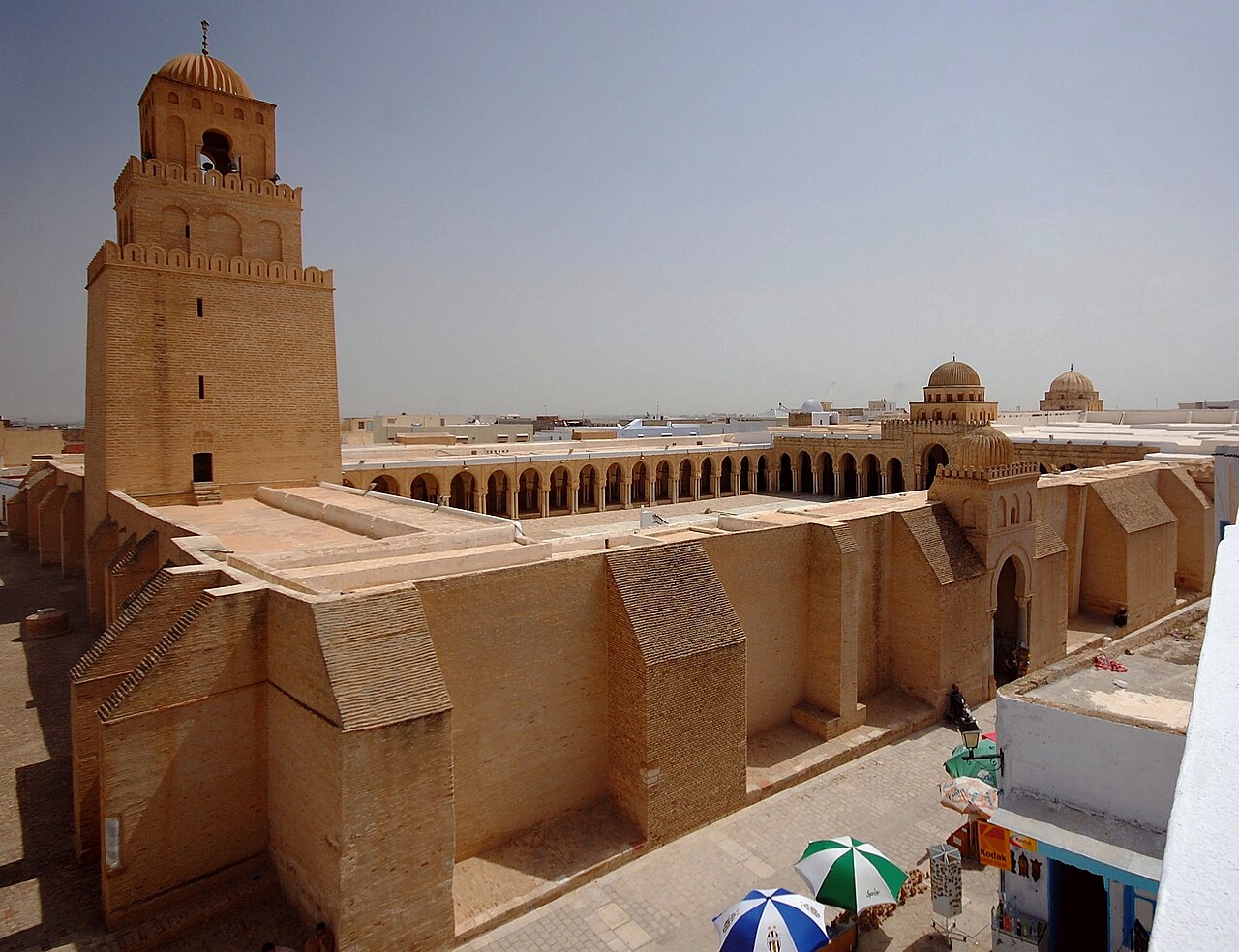
The name Carthage today
Twenty-two centuries after 146 BC, the name remains the symbol of Tunisia.
Seat of the presidency of the Tunisian Republic.
The country's main gateway.
The oldest film festival in Africa and the Arab world.
Every summer, in the ancient theatre of Carthage.
The nickname of the national football team.
One of the country's major public universities.
The great meeting place of Arab and African theatre.
Tunisian sites on the UNESCO list, including Carthage, Kerkouane, Dougga and Kairouan.
A Tunisian continuity
Carthage, a town of today
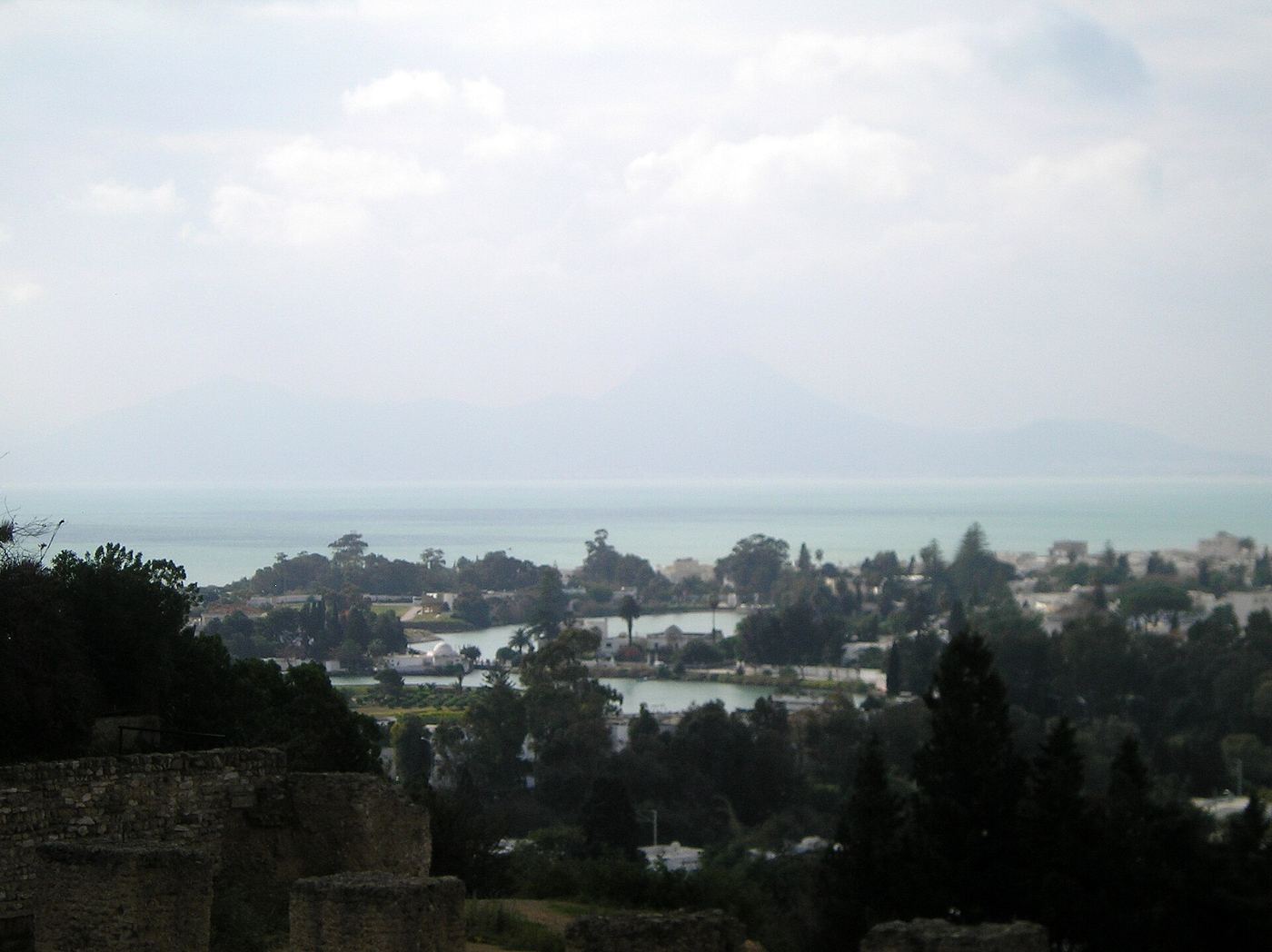
A residential municipality of Greater Tunis, built in the middle of the archaeological site.
inhabitants in the 2014 census (National Institute of Statistics).
the municipality is created by a beylical decree of 15 June.
districts: Carthage, Carthage-Mohamed Ali (created in 1983) and El Yasmina.
from central Tunis, with about 3 km of coast on the gulf, between Le Kram to the south and Sidi Bou Saïd to the north.
The neighbourhoods
From colonial villa to presidential palace
The first European-style villas appear around 1906. The largest belongs to the secretary-general of the Tunisian government, the French official who actually ran the administration of the protectorate.
In 1960 Bourguiba turns it into the presidential palace, on the shore, a stone’s throw from the Antonine Baths. Carthage is not the capital, but it has become an “emblematic seat of power” (Sophie Bessis), while Tunis keeps the administration and the economy.
Among the town’s mayors: Chedli Klibi (1963–1990) and Fouad Mebazaa (1995–1998).
A town of institutions
National Museum (in the former White Fathers’ buildings), the Acropolium and its Jazz à Carthage festival (since 2005), the Tunisian Academy Beit al-Hikma in the Zarrouk palace (since 1983), IHEC Carthage, the Malik ibn Anas Mosque (2003, 55 m minaret, room for over 1,000 worshippers).
Six TGM stations
The TGM train crosses the town, linking it to La Goulette and Tunis on one side and to Sidi Bou Saïd and La Marsa on the other: Salammbô, Byrsa, Dermech, Hannibal, Présidence and Amilcar stations. Transtu buses also run to Ariana and Tunis.
Villas, volleyball and trail running
A mainly residential town, sought after by diplomats and senior officials, it earns little from tourism despite its ruins: few hotels, no large beach. In sport: Union sportive de Carthage, known for volleyball, Club féminin de Carthage and, since 2015, the Run In Carthage urban trail, starting from the Roman theatre.
Four sister cities
Peace signed with Rome
The mayors of Rome and Carthage, Ugo Vetere and Chedli Klibi, sign a symbolic treaty officially ending the Third Punic War, more than 2,100 years after 146 BC.