The Punic Wars
Three wars in a hundred and eighteen years: the duel between Carthage and Rome for the Mediterranean. The word comes from the Latin punicus, "Phoenician" — Rome’s name for the Carthaginians.
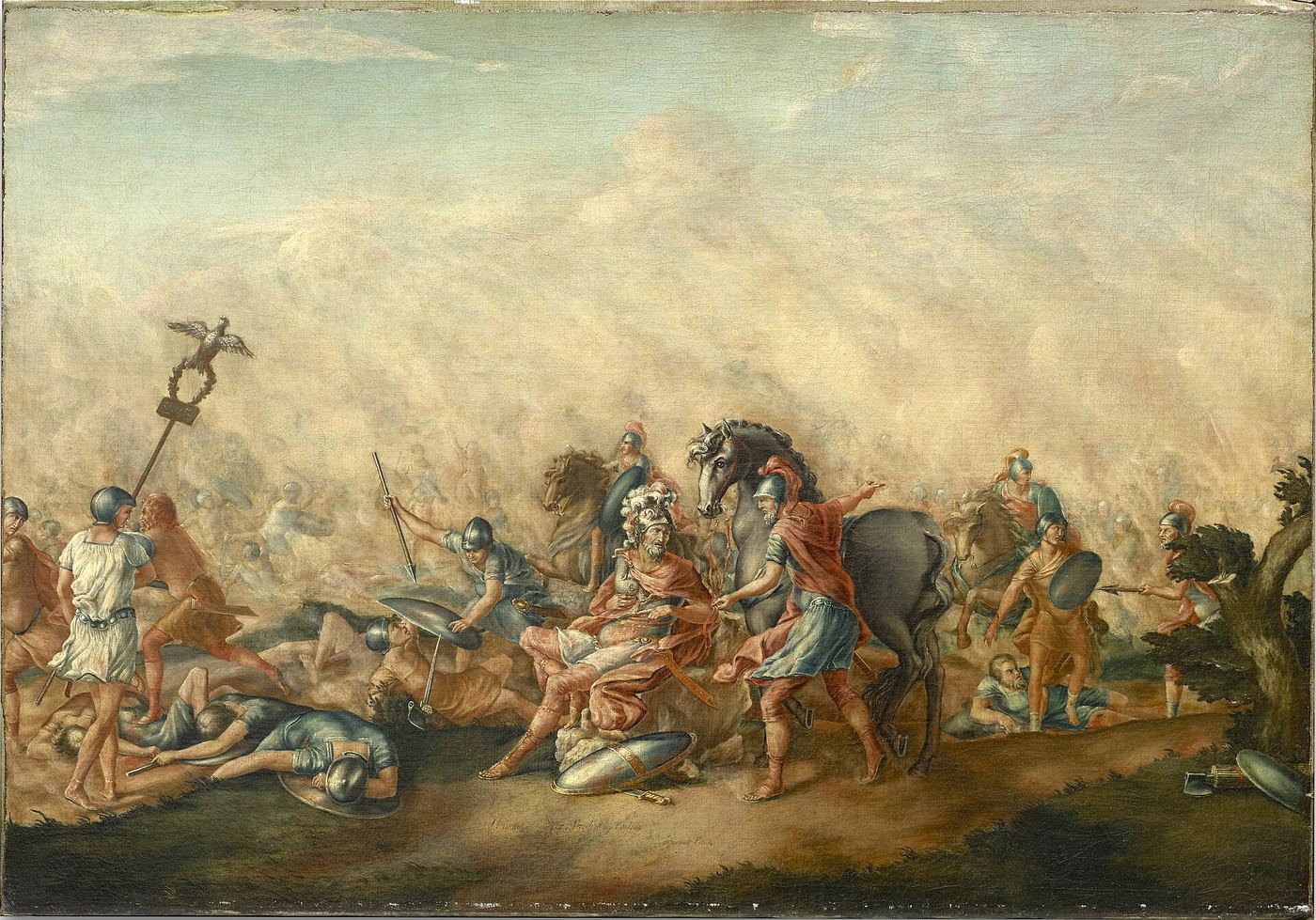
wars between Carthage and Rome
years from the start of the first (264) to the fall of Carthage (146)
years of open war in total (23 + 17 + 3)
talents of silver imposed on Carthage in 201, payable over 50 years
Before Rome: the Greeks of Sicily
For more than two centuries Carthage's enemy was not Rome but the Greek cities, above all in Sicily. With Rome, relations were long governed by treaties.
Two centuries of struggle for Sicily
The treaties with Rome
These treaties guaranteed Carthage a monopoly of trade in North Africa and Rome the security of Latium. Their ever closer rhythm is often read as a sign of rising tension.
Agathocles in Africa
In 310 Hamilcar, son of Gisco, holds almost all of Sicily and besieges Syracuse. Agathocles breaks the blockade, lands on Cape Bon and burns his ships to deprive his soldiers of any hope of retreat (Diodorus, XX).
For the first time an enemy army ravages Carthage's African territory, and several of its Libyan subjects defect. Carthage has to recall its troops from Sicily. The war lasts three years and ends with the flight of Agathocles, who abandons his army (307).
Pyrrhus in Sicily
After his costly victories over Rome in Italy, the king of Epirus crosses to Sicily at the call of the Greeks. He takes Eryx and nearly all the Punic west, but is stopped at Lilybaeum, which his fleet cannot blockade.
He leaves in 276, predicting, according to Plutarch, that he was leaving Sicily as a battlefield for the Romans and Carthaginians. Twelve years later the First Punic War broke out.
Three wars
A war for Sicily, a war for the Mediterranean, a war to destroy Carthage.
First Punic War
The struggle for Sicily
Second Punic War
Hannibal’s war
Third Punic War
The siege of Carthage
The three wars compared
| Aspect | 1st war | 2nd war | 3rd war |
|---|---|---|---|
| Duration | 23 years | 17 years | 3 years |
| Stake | Sicily | Spain, Italy, mastery of the Mediterranean | The survival of Carthage |
| Theatres | Sicily, the seas, Africa (Regulus’ expedition) | Spain, Italy, Sicily, Africa | Carthage and its surroundings |
| Carthaginian leaders | Hanno, Adherbal, Xanthippus, Hamilcar Barca | Hannibal, Hasdrubal and Mago Barca | Hasdrubal the Boetharch |
| Roman leaders | Duilius, Regulus, Lutatius Catulus | Fabius Maximus, Marcellus, Scipio Africanus | Scipio Aemilianus |
| Allies | Rome: the Mamertines, then Hiero of Syracuse (from 263) | Carthage: Gauls, Capua, Syracuse, Philip V; Rome: Italian allies, Masinissa (from 206) | Rome: Utica and the Numidians; Carthage almost alone |
| Outcome | Carthage evacuates Sicily | Carthage loses Spain, its fleet and its elephants | Carthage taken; Roman province of Africa |
| Treaty | Peace of Lutatius: 3,200 talents over 10 years (+1,200 and Sardinia in 237) | 10,000 talents over 50 years, 10 triremes | None: the city is destroyed |
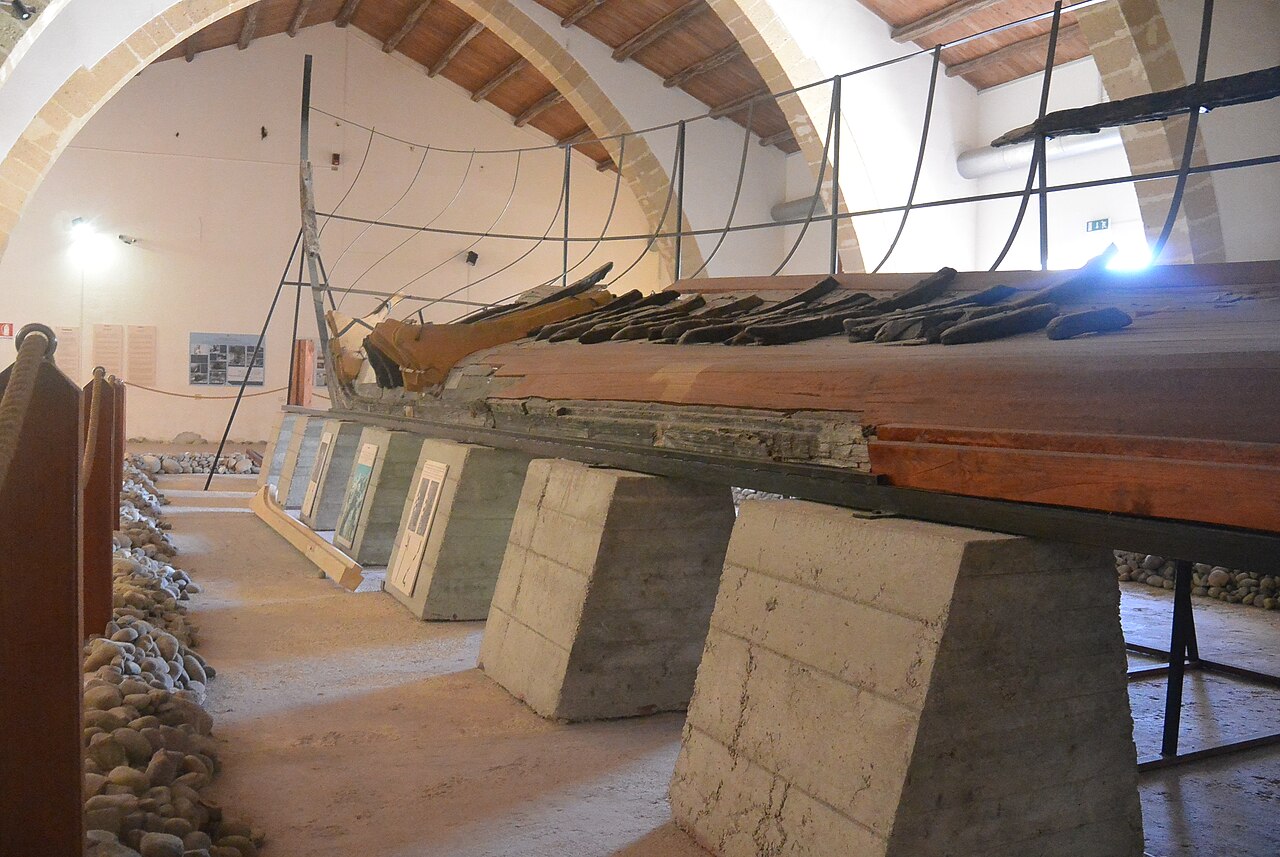
First Punic War
In 264 the Mamertines, mercenaries who held Messana, called on Rome against Syracuse and Carthage. Rome crossed the strait: the first time its legions left Italy. Carthage then dominated western Sicily and the sea.
A land power, Rome built a fleet by copying a stranded Carthaginian ship, and invented the corvus, a boarding bridge that turned sea battle into infantry combat. After 23 years of war on land and sea, Carthage was defeated at the Aegates Islands and had to evacuate Sicily.
years of war
warships lost by Rome (Polybius); about 500 by Carthage
talents owed by Carthage at the peace
From Messana to the Aegates
The Mercenary War
Ruined by the war, Carthage could not pay the 20,000 or so mercenaries brought back from Sicily. They rose under Spendius, Mathos and Autaritus; the Libyan towns, crushed by taxes, joined them, then Utica and Hippo. Carthage itself was besieged.
Hamilcar Barca trapped them in the pass known as "the Saw" (238), then crushed Mathos. Polybius called it the "truceless" war. Flaubert made it the setting of Salammbô (1862).
In 238–237 Rome seized Sardinia, then Corsica, and threatened an exhausted Carthage with war, demanding 1,200 more talents. For Polybius this injustice was one of the causes of the second war.
Second Punic War
The greatest of the three wars. For sixteen years Hannibal fought in Italy without losing a pitched battle there.
After losing Sicily, the Barcids built a new power in Spain, rich in silver mines. In 219 Hannibal took Saguntum; Rome declared war. He crossed the Pyrenees and the Alps and carried the war into Italy.
Rome eventually avoided battle (the strategy of Fabius "the Delayer") and struck elsewhere: in Spain, then in Africa. Scipio landed in 204; Hannibal, recalled, was beaten at Zama in 202. Carthage survived, but disarmed.
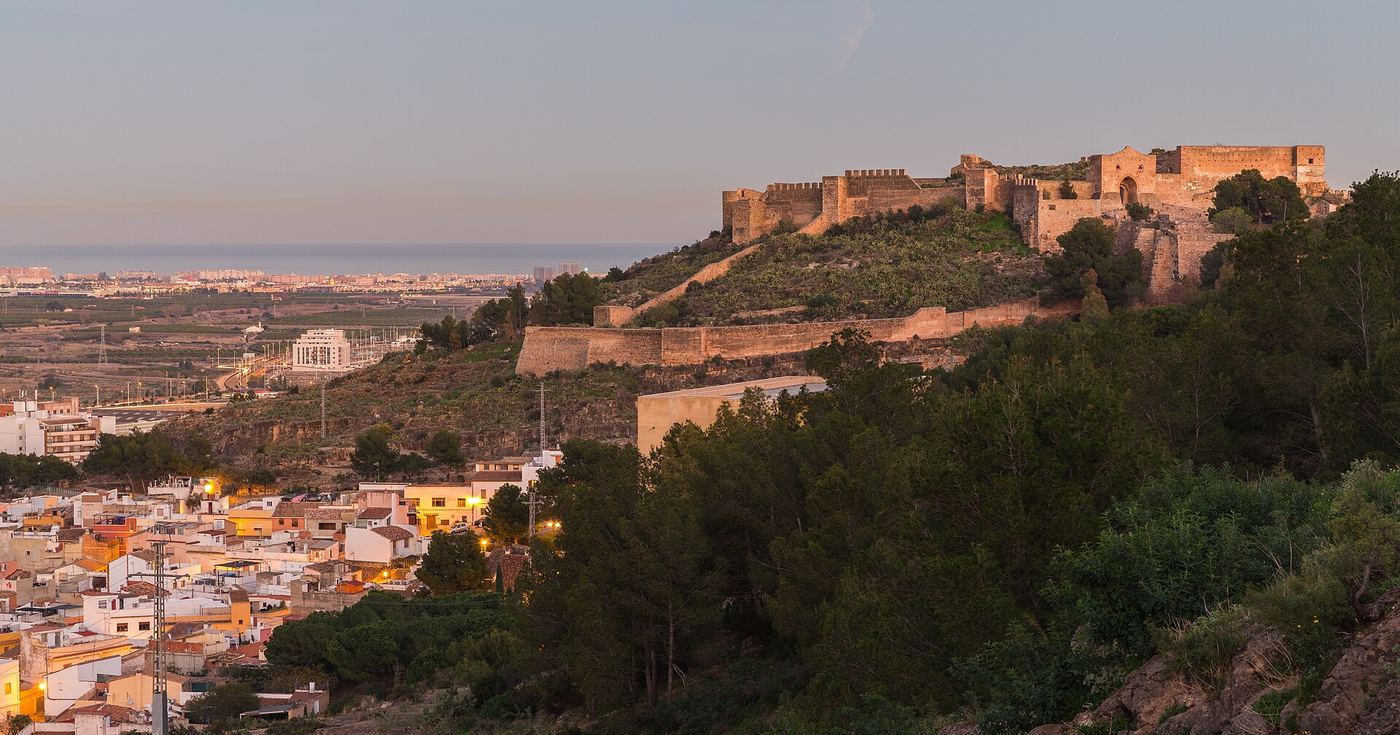
Saguntum
An Iberian city allied to Rome south of the Ebro: its siege by Hannibal was the casus belli.
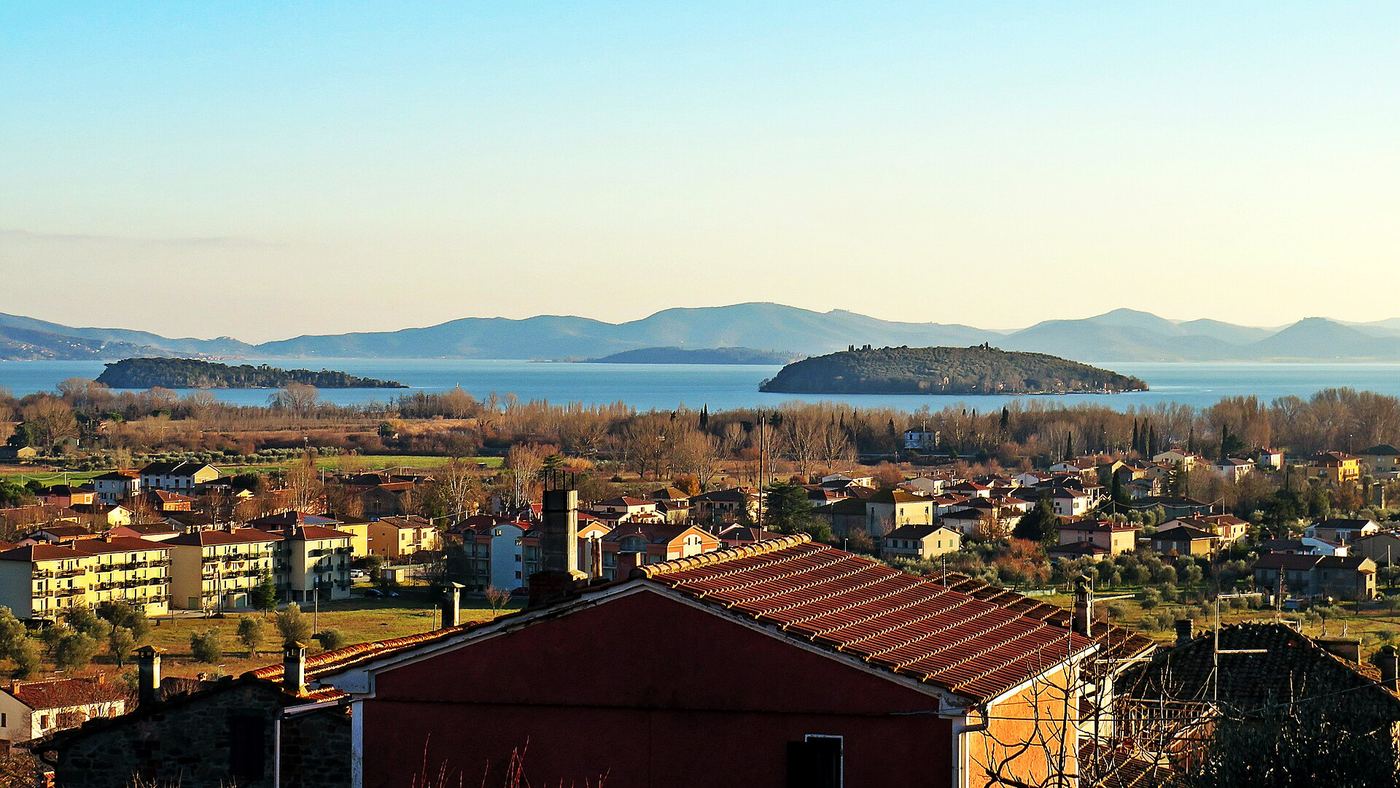
Trasimene
On the north shore of the lake the Roman army was caught in marching column: the greatest ambush of antiquity.
On the map
The territories of Carthage and Rome from 814 to 146, then Hannibal’s campaign, animated.
Approximate borders based on historical syntheses (spheres of influence, not modern borders). Base map: Natural Earth. Ancient sites: customary locations.
Hannibal Barca
The oath, the Alps, Cannae, Zama, exile and death at Libyssa.
The tactics
Cannae, the Trebia, Zama: the manoeuvres step by step.
The elephants
From North African elephants to the 80 elephants of Zama.
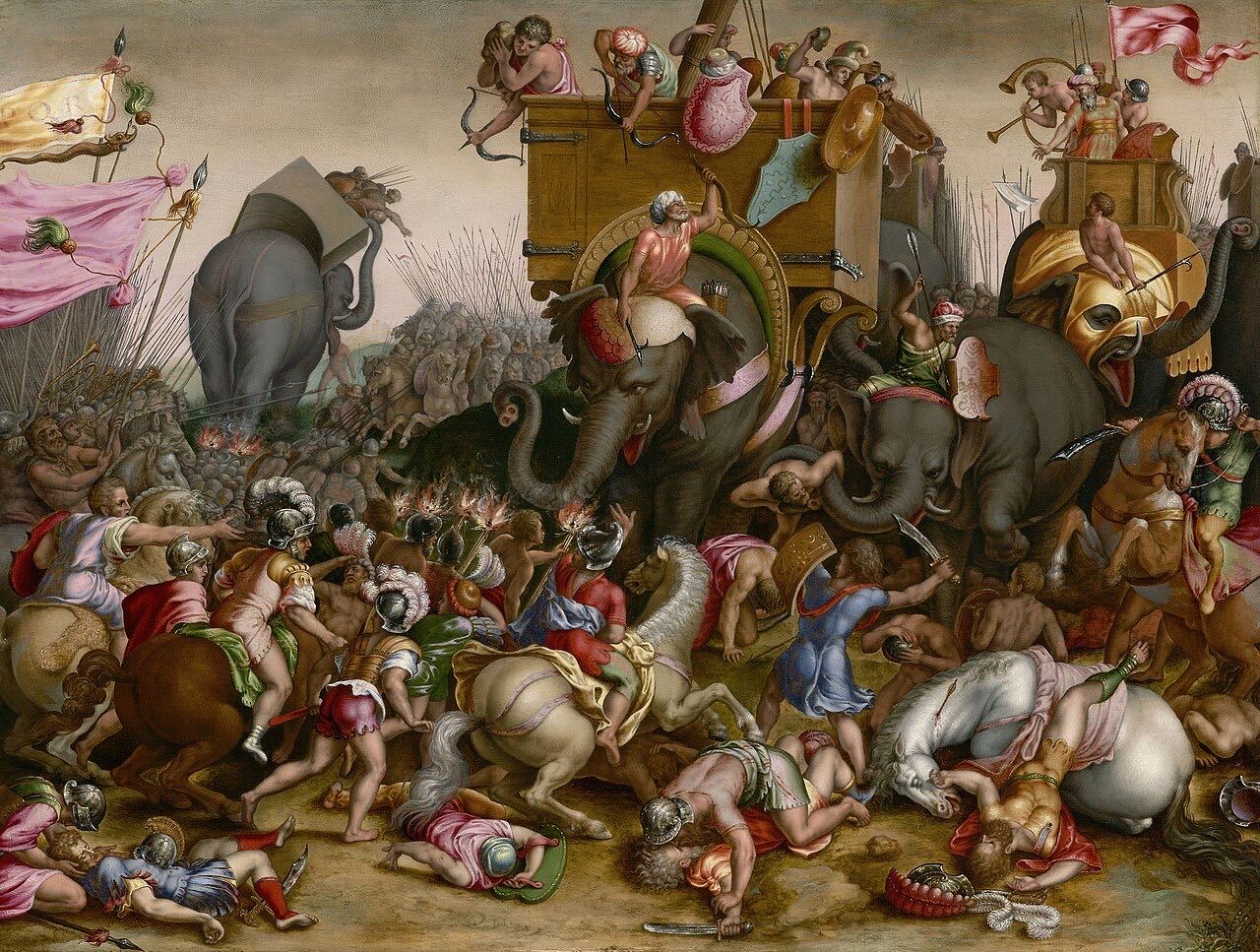
The peace treaty
Carthage recovered fast: in 191 it offered to pay off the whole remaining indemnity at once. Rome refused — the annual payment was also a bond of dependence.
Third Punic War
Fifty years after Zama, Carthage had finished paying and was prospering. In Rome, Cato the Elder ended every speech with "Carthago delenda est": Carthage must be destroyed.
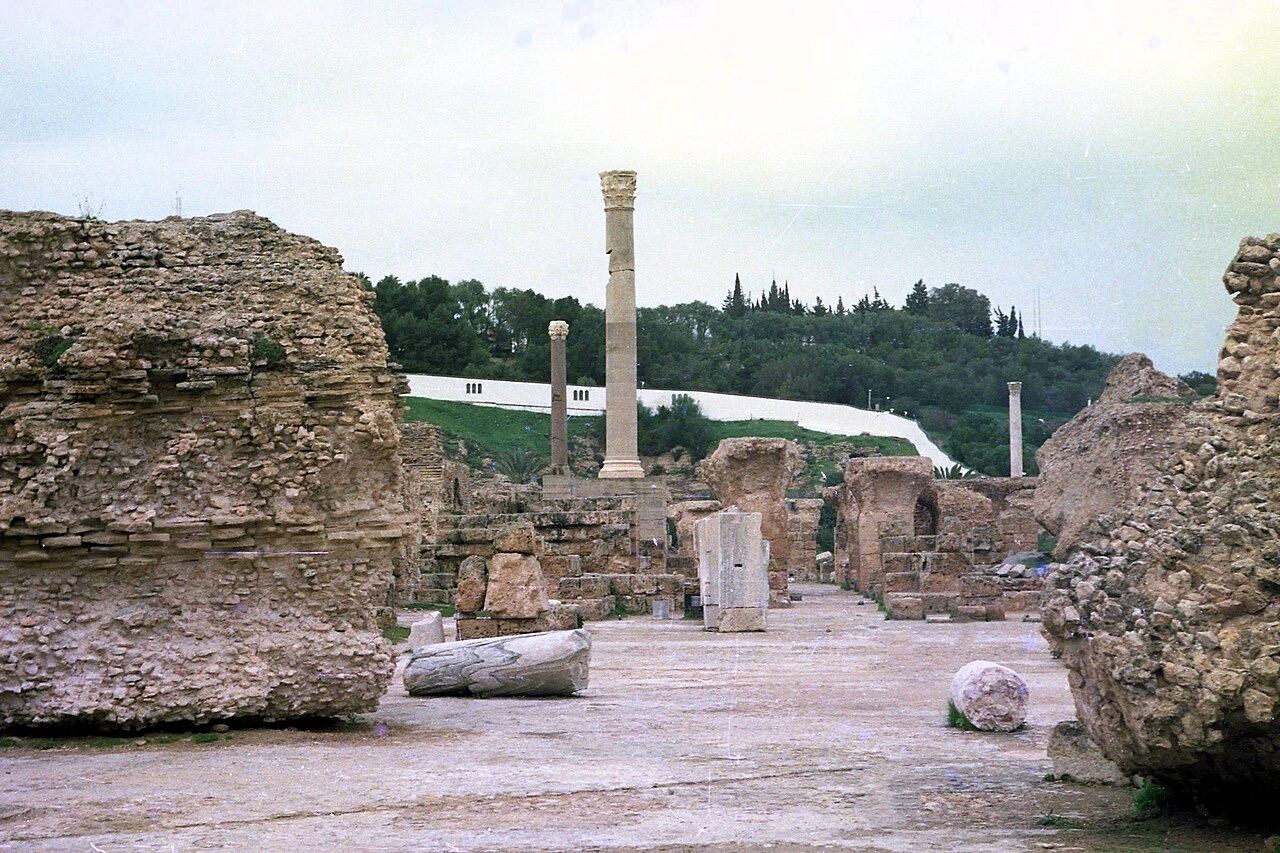
Salt on the ruins?
The city was burned and its ground cursed, but no ancient source mentions salt: that is a modern invention. Punic language and culture survived, and Rome refounded Carthage a century later, under Caesar and Augustus; it became the capital of Roman Africa.
The fall of Carthage →