Mattia Preti · 17th c.
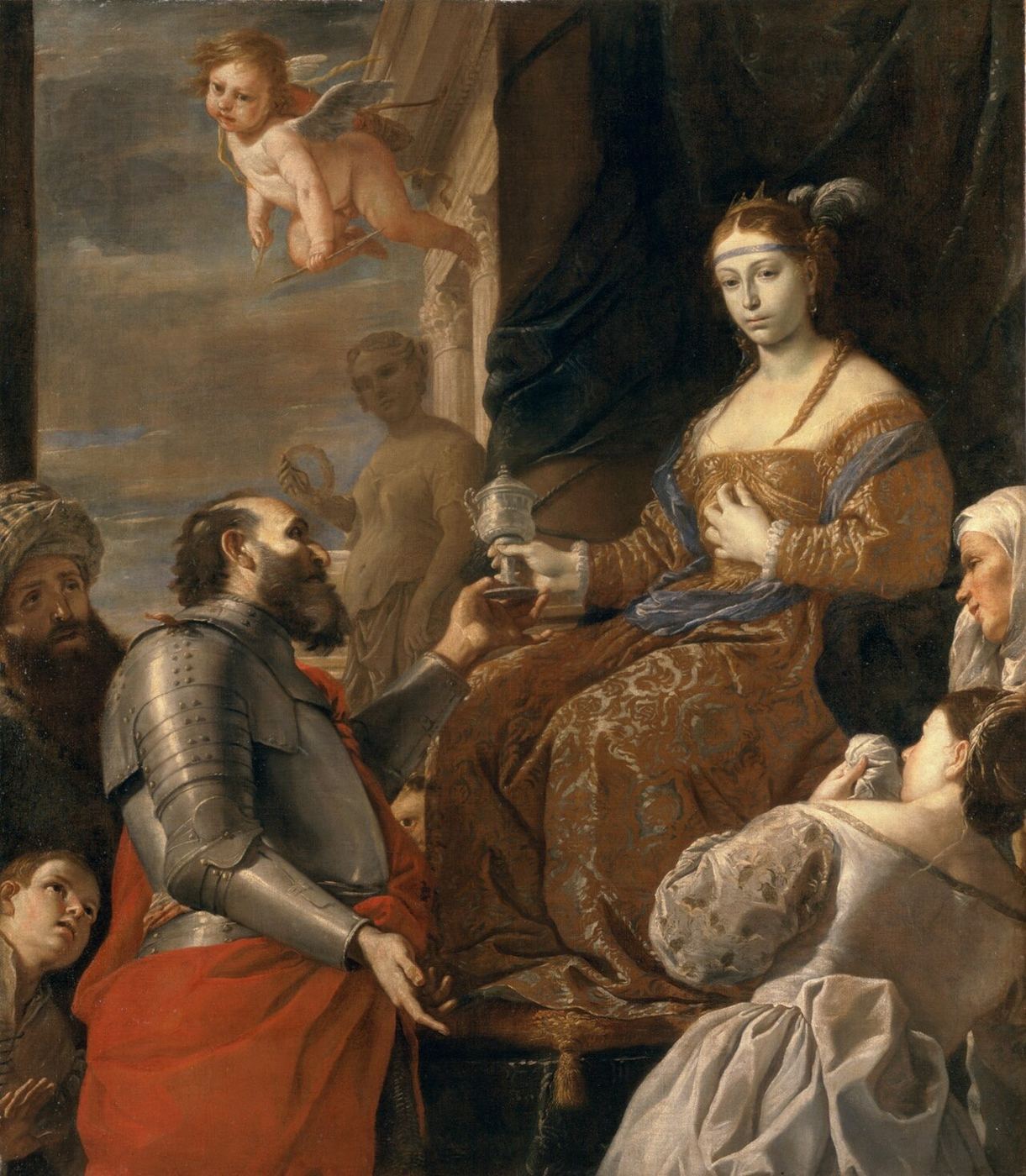
The Death of Sophonisba
The cup of poison sent by Masinissa: a favourite subject of baroque painters.
Rome destroyed the city but never stopped talking about it. Dido, Hannibal, Sophonisba and Salammbô have passed through Latin epic, baroque opera, Romantic painting, sword-and-sandal films and video games — and in Tunisia, Carthage is still an everyday name.
books in Silius Italicus’ Punica, the longest surviving Latin poem
Purcell gives Dido a voice in Dido and Aeneas
Flaubert publishes Salammbô
Cabiria, the first great epic in film history
7 fields shown
Latin poets invented a legendary Carthage; modern writers reinvented it in turn.
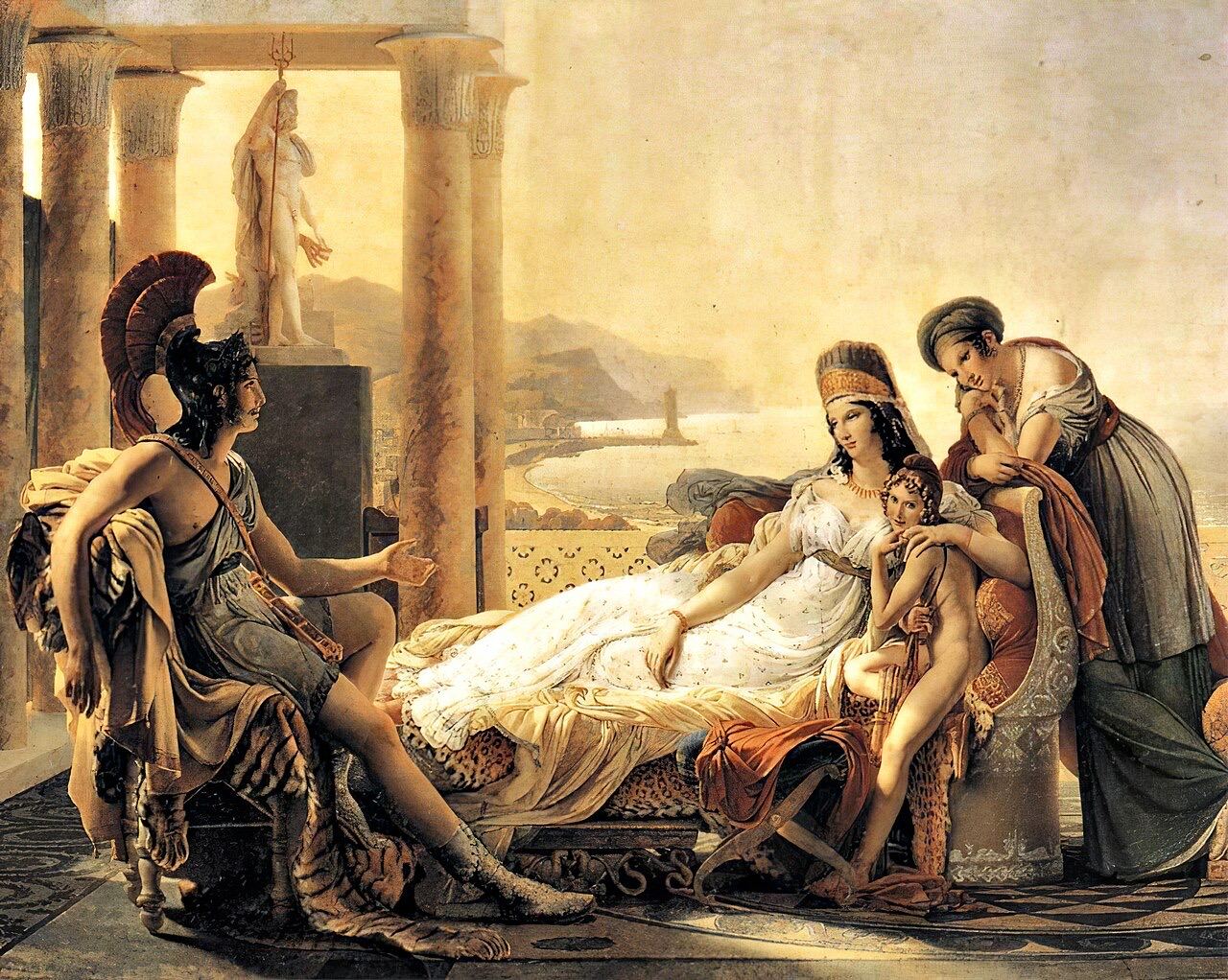
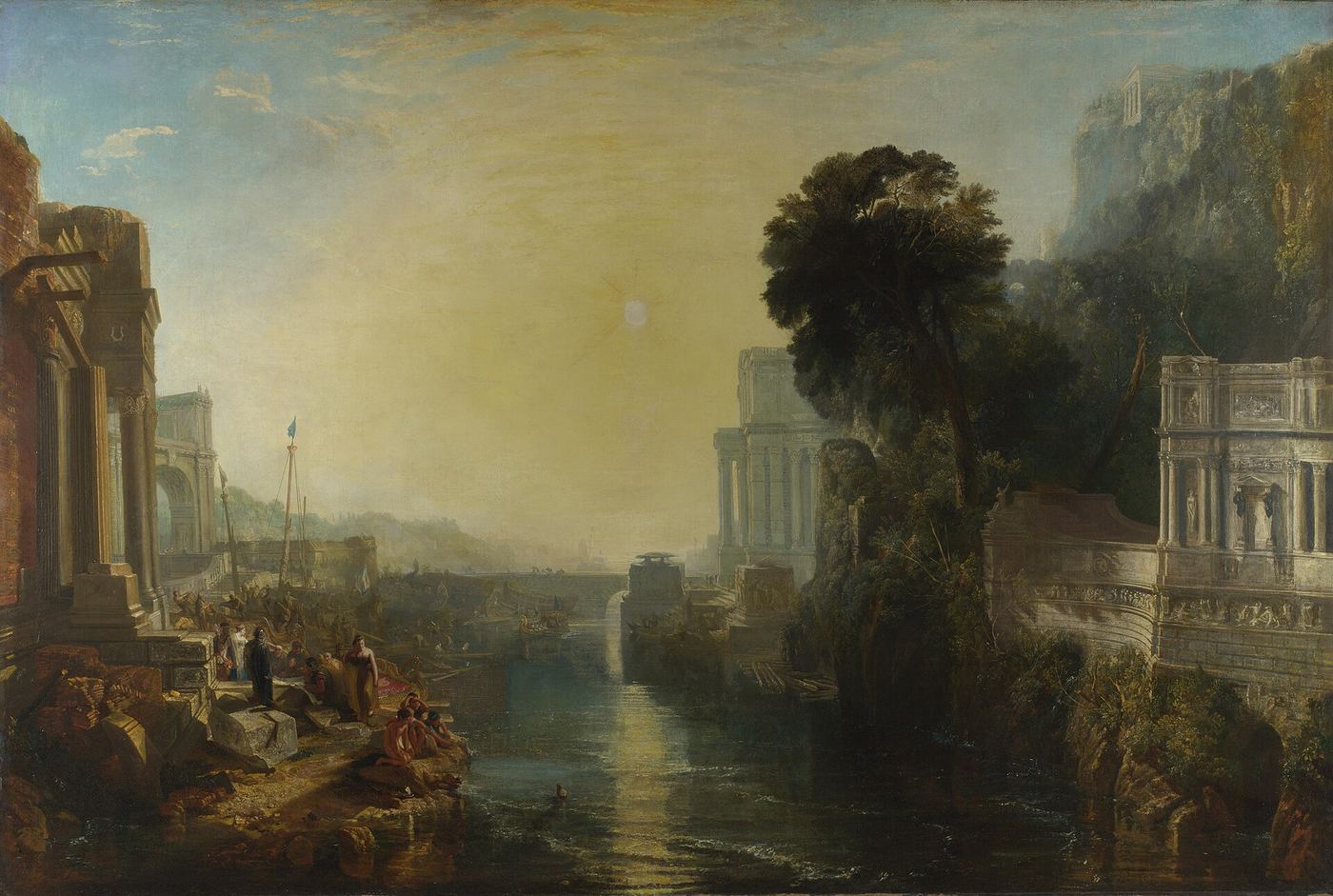
In Timaeus and Justin, Elissa takes her own life to escape a forced marriage; Virgil makes her Aeneas’ lover. This Roman version, taken up by Ovid and then by opera, long overshadowed the founder.
Consul in 68, Silius Italicus devoted his retirement to an epic of over 12,000 lines driven by the tragic figure of Hannibal. Forgotten in the Middle Ages, it was rediscovered around 1417 by the humanist Poggio Bracciolini.
Trissino (1515), Mairet (1634), Corneille (1663), Voltaire (1770): the Carthaginian princess who preferred poison to Scipio’s triumph is one of the great subjects of European tragedy.
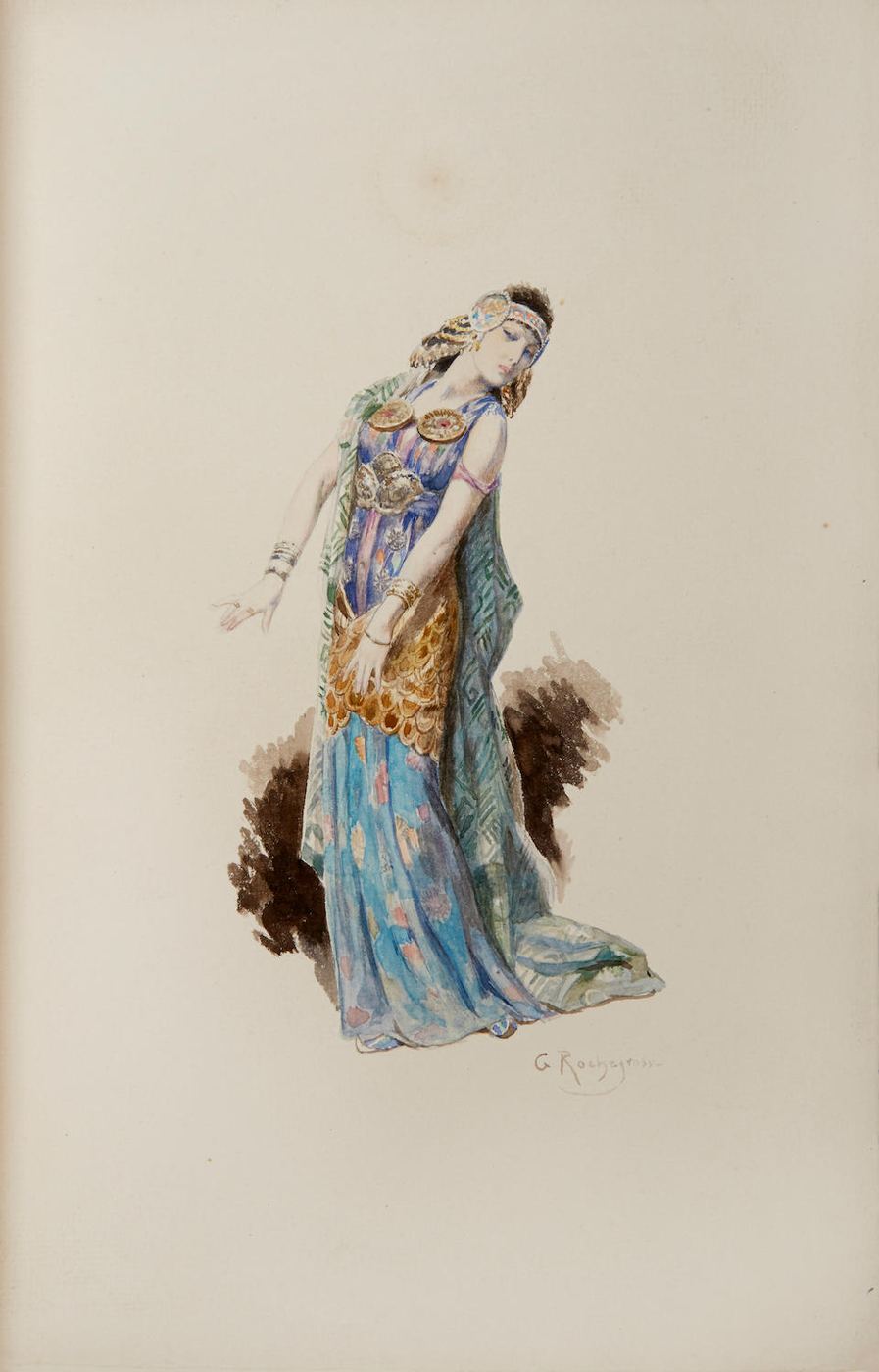
After a stay in Tunis and Carthage in the spring of 1858, Flaubert set his novel during the Mercenary War (241–237 BC), following Polybius closely. The heroine, Hamilcar’s daughter and a priestess of Tanit, is his own invention.
The book caused a sensation: it inspired opera, Orientalist painting, Art Nouveau, silent film — and even the name of a district in present-day Carthage.
« C'était à Mégara, faubourg de Carthage, dans les jardins d'Hamilcar. »
“It was at Megara, a suburb of Carthage, in the gardens of Hamilcar.”
Since baroque opera, the queen of Carthage has been one of the great tragic roles; Salammbô joined her in the 19th century.
Remember me, but ah! forget my fate.
On her pyre, Berlioz’s Dido has a vision of an avenger, Hannibal, before glimpsing the triumph of Rome: the opera stages the curse of the Aeneid (IV, 625).
Exoriare aliquis nostris ex ossibus ultor.
From Venetian baroque to Art Nouveau, painters were drawn above all to the dramas: oaths, grief, suicides and storms.
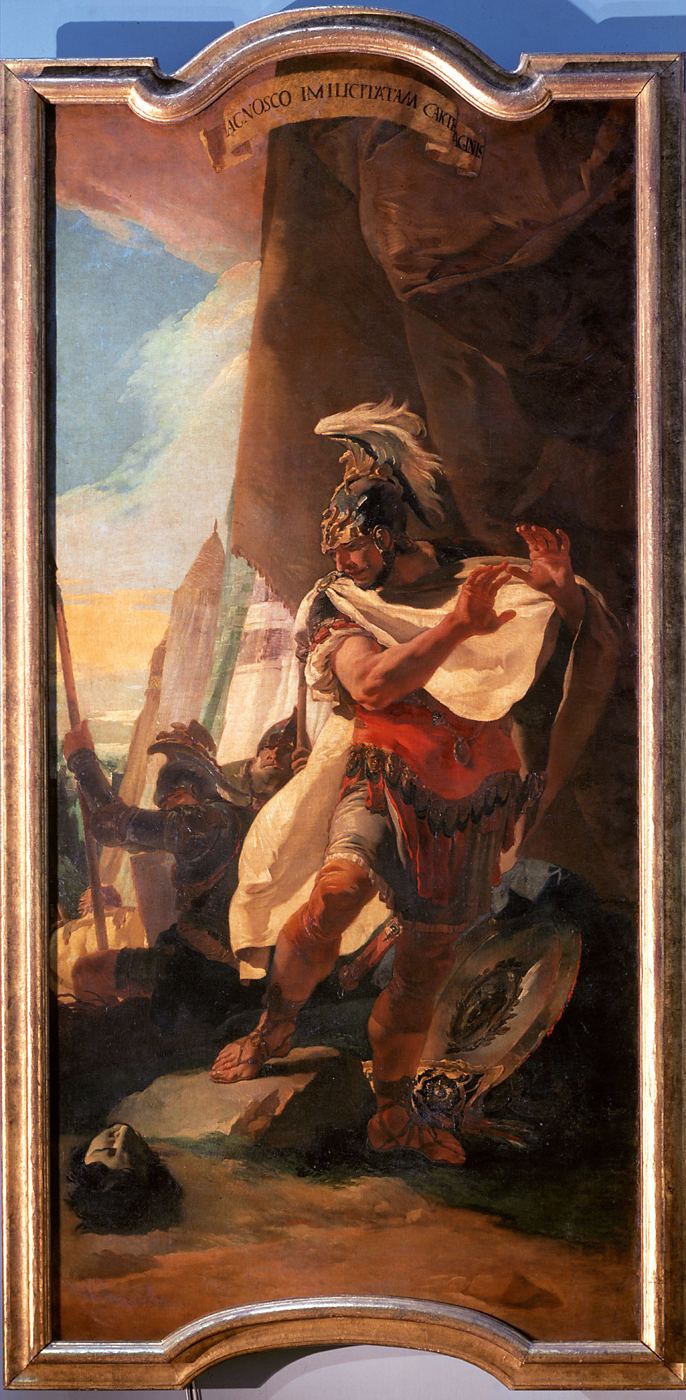
In 207 BC, after the defeat at the Metaurus, the consul Claudius Nero had Hasdrubal’s head thrown in front of his brother’s outposts (Livy, XXVII, 51).
Tiepolo painted Hannibal recoiling in horror for a cycle of Roman history intended for the Palazzo Dolfin in Venice. Carthage became a subject of grand history painting, just like Rome.
Agnoscere se fortunam Carthaginis.
“I recognise the fate of Carthage” — the words Livy gives Hannibal before his brother’s head.
The cup of poison sent by Masinissa: a favourite subject of baroque painters.
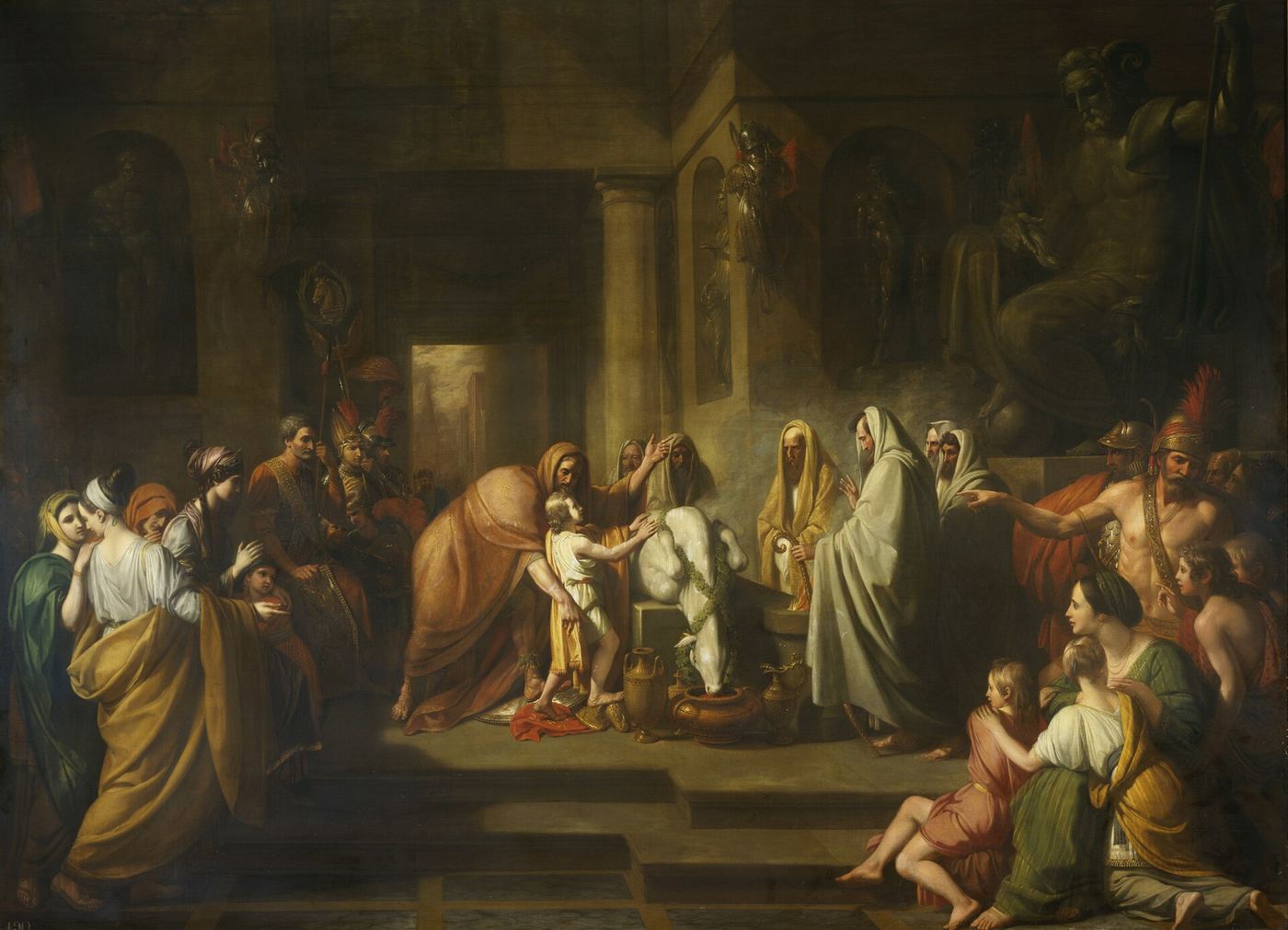
As a boy, Hannibal swears before his father Hamilcar never to be a friend of Rome (Polybius, III, 11; Livy, XXI, 1).
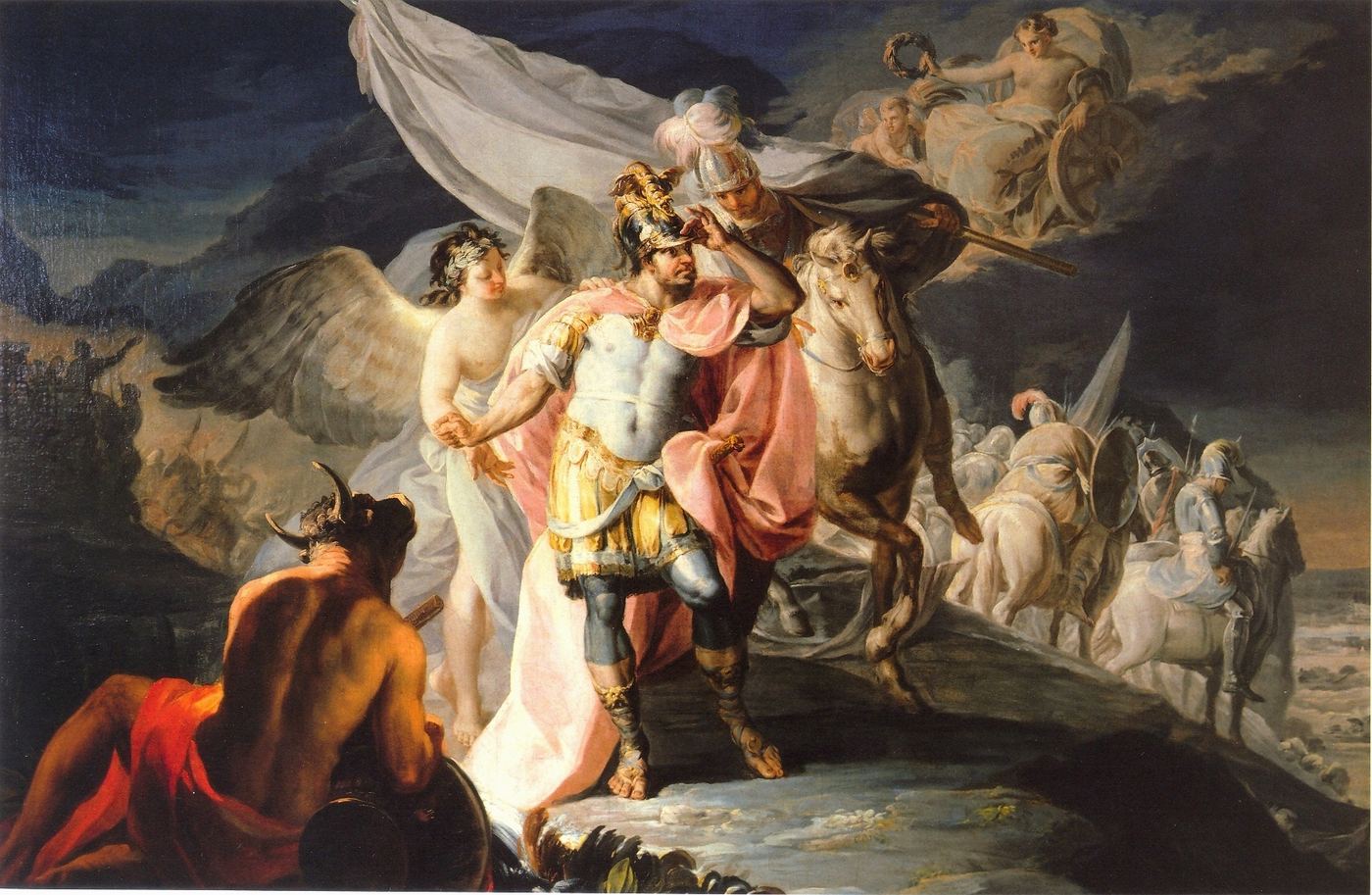
Painted in Italy by the young Goya for a competition of the Parma Academy: Hannibal sees the peninsula from the heights of the Alps.
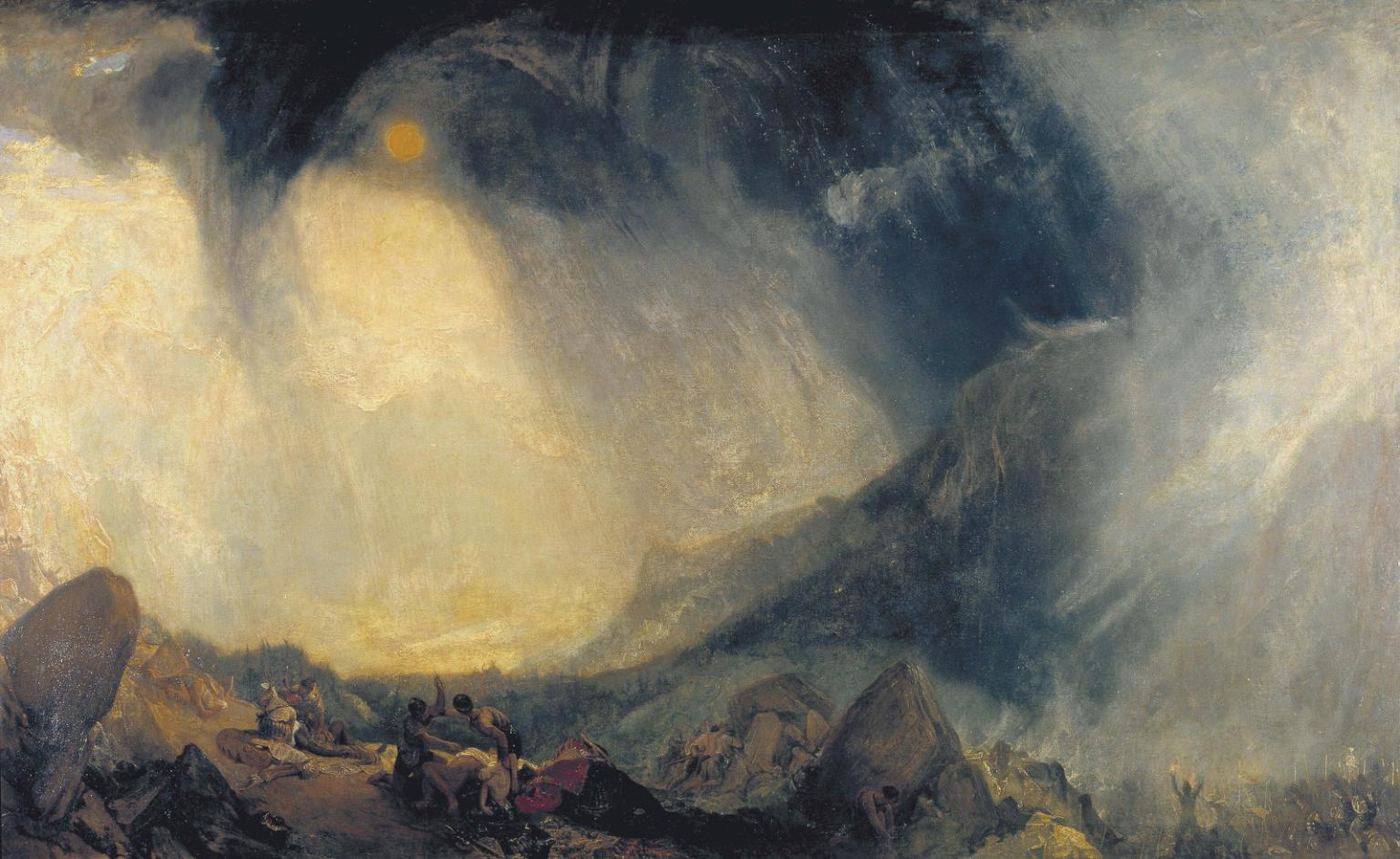
A vortex of snow all but swallows the army: Turner makes Hannibal a Romantic subject, in a Europe dominated by Napoleon. (Tate, London)
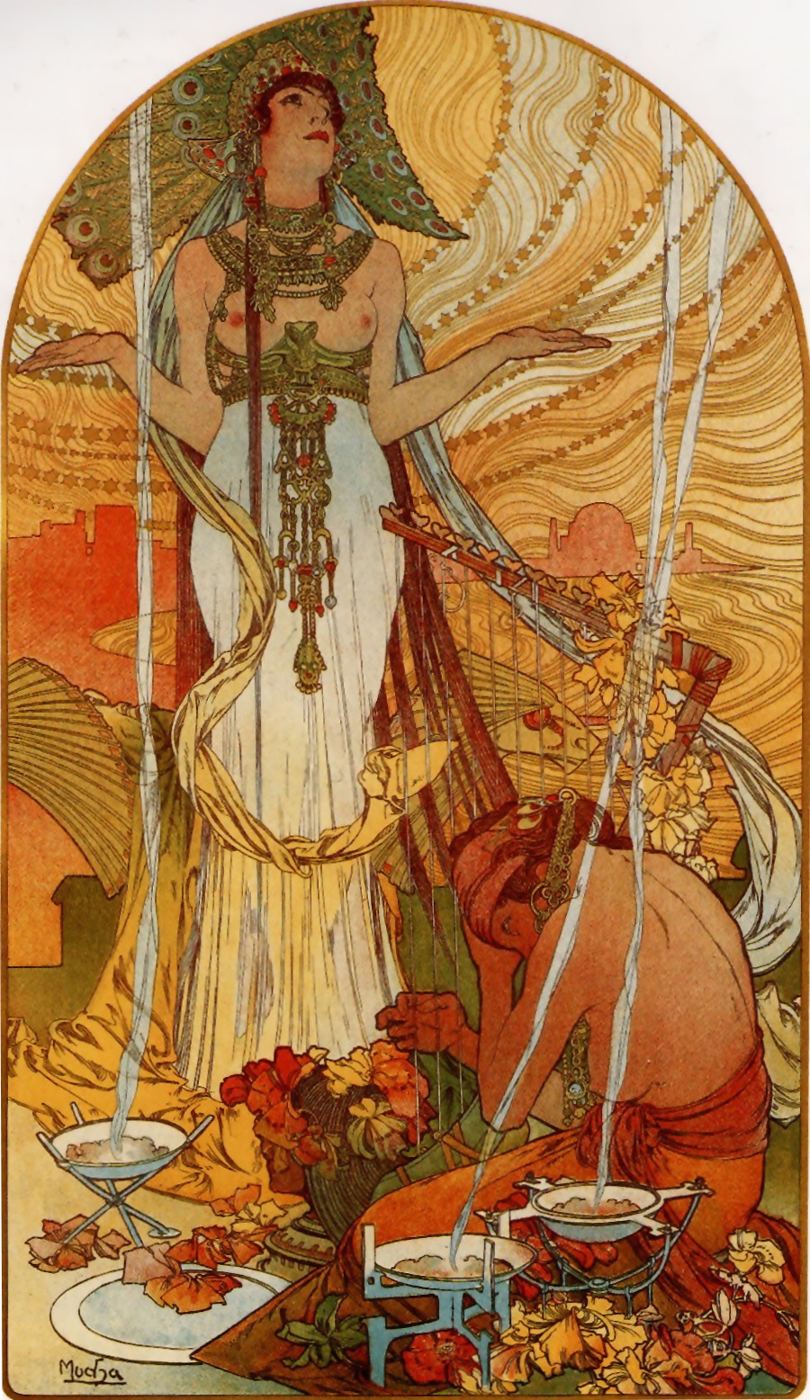
An Art Nouveau lithograph: Flaubert’s priestess of Tanit, between harp and incense burners, becomes a decorative icon.
Italian epic cinema turned Carthage into a legendary backdrop — and a mirror of modern Italy’s ambitions.
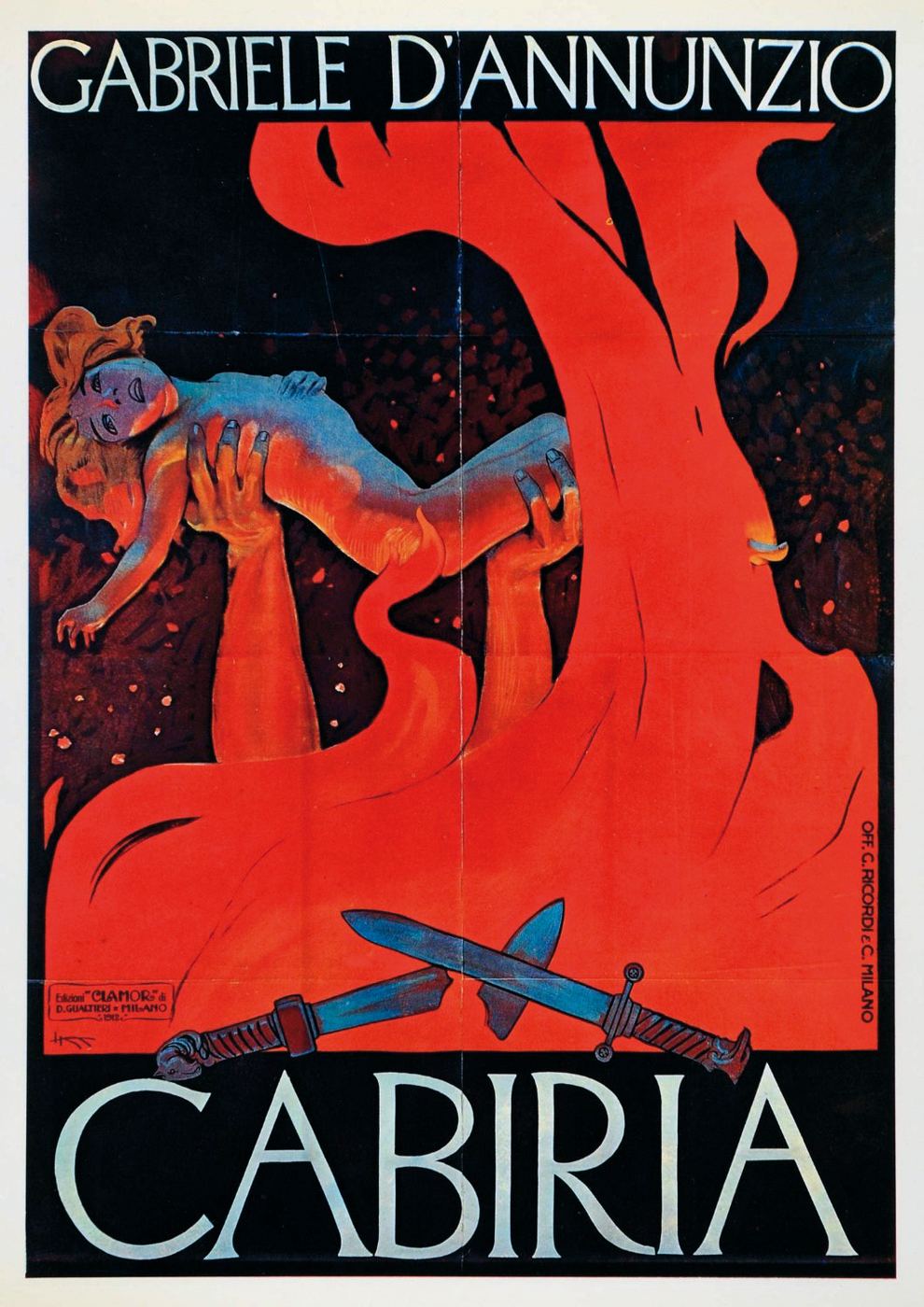
Directed by Giovanni Pastrone, Cabiria follows a Sicilian girl who is kidnapped, sold in Carthage and doomed to be sacrificed in the temple of “Moloch”, against the backdrop of the Second Punic War: Hannibal crossing the Alps, the siege of Syracuse and Archimedes’ mirrors, the tragedy of Sophonisba.
Nearly three hours long, with monumental sets and long tracking shots, Cabiria is the first great film epic and inspired D. W. Griffith’s Intolerance (1916). Its sacrifice scenes owe more to Salammbô than to the ancient sources.
Recent documentaries draw on archaeology — the circular harbours, the tophet, the Punic quarter on Byrsa — to move beyond epic-film imagery.
The challenge remains: to tell Carthage’s story from its own traces, not only from its conquerors’ accounts.
Comics, video games, board games: Hannibal is still the strategist everyone wants to play.
In Tunisia, Carthage is not a scholarly memory: it is the name of a neighbourhood, a street, a TV channel.
The presidential palace, the airport, the Carthage Film Festival and International Festival, the “Eagles of Carthage” of the national football team: the name of the Punic city has become the name of Tunisia as it presents itself to the world.
Phrases that passed into common use — often coined by Rome, the enemy.
Hannibal ad portas
“Hannibal is at the gates”: the ultimate alarm.
The phrase, attested in Cicero (Philippics, I, 11), preserves the memory of the terror of 211 BC, when Hannibal marched on Rome. Livy writes “ante portas” instead.
Carthago delenda est
“Carthage must be destroyed.”
According to Plutarch, Cato the Elder ended every opinion he gave in the Senate with this demand; the famous Latin wording is a later reconstruction.
Punica fides
“Punic faith” — in other words, treachery.
A cliché of Roman propaganda, repeated by Sallust and Livy, who credits Hannibal with “more than Punic perfidy”. Rome, for its part, did not always keep its word.
The delights of Capua
Comfort that softens you and costs you the advantage.
The phrase comes from Livy (XXIII, 18): the winter of 216–215 BC spent in Capua supposedly softened Hannibal’s army. Modern historians strongly qualify this verdict.
A Carthaginian peace
A peace that crushes the defeated.
Keynes popularised the phrase in 1919, in The Economic Consequences of the Peace, to denounce the Treaty of Versailles.
A “Cannae”
The perfect encirclement.
Hannibal’s victory in 216 BC became the byword for the battle of annihilation; the German chief of staff Schlieffen made it a model.
Cartagena, founded by the Barcids as Qart Hadasht; Cartagena de Indias in Colombia, named after the Spanish city; Hannibal in Missouri, and more than a dozen American towns called Carthage.
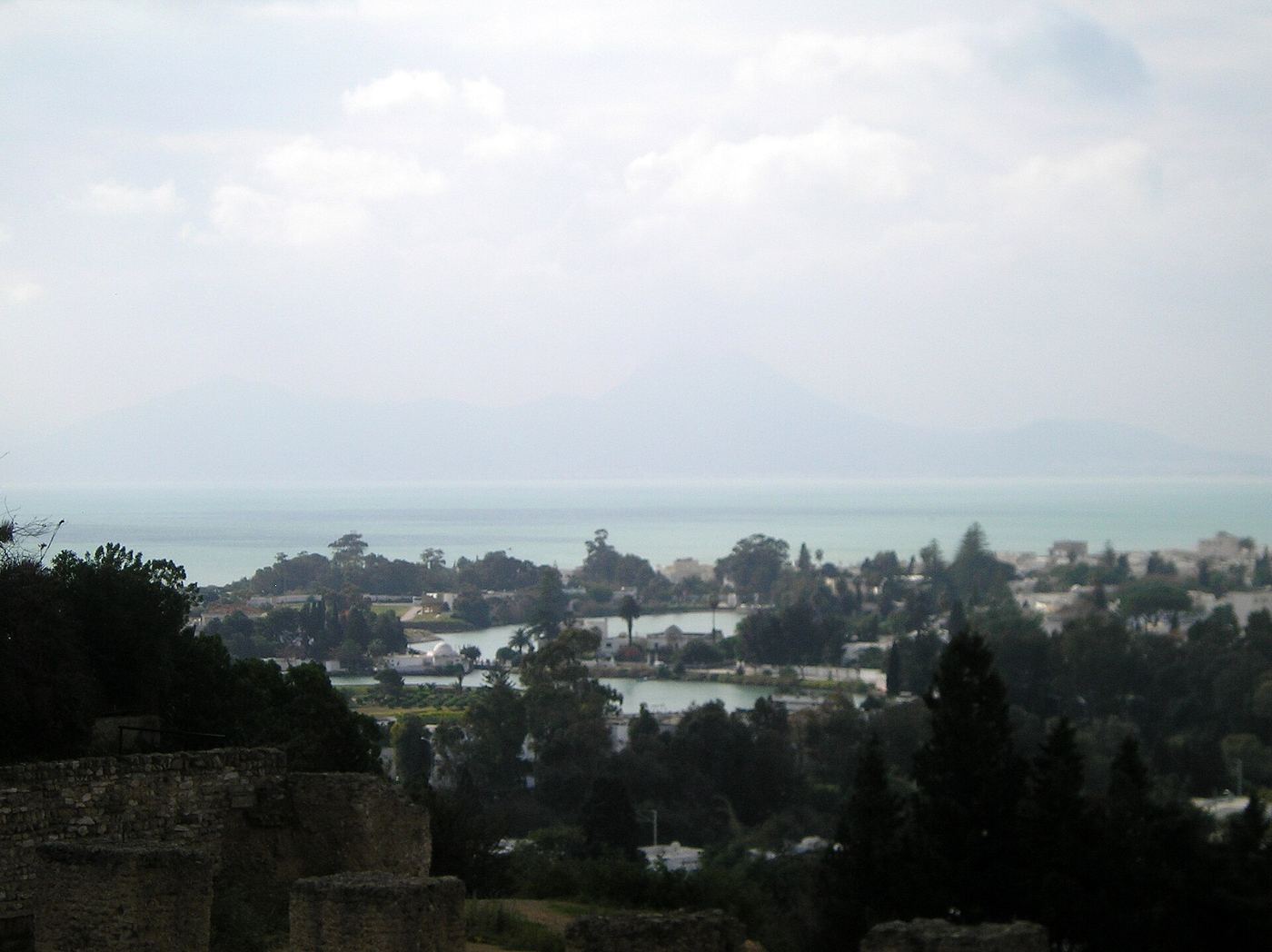
The founder of Carthage, before Virgil reinvented her.
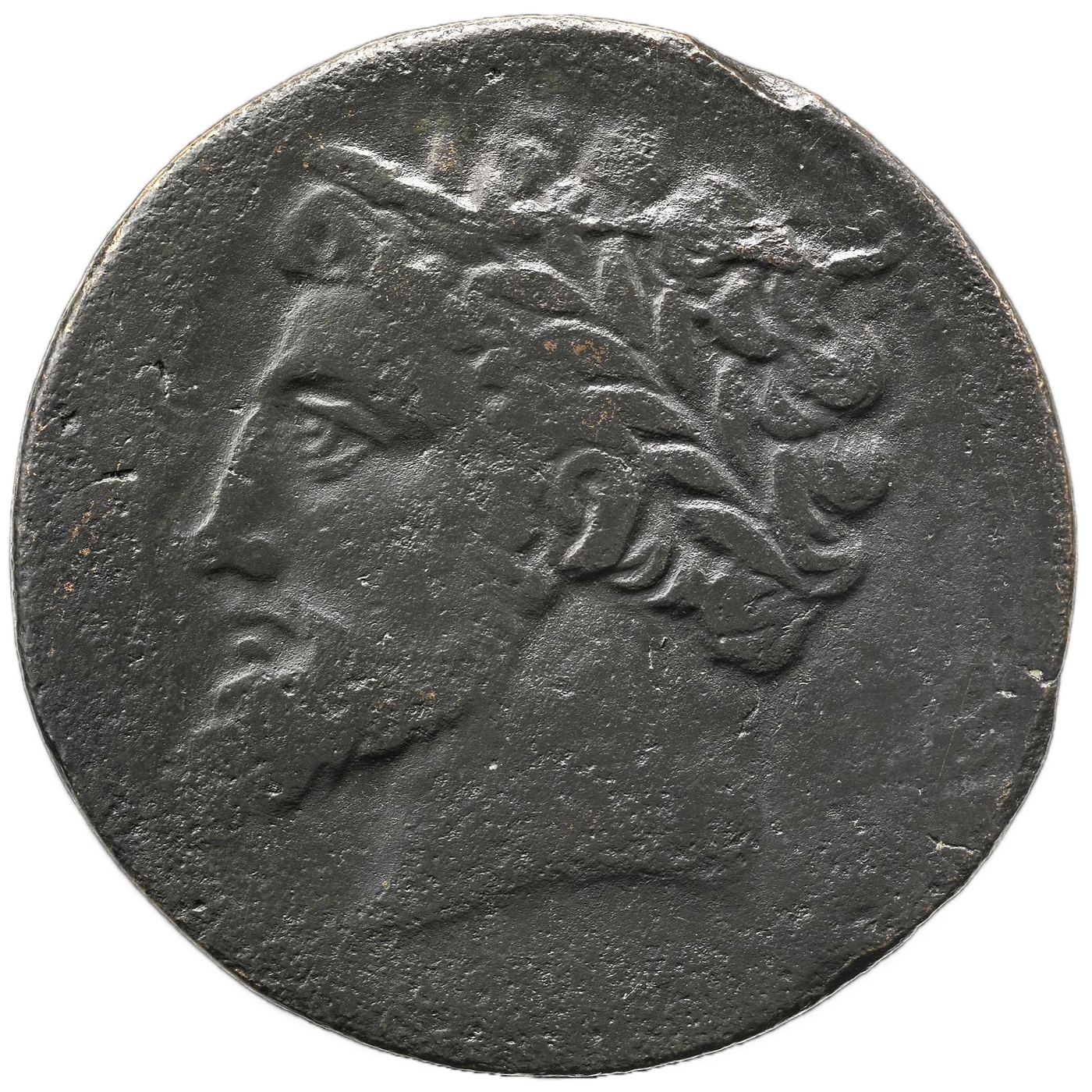
The princess who chose poison over Scipio’s triumph.
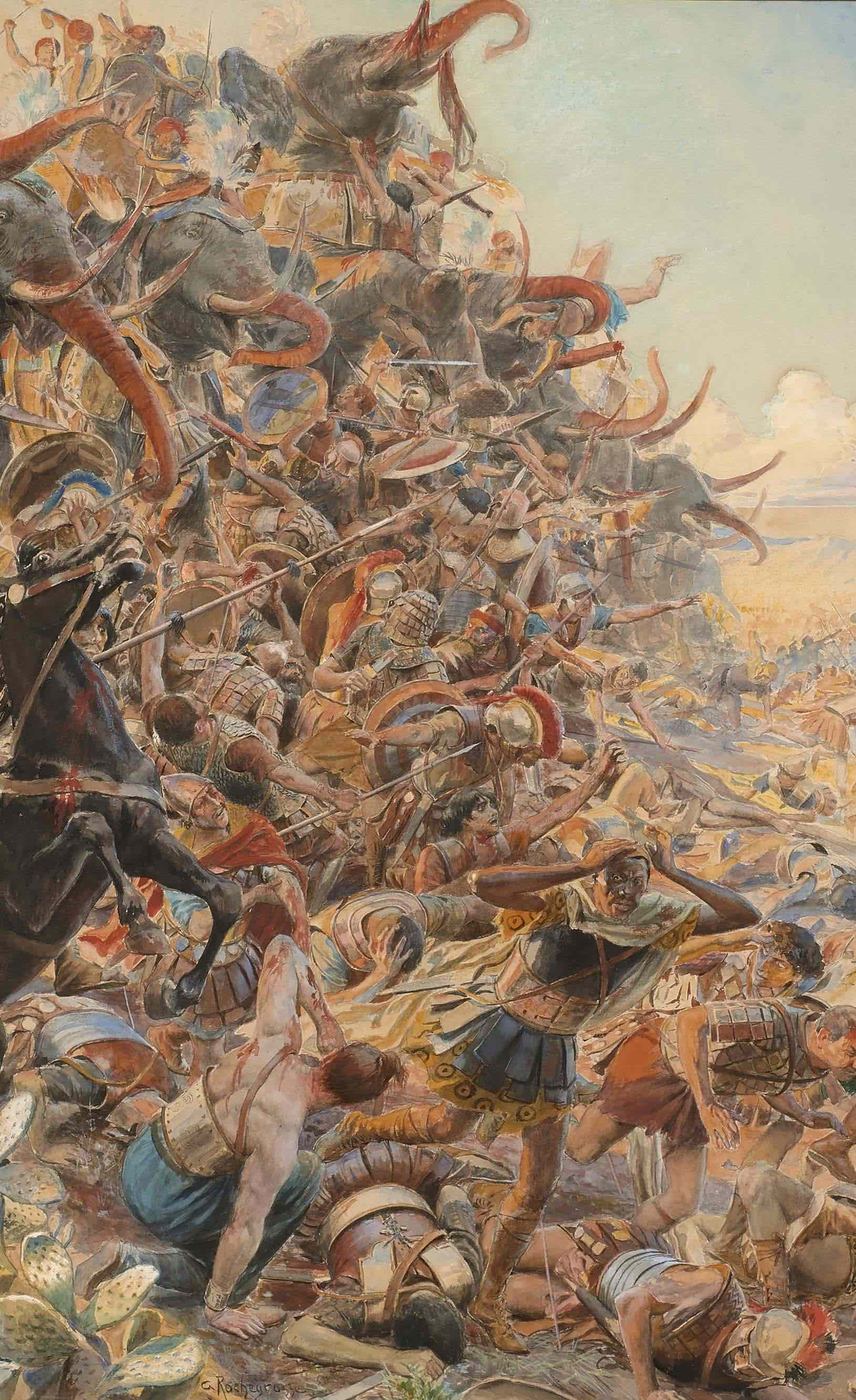
The real conflict behind Salammbô.
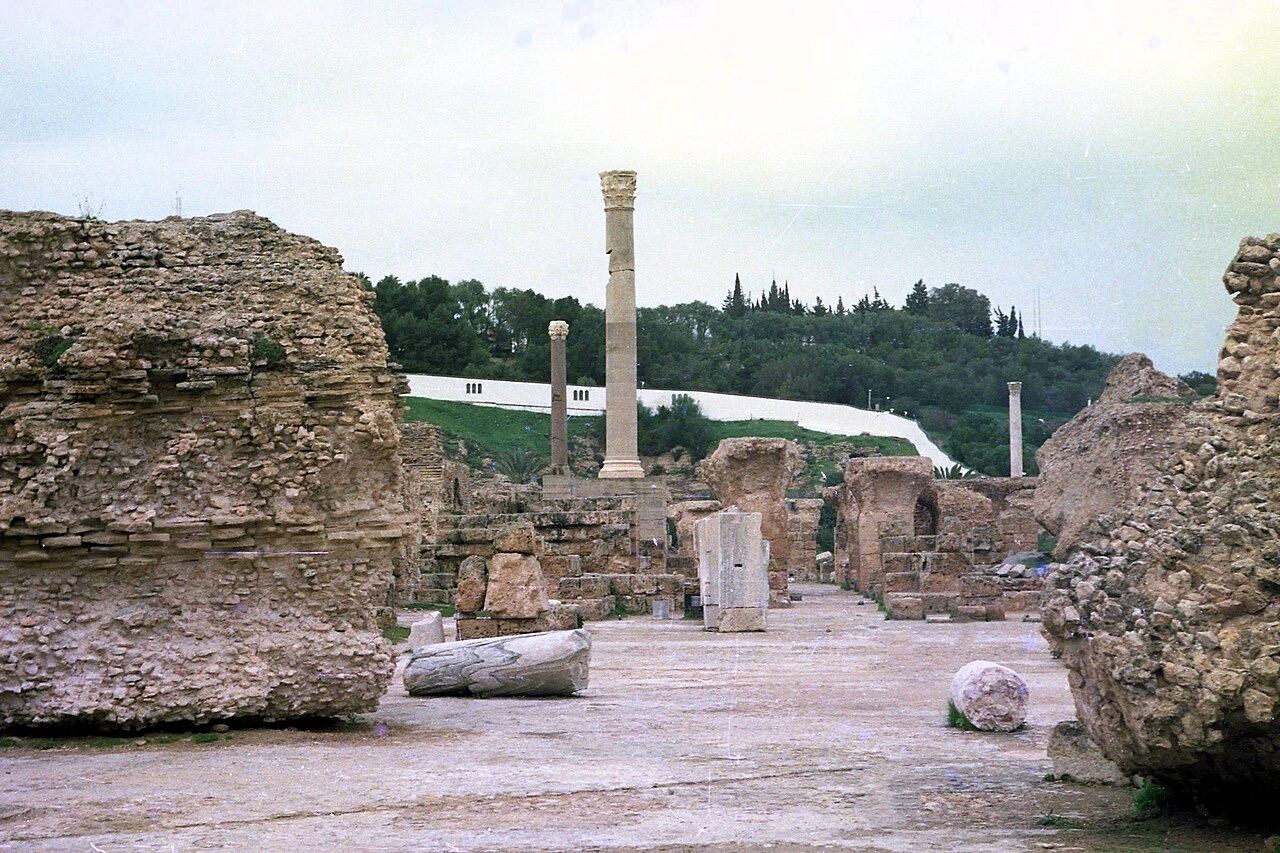
A name, an emblem, a town in Greater Tunis.
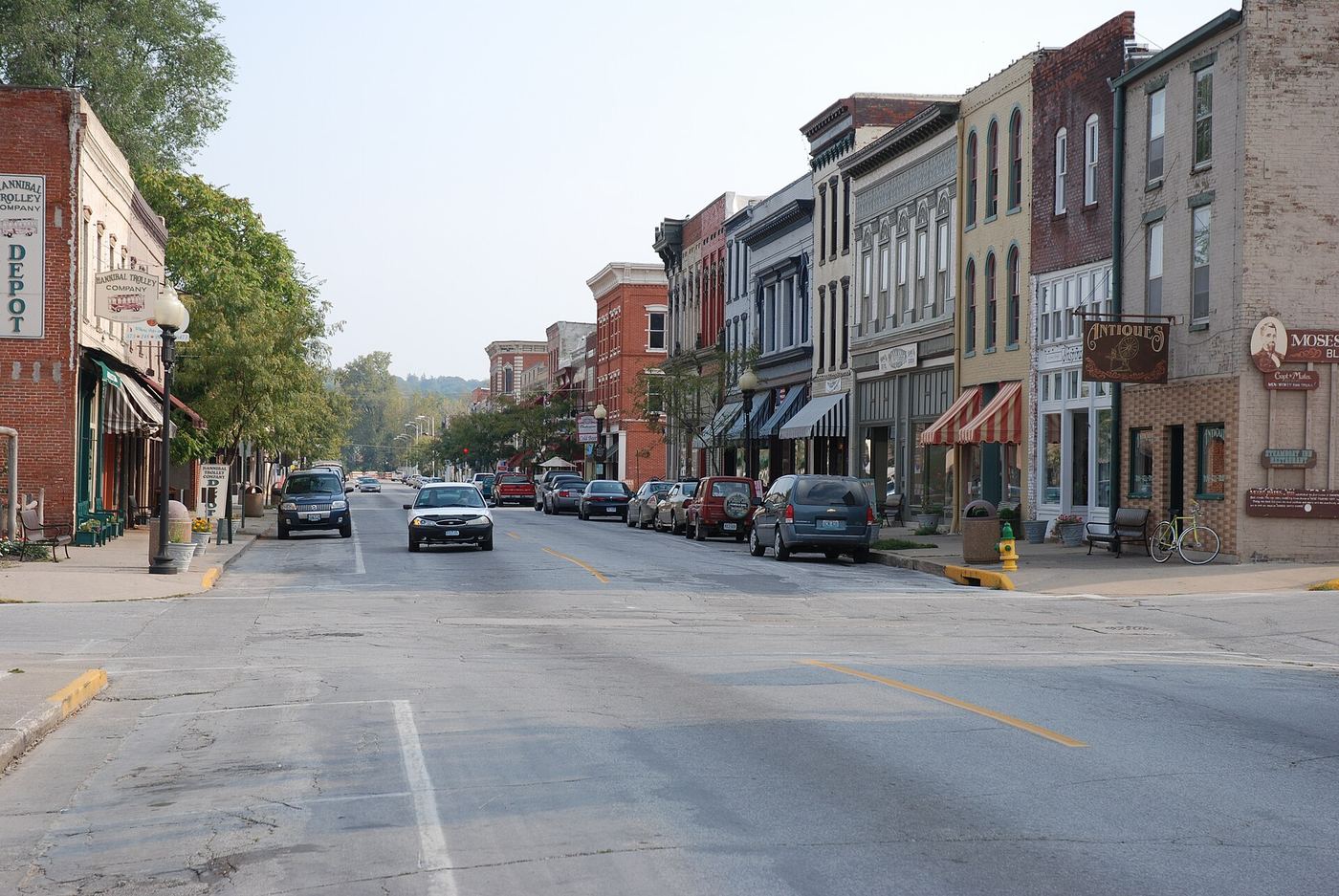
From Cartagena to Trasimene, all the way to Missouri.
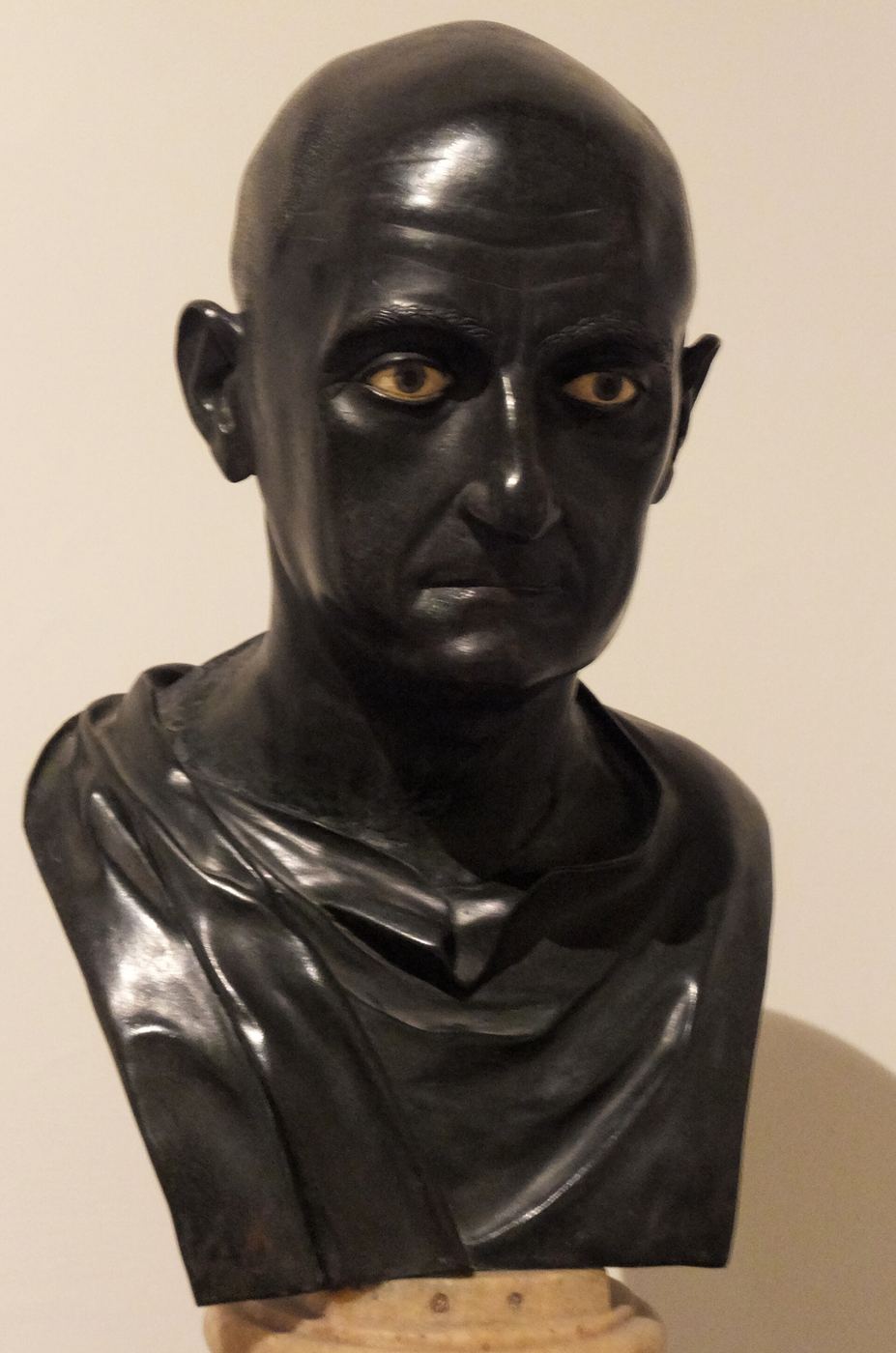
Why our picture of Carthage comes from Rome.