9th century BC · founding c. 814
Elissa-Dido
Princess of Tyre, fugitive and founder: a Phoenician sovereign who turned a forced exile into the birth of a city — Qart-Hadasht, the "New City".
BC: founding date given by Timaeus
Cypriot maidens taken to Africa (Justin)
oxhide to mark out the hill of Byrsa
years of Punic Carthage, until 146 BC
Elissa
The name given by Timaeus and Justin, probably the transcription of a Phoenician name. Tunisians today call her Elissa (عليسة).
Dido
According to Timaeus, the Libyans nicknamed her Deidō, "the wanderer", because of her long travels. This is the name Virgil kept.
A life, from Tyre to Byrsa
The oxhide
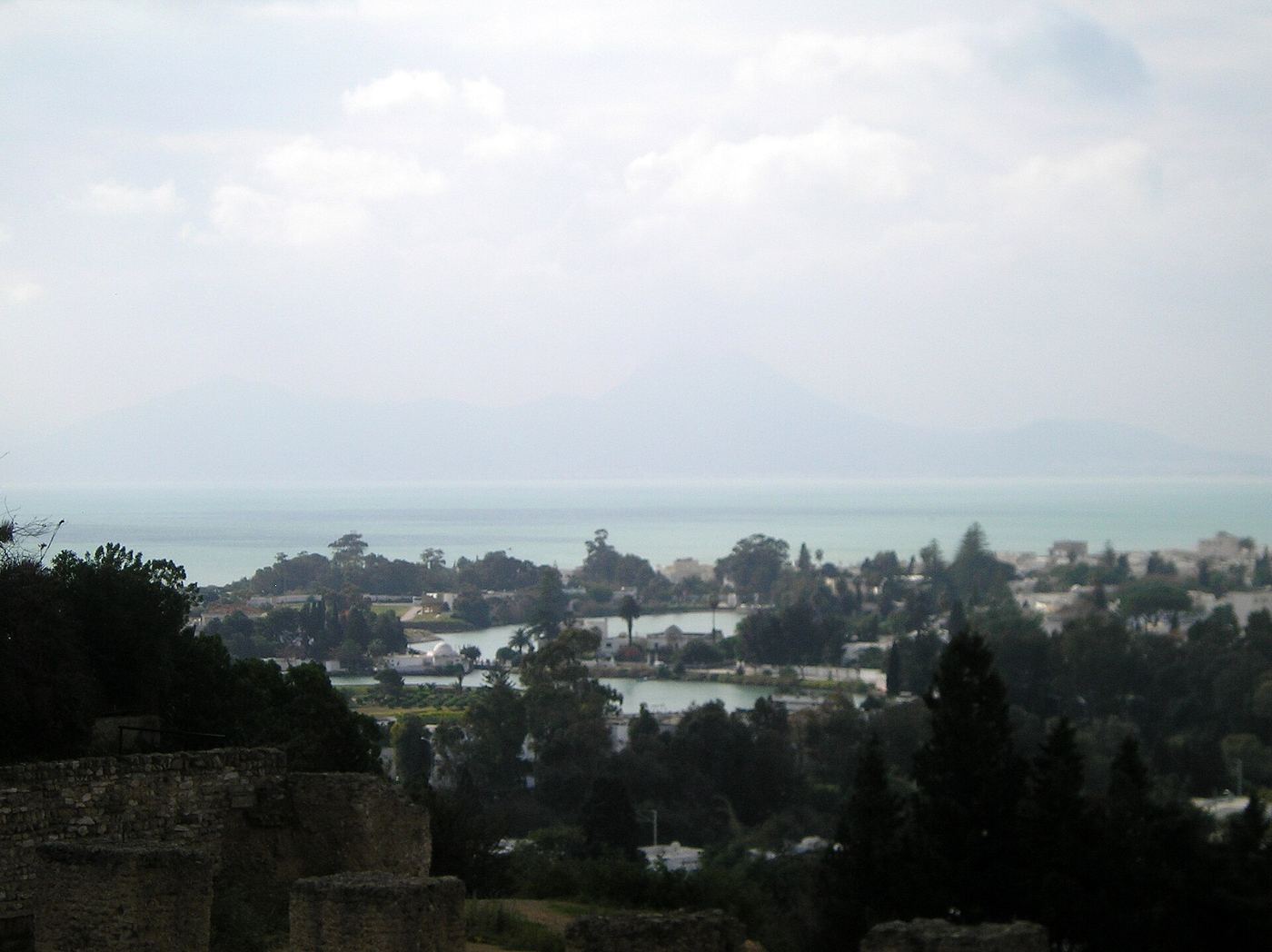
Arriving on the coast of present-day Tunisia, Elissa asked the inhabitants for as much land as an oxhide could cover. She cut it into strips so thin that they encircled an entire hill: Byrsa.
The Greeks explained the citadel’s name this way (bursa, "hide"), though it probably comes from a Semitic word for a fortress. The legend says what matters: intelligence and diplomacy prevail over force.
« As much land as an oxhide could cover. »
After Justin, XVIII, 5
Two stories, two queens
The Phoenician story handed down by the Greeks, and its Roman rewriting.
The abandoned lover
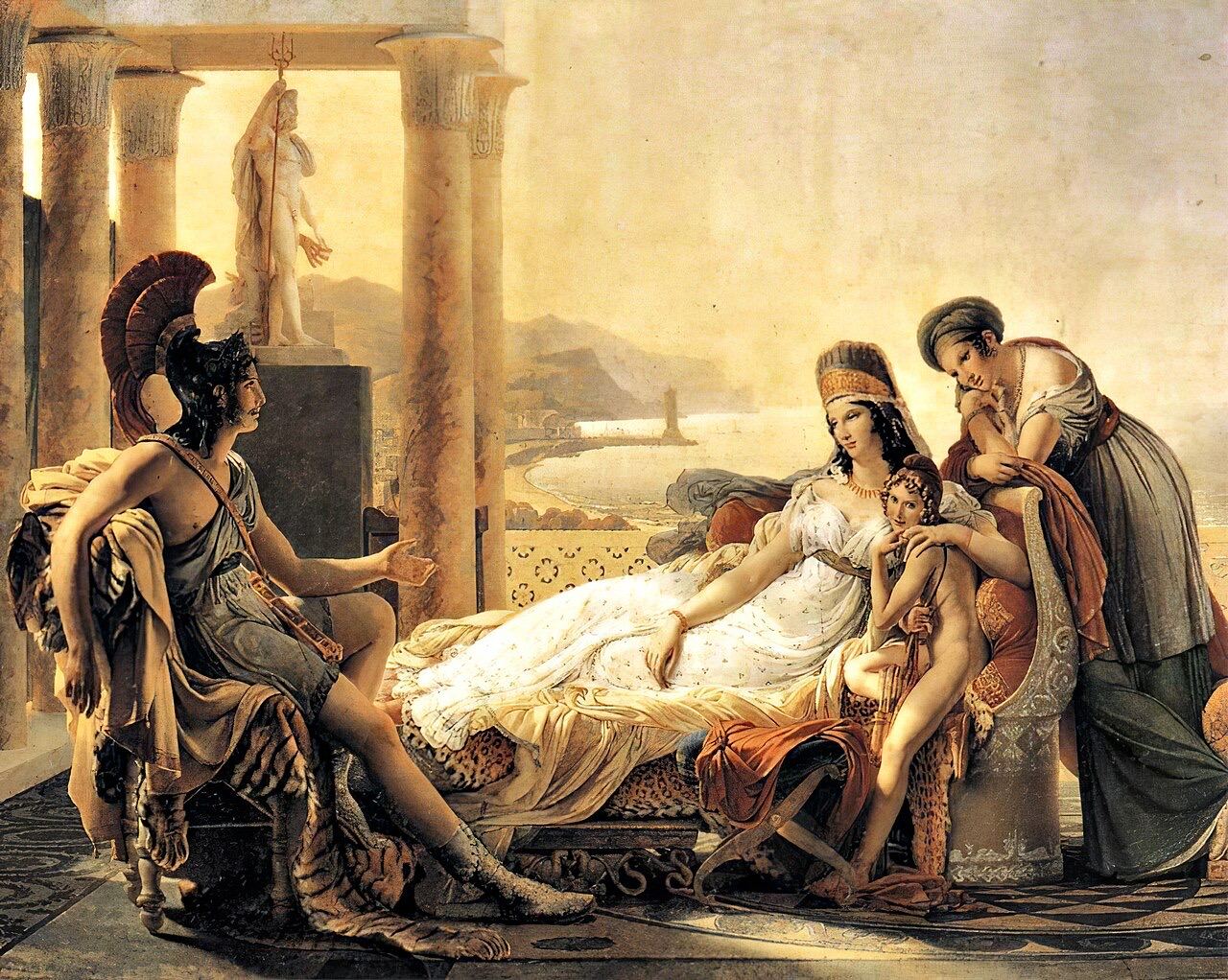
Virgil makes Dido the lover of Aeneas, who leaves her at the gods’ command to go and found Rome; she kills herself in despair, cursing his descendants and calling for an avenger — Hannibal.
A Roman founding myth that explains the hatred between Rome and Carthage, but reduces a sovereign to a grieving woman.
The sovereign queen
In the older tradition, Aeneas does not appear. Elissa is a state builder who dies to stay faithful to Acherbas and to preserve her city’s independence from Iarbas.
And the chronology is impossible: the fall of Troy, traditionally dated around 1184 BC, precedes the founding of Carthage by more than three centuries.
She died for her city
Pressed by Iarbas and by her own notables, Elissa pretended to consent to the marriage. She had a pyre raised at the city gates, as if to appease the shade of her first husband, then killed herself before her people: she was going to her husband, she said, as they had asked.
According to Justin, she was worshipped as a goddess for as long as Carthage remained unconquered.
What the ancients say
Quamdiu Carthago invicta fuit, pro dea culta est.
« As long as Carthage remained unconquered, she was worshipped as a goddess. »
Exoriare aliquis nostris ex ossibus ultor.
« Arise from our bones, some avenger. »
Dux femina facti.
« A woman led the enterprise. »
Where our knowledge comes from
Legacy of a founder
A city of seven centuries
Carthage, from 814 to 146 BC, became the great naval power of the western Mediterranean, Rome’s rival for more than a century.
Tyrian roots
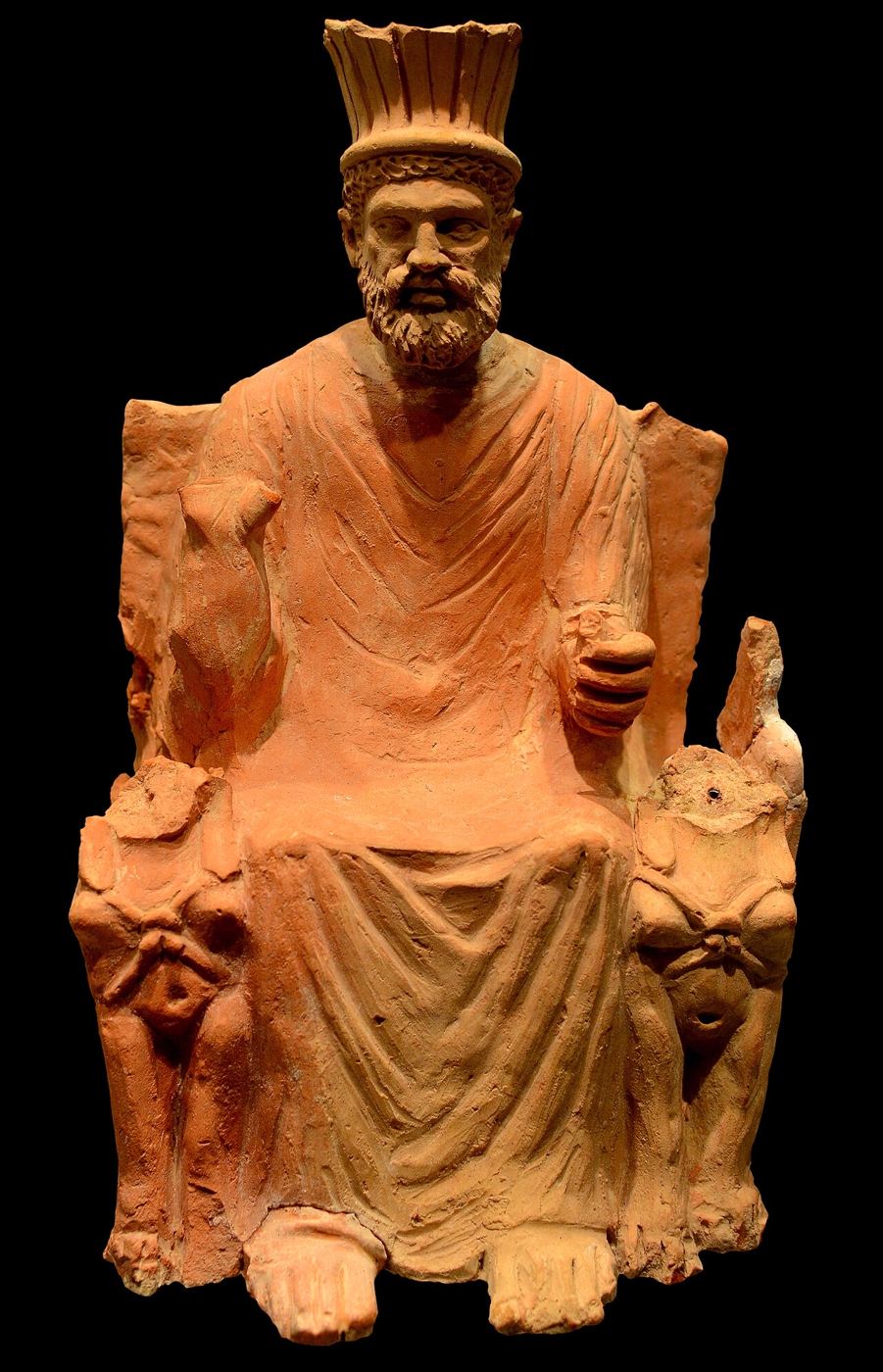
Navigation, trade, the alphabet, the cult of Melqart: the heritage of Tyre formed the DNA of Carthaginian culture.
A queen in the arts
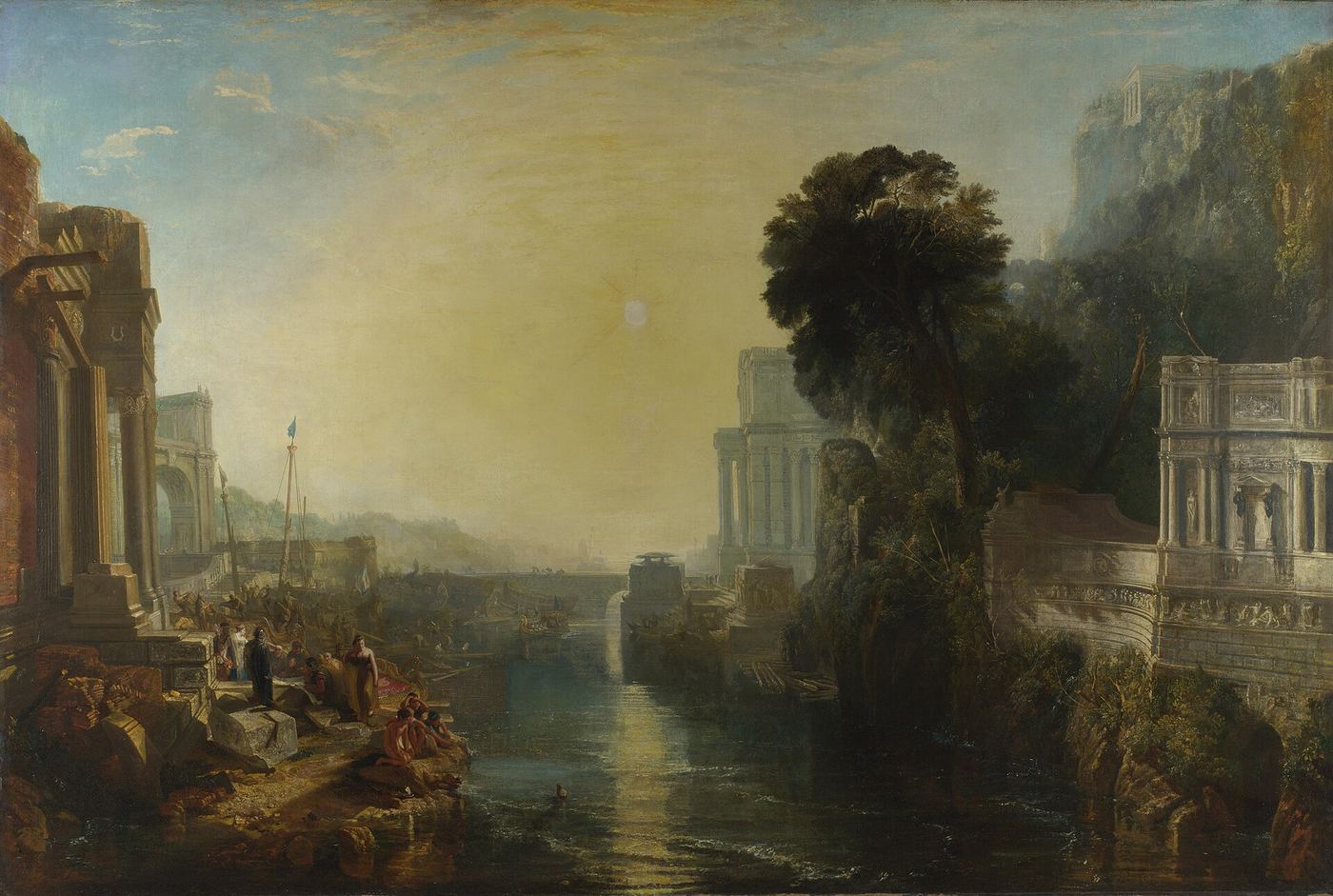
Ovid (Heroides, VII), Purcell (Dido and Aeneas, 1689), Berlioz (Les Troyens), Guérin and Turner (1815): Dido runs through literature, opera and painting.
A Tunisian symbol
In Tunisia today, Elissa remains the founding figure par excellence, a symbol of political intelligence and sovereignty.