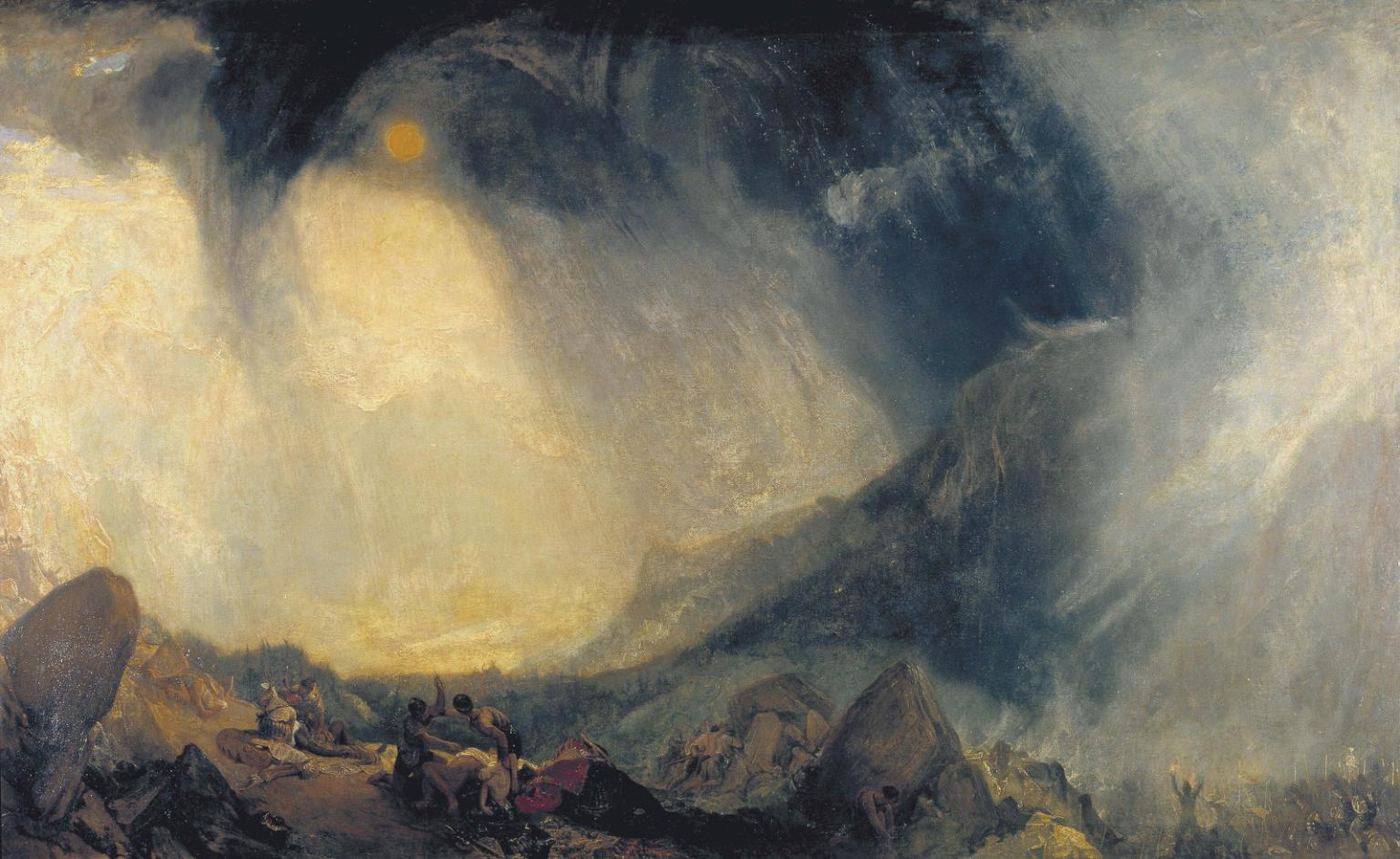
37 elephants against the Alps
A great river, snowbound passes, hostile tribes: the most audacious logistical feat of Antiquity.
km from Carthago Nova
elephants at the start
of marching
in the Alps
altitude of the pass, depending on which one
famous survivor: Surus
The impossible made real
In the autumn of 218 BC, Hannibal Barca achieved what the Romans thought impossible: crossing the Alps with an entire army and its war elephants to invade Italy from the north. This march of more than 1,600 kilometres from Carthago Nova remains one of the most extraordinary logistical and military feats in history.
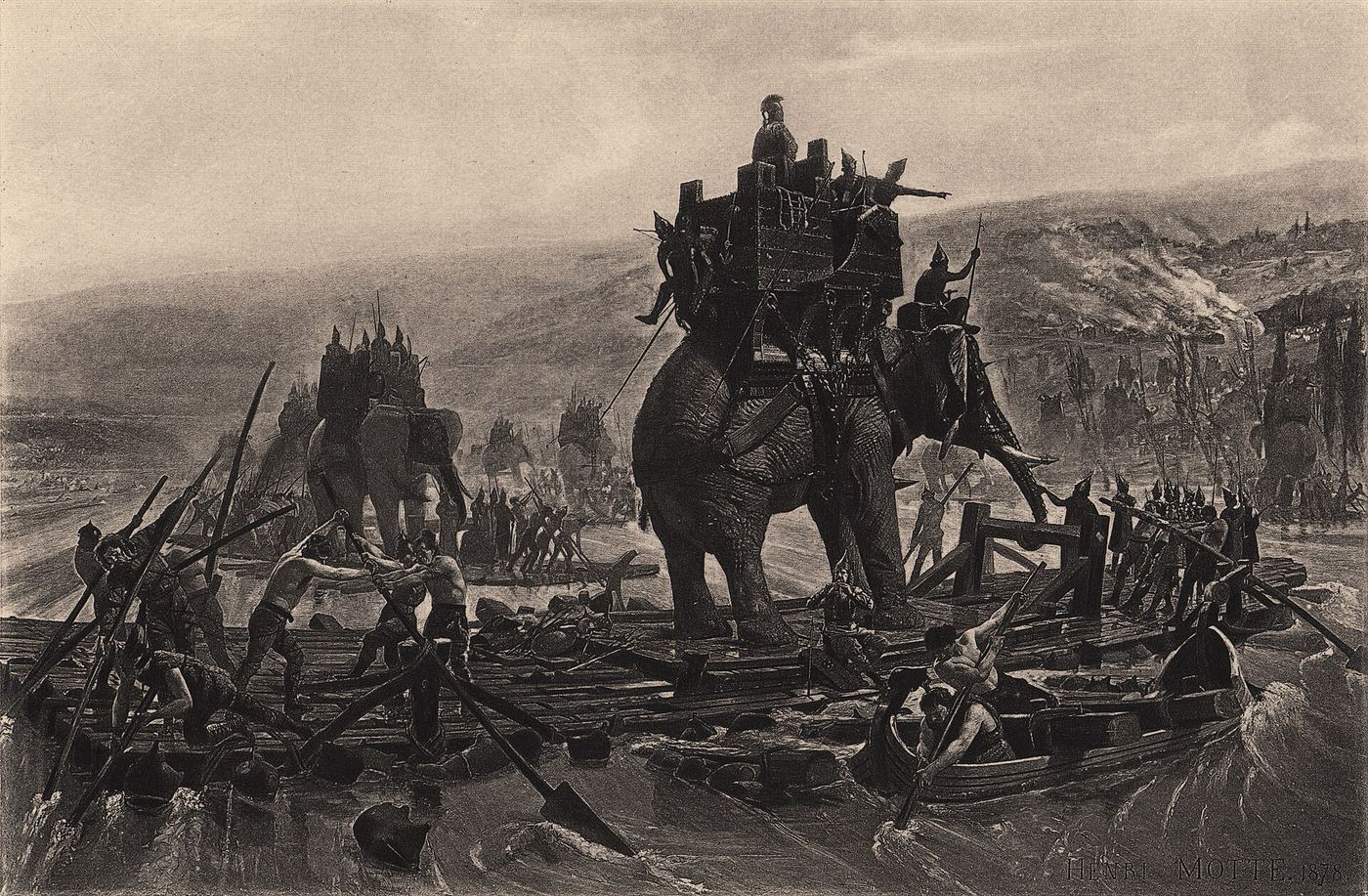
Make them believe it is land
According to Polybius, the engineers built great rafts covered with earth, so that the elephants would think they were still walking on the bank. Once towed, some panicked and plunged into the water — but all of them made it across.
On the far bank, Gauls blocked the way. Hannibal sent Hanno, son of Bomilcar, by night to cross upstream; at his smoke signal the army crossed in boats while Hanno fell on the Gauls from behind.
The North African elephant
A now-extinct population, smaller than the savanna elephant: about 2.5 m at the shoulder. It appears on Barcid shekels.
Fire and vinegar
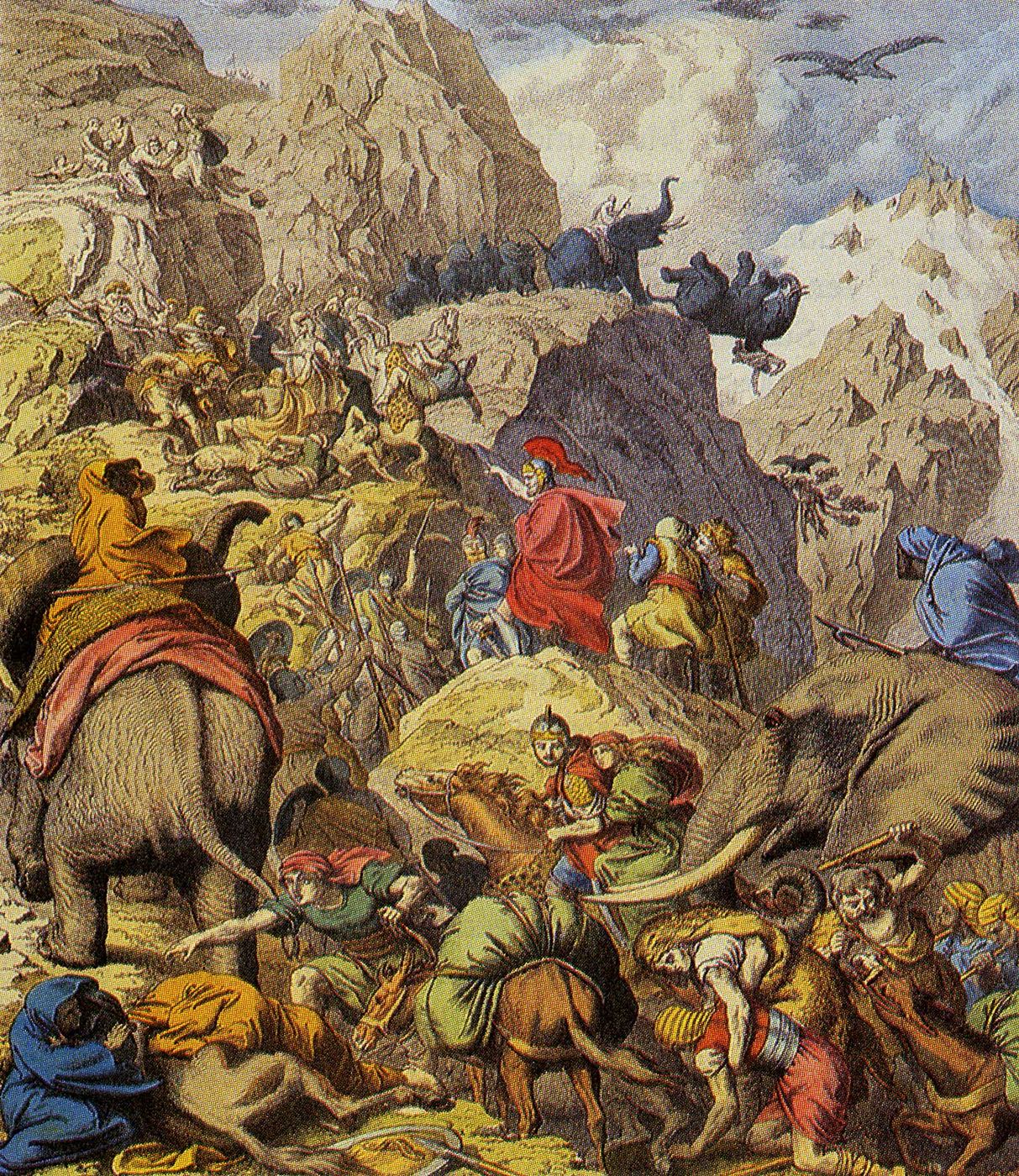
According to Livy, a rockfall blocked the descent; the soldiers heated the rock with fire, then split it by pouring vinegar over it.
Which pass?
Traversette, Mont Cenis, Clapier, Little St Bernard… The debate remains open; recent soil analyses have revived the case for the Traversette.
The route, stage by stage
From Carthago Nova to the Po plain — after Polybius and Livy
- Spring 218
Carthago Nova
Hannibal leaves Qart Hadasht with a huge army. He leaves his brother Hasdrubal to defend Spain.
90,000 infantry12,000 cavalry37 elephants - Summer 218
Pyrenees
He subdues or negotiates with the tribes, leaves Hanno to hold the region with 11,000 men and sends 11,000 Iberians home rather than force reluctant troops onward.
50,000 infantry9,000 cavalry - Late summer 218
The Rhône
Great earth-covered rafts for the elephants; a detachment crosses upstream and attacks the Gauls from the rear.
37 elephants cross - October 218
The ascent
9 days to the summit: ambushes by Alpine tribes, rockfalls, narrow paths and bitter cold. The elephants suffer on the steep ground.
- October 218
The pass
At the top, he shows his exhausted troops the Po plain below and restores their morale. The descent, on icy paths, is even more dangerous than the climb.
- Autumn 218
Italy
After 15 days in the Alps, the army reaches the Po plain. Losses are terrible, but Rome is caught off guard: Italy has been invaded overland.
26,000 survivors> 50% losses since the Pyrenees
The route on the map
Follow Hannibal's campaign from Carthago Nova to the Po plain, then on to Cannae and Zama.
Approximate borders based on historical syntheses (spheres of influence, not modern borders). Base map: Natural Earth. Ancient sites: customary locations.
War elephants
Carthage's psychological weapon
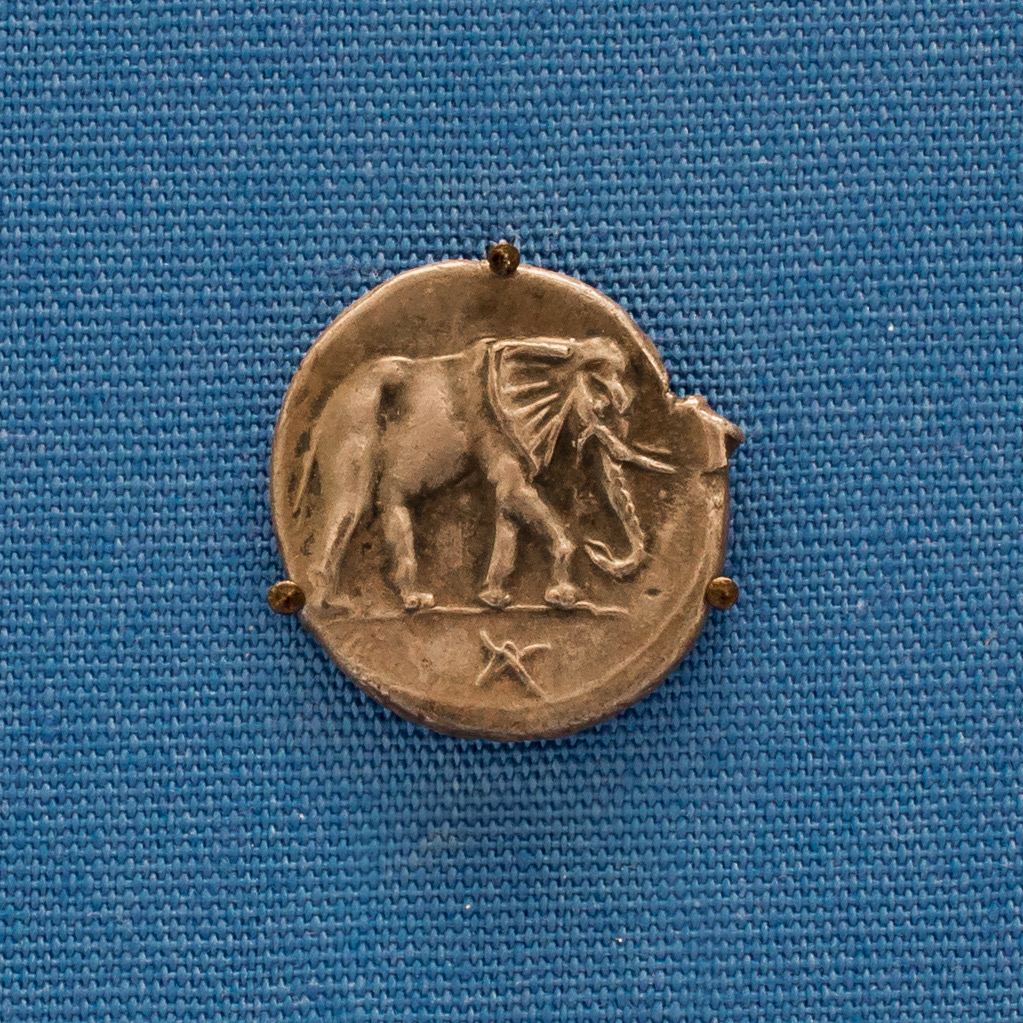
A vanished elephant
Most likely the North African elephant, an extinct population (sometimes called Loxodonta africana pharaonensis), smaller than the savanna elephant: about 2.5 m at the shoulder. Its exact status is still debated. Carthage may also have had a few Asian elephants, obtained from Egypt or Syria.
Terrify, then strike
Elephants were above all a psychological weapon: their charge terrified infantry and panicked horses unused to them. Each was driven by a mahout. Archer towers, common on the Indian elephants of the Hellenistic kings, are doubtful for Carthage’s smaller animals.
Surus
Cato the Elder, quoted by Pliny, recorded the name of the bravest elephant in the Punic army: Surus, "the Syrian", who had only one tusk. According to Livy, Hannibal crossed the Arno marshes in spring 217 riding the last surviving elephant — often identified with Surus.
Surviving the Alps, not the winter
Most of the 37 elephants survived the crossing and fought at the Trebia in December 218. But the snow, rain and cold of that winter wiped them out: according to Polybius, only one survived. In 215 Bomilcar landed 40 elephants as reinforcements at Locri; at Zama in 202, Hannibal fielded 80.
A symbol of Antiquity
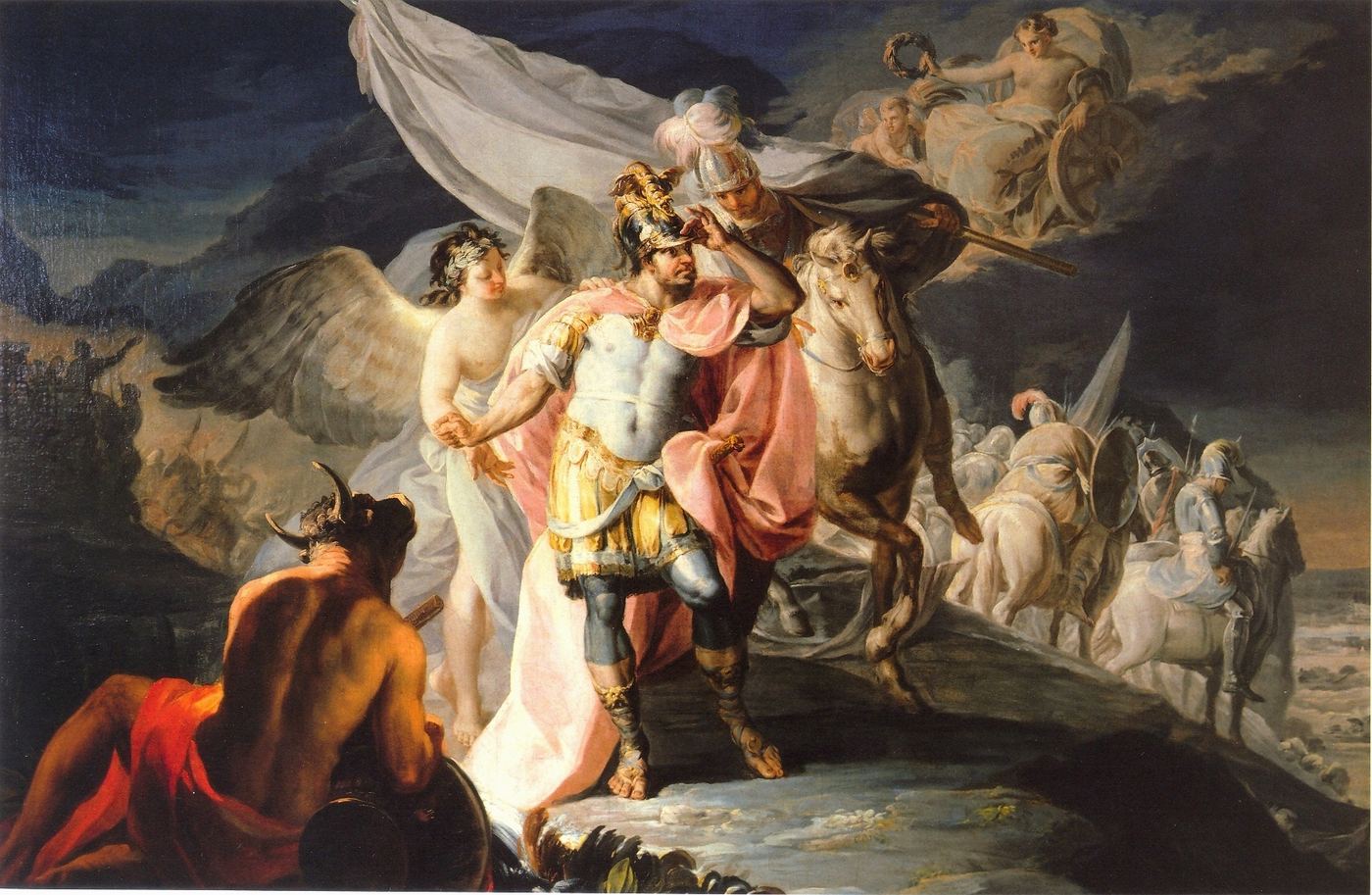
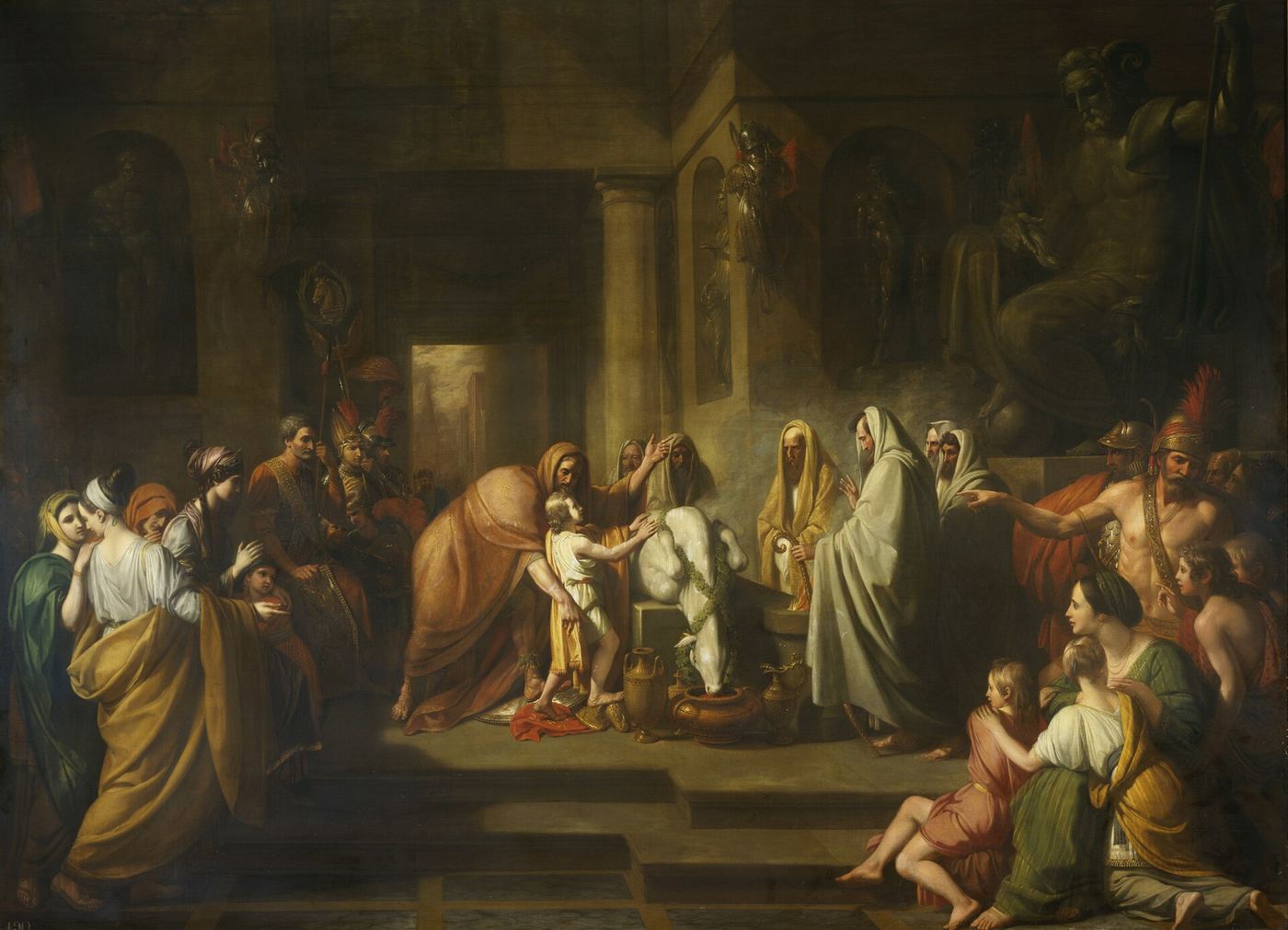
Carthaginian coins, and those the Barcids struck in Spain, often show elephants. The image of Hannibal and his elephants crossing the Alps became one of the most powerful symbols of Antiquity, painted by Goya, Turner and many others.
The victories in Italy
Hannibal's battles in diagrams
The Trebia, Trasimene, Cannae step by step, and Zama: the manoeuvres that changed history.
Depictions
Read also
Hannibal Barca
From Carthago Nova to Zama, the life of the strategist who made Rome tremble.
The Punic Wars
Three wars, a century of conflict over the Mediterranean.
The army of Carthage
Sacred Band, Libyans, Numidians, slingers and elephants.
Carthage and the Mediterranean
Territories, Hannibal's campaign, voyages and allies.