The gods of Carthage
Brought from Tyre, the Phoenician gods took on a new face in Africa, blended with Libyan beliefs.
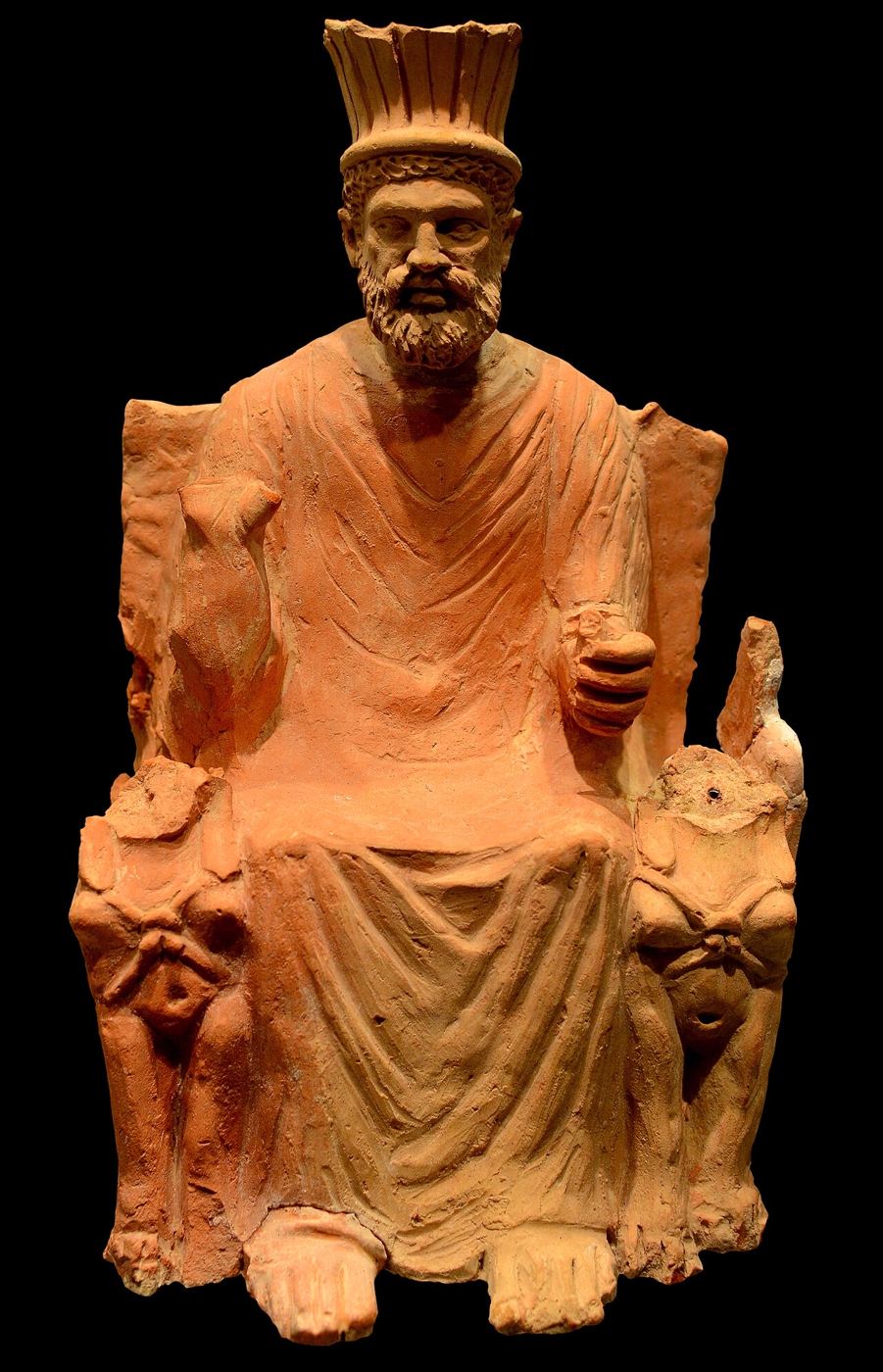
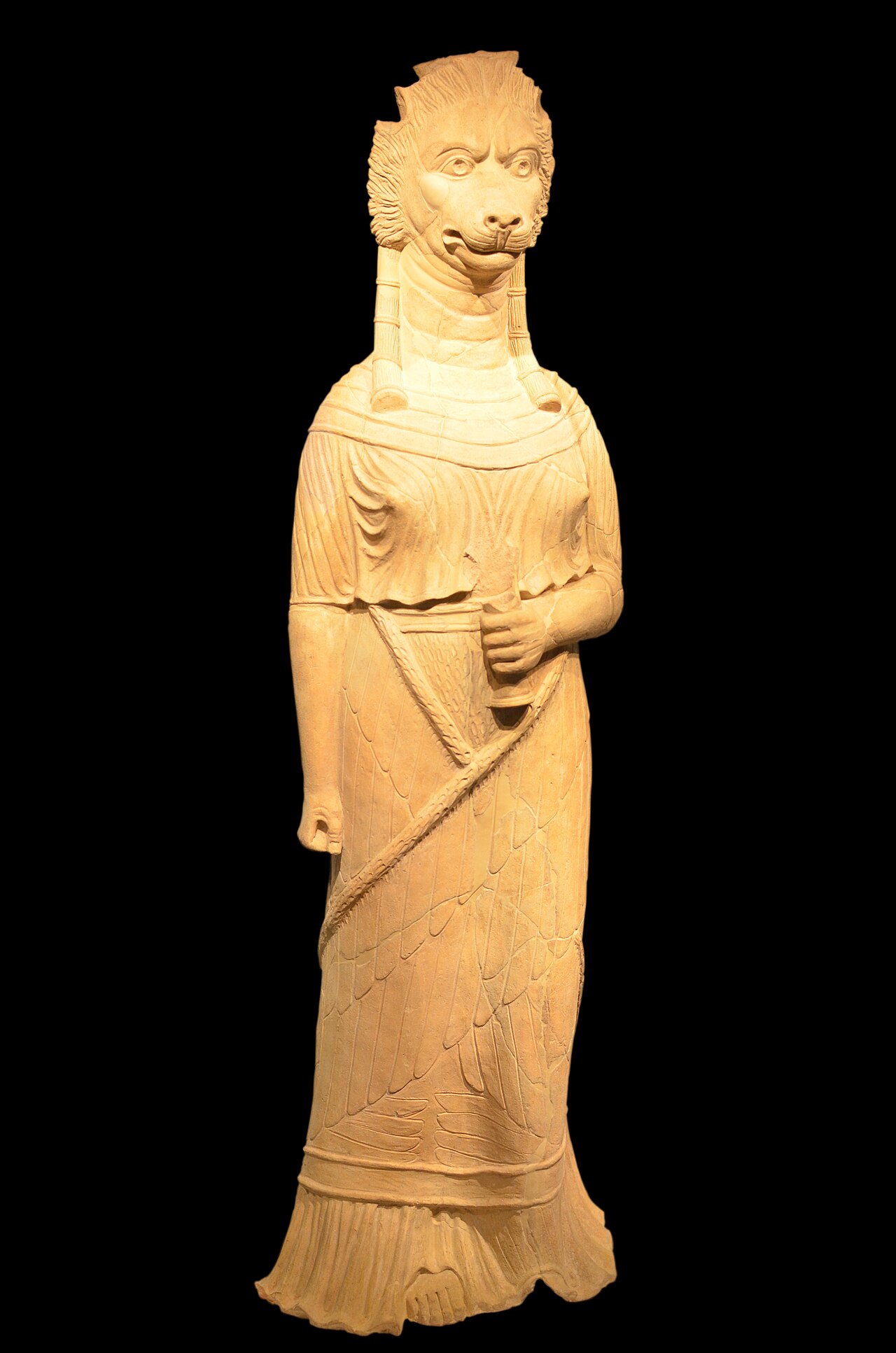
Baal Hammon
The supreme god, lord of the sky and of fertility, shown old and bearded on a throne flanked by sphinxes.
Tanit
“Face of Baal”, protector of the city. Her sign — a triangle, a bar, a disc — is everywhere, even in the floors of Kerkouane.
Melqart
“King of the city”, god of Tyre; Carthage sent him an offering every year. The Barcids put him on their coins.
Eshmun
The healing god. His temple crowned Byrsa: it was there that the last defenders took refuge in 146.
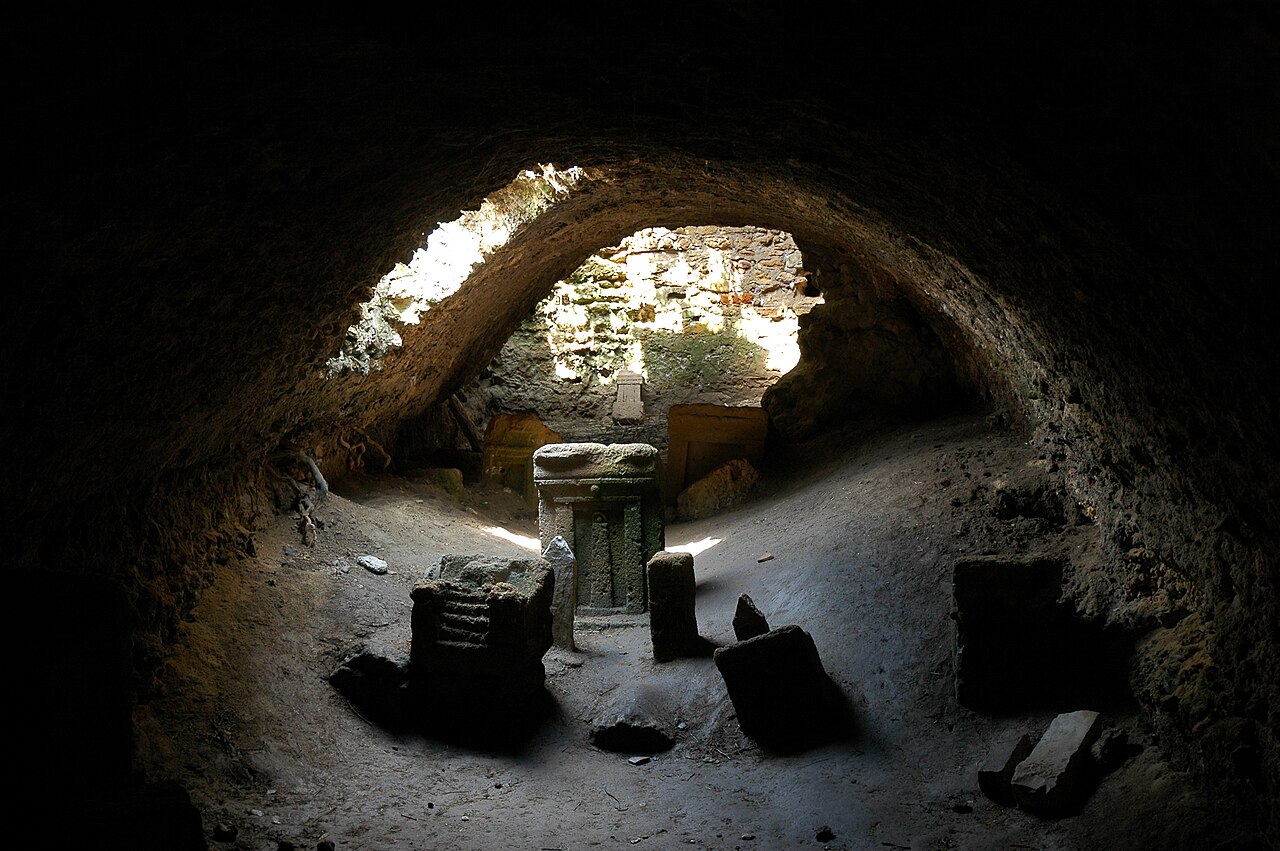
The tophet
An open-air sanctuary where thousands of urns holding the remains of children were found, topped by stelae dedicated to Baal Hammon and Tanit.
Greek and Roman authors saw it as a place of sacrifice. Archaeologists remain divided between sacrificial rite and infant cemetery: the debate is presented on the sources page.
A wider pantheon
Deeply West Semitic despite the Greek or Latin names in the sources (Sznycer), the Carthaginian pantheon grew through contact with Libyans, Egyptians and Greeks.
Astarte
Goddess of fertility and war, still honoured at Carthage. Her sanctuaries were famous, such as Tas Silg on Malta or Eryx in Sicily.
Reshef
God of war and plague, whom the Greeks likened to Apollo. His cult is attested throughout the Phoenician and Punic world.
Sakon
Known mainly from dedications and from personal names invoking him; his exact role remains obscure.
Baal Shamim
The great sky god of the Phoenicians. A dedication from the island of San Pietro, in Sardinia, attests his cult in the Punic West.
Sid
Worshipped in Sardinia, where the Romans would call him Sardus Pater (temple of Antas). At Carthage, dedications pair him with Tanit: Sid-Tanit.
Isis, Horus, Bes
Amulets, scarabs and engraved razors spread the Egyptian gods, imported from the 7th century or copied locally, above all in the graves of women and children.
Demeter and Kore
Himilco’s army plundered their sanctuary near Syracuse, then plague ravaged it. To appease the goddesses, Carthage adopted their cult and entrusted it to Greek priests (Diodorus, XIV, 63 and 77).
Gods that change
Melqart took on the features of Heracles; Baal Hammon drew close to the ram-headed Libyan Ammon, then to Jupiter. Under Rome he lived on as the African Saturn, and Tanit as Caelestis.
The gods of the oath
When Hannibal concluded an alliance with Philip V of Macedon, the treaty was sworn before the gods of Carthage. Polybius renders them with Greek names: Zeus, Hera and Apollo, the guardian "daemon" of the Carthaginians, Heracles and Iolaus, Ares, Triton, Poseidon, then Sun, Moon and Earth. Historians recognise Baal Hammon, Tanit, Melqart or Reshef among them, though the equivalences are not agreed by all.
Source: Polybius, Histories, VII, 9
Temples and sanctuaries
Priests and tariffs
Religion was a matter of state. Without running politics, the priests, organised in a hierarchy, carried weight in a very devout society; the highest offices went to the great families (Dridi).
Sacrifices followed tariffs posted in the temples: for each animal and each request they set the share of the god, of the priest and of the worshipper. A stele then commemorated the offering.
Funerary rites
Tombs were the first Punic remains to be excavated, from the late 19th century — and the richest source on belief in the afterlife.
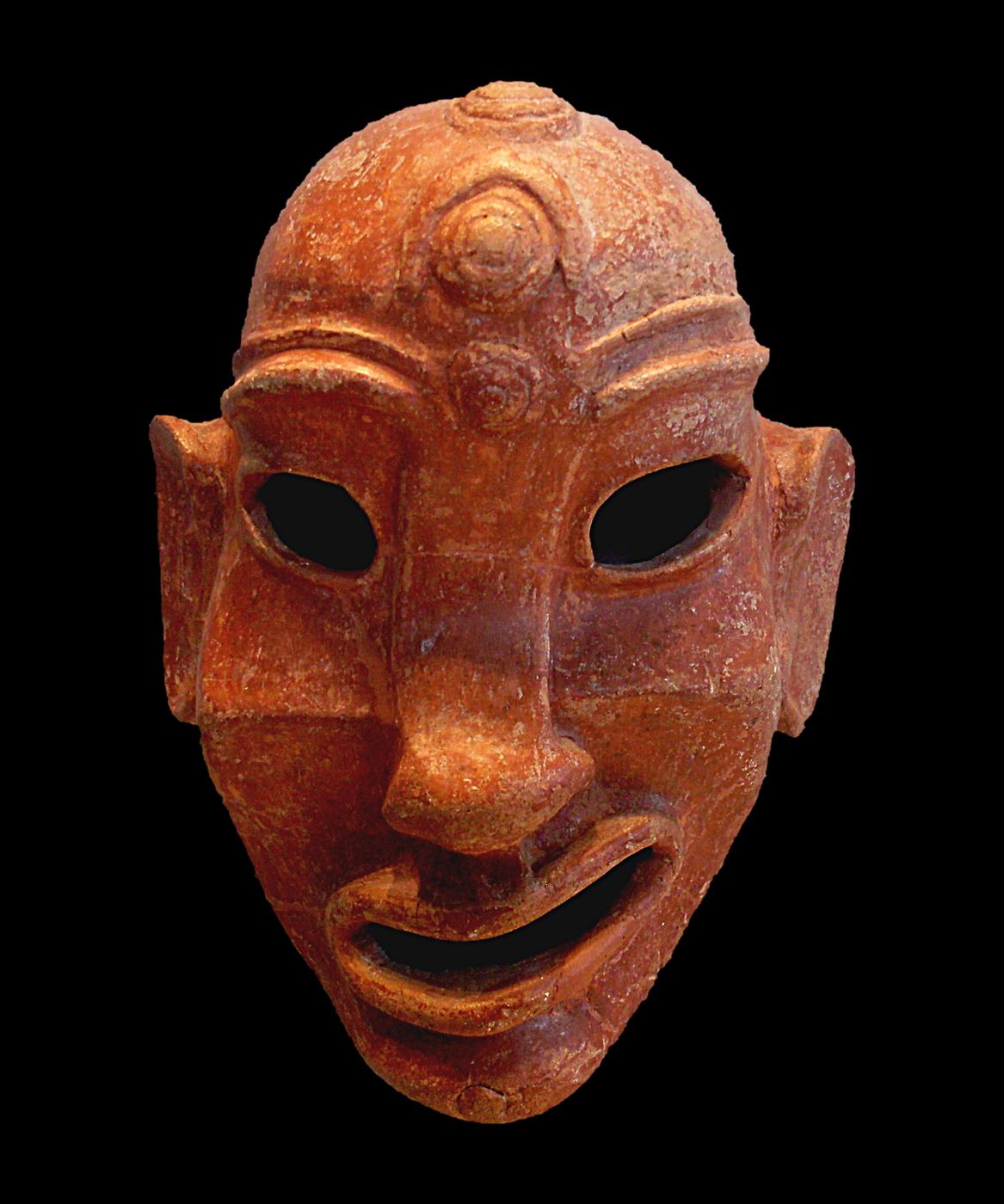
Grimacing Punic mask. Placed in tombs, such masks probably served a protective purpose.
“For this seafaring people, the heavenly City was the last harbour to put in at.”
F. Decret, Carthage ou l’empire de la mer (1977)